Put Yourself in my Shoes: Role-Playing for a Better Policy Design

Summary: Key features in a nutshell

  • Originated from an academic participant’s observation of a local problem (difficulties in dialogue between providers of public interest services)
  • Mobilized the quadruple helix model (academia, policymakers, private sector, civil society) plus Master’s students
  • Resulted in two webinars discussing key issues and an experiential workshop led by academic scholars (full professor and researchers) and knowledge exchange managers
  • The experimental workshop included group works in a role-playing mode, in order for participants to understand how other professional job role works
  • Final debate and networking
  • Ultimately, it allows for a new perspective and a broader understanding of the policymaking and implementation process


Description

This case study points out how a common language can be constructed with respect  to policy design or policy implementation in the region, thanks to an experiment launched by the Department of Economics at Ca’ Foscari University of Venice and Ca’ Foscari Challenge School (the executive school of Ca’ Foscari University of Venice offering Master’s degrees and advanced training courses for professionals) under the Erasmus+ ENGAGEgreen project.

The program was organized into three constituent parts: two online meetings an in-person experiential workshop. This approach facilitates the engagement of researchers, policymakers, students, and workers/representatives from the third sector, NGOs, and civil society.


The starting point

The impetus for establishing a workshop that facilitates collaboration among diverse professionals engaged in public policy emerged from the observations of a researcher from the Department of Economics at Ca’ Foscari University of Venice. The researcher was involved in a field research project in the planning office of a public body that collaborates with third sector organizations to provide services and relies on university research centers for the methodological definition of planning tools. Through field observation, it became clear that there was a problem in the dialogue between different bodies on the same issues, with regard to both administrative and methodological processes – in this specific case, the coproduction of social services.


Who should be involved as participants?

Master’s students, doctoral students, researchers, professors, mayors, councilors, public sector workers, third sector workers, and civil society.


How does the format work?

The initiative begins with the collection of participants’ registration. This step may seem obvious, but it is equally essential for creating a mixed classroom composed of different professionals and roles.


Subsequently, two online webinars are planned, led by professionals and university professors. The number of introductory webinars may vary based on the need for further study and the topics to be covered. The webinars aim to bring together the key topics of the course from both a theoretical perspective (looking at both the legal/administrative and methodological/sociological aspects) and a practical perspective. Ideally, the introductory webinars should lay the foundations for what will then be shared and implemented during the experiential workshop. The ideal structure should include at least one webinar held by academics to share theoretical foundations and at least one webinar held by public sector professionals to share the operating methods implemented by public offices.


The last and most important meeting is an experiential workshop divided into two parts:

  • In the first part, the key theme of the day is explored in depth through a presentation by an academic expert on the subject, who will then support the working groups to resolve any theoreticalissues;
  • The second part – which should last at least three hours – is the core of the activity and involves dividing the participants into mixed groups. It will proceed as follows:
    • the group work will take the form of a role-playing game, replicating a real-life operational situation involving discussions between various organizations and professionals, as would happen in reality;
    • as in any role-playing game, participants will put themselves in someone else’s shoes so the mayor may be a third sector worker, the public sector worker may be the councilor, the third sector worker may be the researcher, etc.
    • tasks are assigned – for example, the preparation of a collaboration agreement between institutions, and participants must draft the document, remembering that, on this occasion, they must represent an institution or role other than their own;
    • each group will have a knowledge exchange manager who will help participants stay on track.


Participants:

5 researchers

37 policymakers

6 students

5 NGO/civil society representatives

30 other (business/private)


Challenges

  • involve different professionals and roles from different organizations and territories
  • ensure that participants have a uniform level of knowledge
  • make it clear that during the experiential workshop group work, participants are representing another organization and/or another role and therefore need to think differently


Task and resources

Academics

The program is very time efficient for academics. Since the meetings are about topics they already cover in conferences or courses, they do not have to invest much time in preparing other than reading about the topics of interest.

Support staff (researchers, knowledge exchange managers, and research managers)

The department employed

  • two researchers, already part of the staff, to handle the methodological management of the initiative
  • two research managers who handled the organizational aspects
  • three knowledge exchange managers who facilitated the group work

Policymakers/researchers/workers from public bodies and the third sector

The participants must submit an application that takes them a couple of minutes to prepare.

Required funding

Light networking lunch was offered at the end of the workshop.


Sources and further reading

Event poster.

Format: Role-Playing Game for Researchers | Policymakers | Media

Introduction: What is the format about?

– A role-playing game puts participants in the situation of making decisions in a political context

– The idea is to put researchers, policymakers, and sometimes representatives of civil society or media in a situation to see how science can (or cannot) influence policy choices


How does the format work?

An idea for a role-playing game where researchers and policymakers swap roles for a day was conceived to better understand the real dynamics between research and policymaking.

Faced with challenges such as a health crisis, an environmental disaster, or a sensitive energy issue, participants can learn to navigate between the need to use scientific data and economic, social, and political pressure.

The aim is to experience the complexity of the dialogue between science and policy and to better understand the challenges of decision making in a fictional situation.

Participants are assigned different roles than their own in real life:

either as researchers whose role is to analyze data and advise policymakers by providing them with clear and usable recommendations

or policymakers whose role is to make choices based on scientific advice as well as on economic, social, and media concerns.

Media and civil society actors (depending on the version of the game) add a level of complexity by influencing public opinion and exerting pressure on decision makers.

The game takes place in several stages, with new information being introduced gradually, requiring participants to adjust their strategies. It highlights the challenges of communication between researchers and policymakers, managing uncertainty, and the necessary compromises in decision making.


Challenges and how to address them

Of course, there are many challenges to this complex role-playing game.

Our approach involves a service provider who creates role-playing scenarios from a sociological perspective to help participants understand each other’s roles and responsibilities.   But preparing the game still requires a significant amount of work, particularly the preparation of a consistent scenario and situations that are appropriate for the setting without being too realistic, so as to create arguments.

Balance management: the different theatrical acts must be stimulating, and the scenes played by the actors must maintain the interest of the different participants who do not know each other.

At the same time, rather than exacerbating areas of conflict, this role-playing game should teach its participants how, for example, a politician plays the researcher and vice versa.


Tasks and resources

This role-playing game is run by an external partner that handles the learning side of role-playing. Setting up a role-playing game on this scale is, however, a significant organizational task for the knowledge officers.

Furthermore, to ensure the game runs smoothly and that it has the desired effect, it is important not to reveal too much about the day and learning expectations. It is therefore challenging to get researchers and policymakers to set aside time for this.


Examples

Scientific-Political Cooperation Workshops Day (ACooSP) September 12, 2023, in Dijon, organized by the University of Burgundy Franche-Comté in partnership with INGSA.


Sources and further reading

The International Network for Government Science Advice (INGSA) regularly offers this type of workshop to help researchers and decision-makers work better together.


Do you want to know more about the policy engagement toolkit?

Do you want to share your experience in policy engagement? Do you think about contributing to the policy engagement toolkit? Feel free to contact Tome Sandevski via science-policy@pvw.uni-frankfurt.de

Information seminar for research managers and administrators (RMAs)

What is the format about?

Research managers and administrators (RMAs) can play a crucial role in connecting academia with policymakers for a number of reasons that go beyond their traditionally perceived administrative responsibilities:

1) RMAs systematically identify and monitor opportunities for collaboration through national, European, and international funding programmes. Thanks to their detailed knowledge of specific topics and calls and the strategic priorities of funding bodies, they are able to identify projects in which the involvement of public authorities is either essential or highly beneficial. In this way, RMAs help to bridge academic research and the practical needs of public administration at the national and local levels.

2) In recent years, the role of RMAs has become significantly more professionalised and expanded. They are no longer solely project administrators; they increasingly contribute to the design and co-creation of institutional strategies and support new forms of collaboration. This enables them to systematically integrate cooperation with policymakers into the long-term strategies of universities and to promote evidence-informed policymaking as a natural component of the universities’ “third mission”.

3) As part of university administration, RMAs also serve as key contact points. Policymakers often do not know which experts to approach on a specific topic, while individual researchers do not always actively communicate beyond their own academic communities. RMAs, however, have an overview of institutional research capacities across faculties and disciplines, allowing them to effectively mediate between the needs of public institutions and relevant academic experts.

The information seminar on evidence-informed policymaking and its integration into research and educational projects aims to equip RMAs with practical tools and knowledge that will enable them to effectively support collaboration between academia and policymakers.


How does the format work

Training on this topic is best delivered in a group format rather than through individual consultations. Research managers and administrators represent a highly heterogeneous group in terms of expertise, professional experience, and functional roles. A group-based setting therefore creates space for rich discussion, the sharing of diverse perspectives, and the exchange of practical experiences, all of which significantly increase the added value of the seminar compared to an individual format.

The seminar can be delivered at different institutional levels, ranging from individual faculties or universities to the national level through professional platforms and associations of research managers and administrators. The participation of institutional leadership is also highly beneficial, as it helps ensure follow-up conceptual support for the topic (for example, by enabling the establishment of dedicated impact manager positions within project support units). If delivered at the international level, the focus of the seminar should be adapted towards the exchange of experiences and good practices, taking into account differences in public administration systems, institutional frameworks, and policymaking processes across countries.


The information seminar for RMAs should cover the following areas:

1) Key benefits of collaboration between researchers and policy-makers in projects

  • Access to data and practice: Public authorities provide data, information, and case studies that are not typically accessible within the academic environment.
  • Mutual capacity building: Universities strengthen their ability to communicate with the applied sector, while public institutions gain access to the latest scientific knowledge.
  • Strategic and financial advantages: The involvement of non-academic partners is a key requirement in many funding programmes (Horizon Europe, Interreg, ERDF, national programmes).
  • Increased societal impact of research: Researchers can directly contribute to policymaking and enhance the relevance of their projects by engaging with major societal challenges such as climate change, public health, urban development, and digital transformation.

2) Mapping project opportunities in current funding programmes

  • Regular monitoring of open calls on funding agency portals and matching these calls with the strategic priorities of the university or faculty, as well as with the needs of public administration.
  • Building networks of contacts across project support units, institutional leadership, and individual departments or units, and sharing up-to-date information to coordinate researchers’ interest.

3) Specifics of project collaboration with public authorities at the local, regional, national, and European levels

  • Institutional structures and complex decision-making processes
  • Bureaucracy, legislative frameworks, public procurement rules, and related requirements
  • Limited time and human resources
  • Political influences and public expectations

4) Targeted science communication

  • Developing skills in interpreting scientific results for non-academic audiences, helping to formulate research objectives and outputs in ways that are understandable and relevant to policymakers.
  • Framing topics not primarily as research questions but as policy-relevant issues, including who is affected, how the issue relates to decision-making processes, and the broader policymaking context and related strategic documents.
  • Focusing on impact and added value of collaboration: offering concrete solutions to identified problems, saving time and resources, and increasing institutional efficiency and credibility.

5) Building sustainable infrastructure for collaboration beyond projects

  • Developing processes, tools, and platforms that facilitate long-term communication between academia and public administration.
  • Establishing networks of contacts (expert databases, thematic partnerships) and supporting various formats of collaboration, as further described in the ENGAGEgreen Policy Engagement Toolkit.

6) Strategic orientation of research activities: supporting socially relevant research topics based on an analysis of current public administration needs

  • Public authorities can ensure the practical use of research outputs in the day-to-day functioning of institutions, allowing project results to respond to real needs of citizens and communities.
  • Research results can be further utilised within public administration through follow-up policies and strategies, staff training and education, and the implementation of new digital tools or methodologies.


Challenges

One of the main challenges in implementing training focused on collaboration with policymakers is the low awareness of the relevance of this topic among research managers and administrators (RMAs). The topic is often perceived as marginal or as falling outside their regular project responsibilities.

It is therefore more effective to integrate the seminar into existing educational activities (workshops or conferences) for RMAs, rather than offering it as a standalone event, and to promote it through professional networks and internal institutional communication. When framed in this way, the training is perceived as a natural part of professional development rather than an additional or optional topic. At the same time, it is important to systematically raise awareness of the topic among researchers so that demand for this type of project support also emerges from the academic community itself.

Ensuring follow-up after the seminar is equally important. Awareness of relevant calls, project initiatives, and examples of good practice should be reinforced through institutional communication over the long term, enabling participants to practically apply the knowledge gained. This approach increases the likelihood that the seminar will not only enhance individual competencies but also lead to tangible changes in institutional processes and project practices.


Tasks and resources

The speaker should be well-informed about current funding opportunities and the existing structures that support various forms of collaboration with policymakers at the institution. Seminar participants do not need prior theoretical knowledge; however, it is recommended that they map the situation within their department or faculty in advance—for example, identifying who is engaged in collaboration with public authorities, which researchers are already working with institutions, and what forms of collaboration exist. This mapping enables participants to actively contribute to discussions and share concrete practical examples. Resources that can be used for preparation include internal databases and contacts within departments or faculties.


Example

RMA Power Week (19 -23 May 2025)

The RMA Power Week was a five-day professional workshop primarily aimed at research project managers, but also open to other administrative and technical staff involved in research support. It was organized by the Grant Office at the Faculty of Arts, Palacký University Olomouc. The workshop focused on key areas of research management, including the preparation of project proposals, science communication, effective financial planning and monitoring, research data management, and the use of artificial intelligence in project management. The workshop was supported by two ongoing Horizon Europe projects (Twinning calls), which aim, among other objectives, to enhance the competencies and capacities for project support at the participating institutions.

On the second day of the workshop, which focused on science communication in projects, a 60-minute session titled ‘Public Administration as a Project Partner’ was devoted to collaboration with policymakers. The presentation was divided into a theoretical and a practical part: the theoretical part covered all the key areas of the Information seminar described above, while the practical part presented concrete examples of ongoing projects and initiatives at the university. The session concluded with a discussion in which participants shared their experiences and reflected on how the insights gained could be applied in practice.


Do you want to know more about the policy engagement toolkit?

Do you want to share your experience in policy engagement? Do you think about contributing to the policy engagement toolkit? Feel free to contact Tome Sandevski via science-policy@pvw.uni-frankfurt.de

Format: Short Training Course for Research Managers

Summary: Key features in a nutshell

  • A short in-person training course for research and knowledge transfer managers of Ca’ Foscari University of Venice and local partner institutions
  • Dual format: presentation of research projects at different development stages, with a focus on policy engagement, followed by a roundtable with experts (research facilitator, research manager, and postdoctoral researcher)
  • Valuable opportunity to share best practices and tools and analyse key elements to consider during the project design phase, specifically on the impact of projects on policymaking
  • Networking opportunity at the end of the training course
  • Course hours are recognized as official training by the competent office within the university (all the staff from Italian Public Administration are required to attend at least 40 hours of training annually)


How does the format works?

Before the course

The ENGAGEgreen project unit of the Department of Economics at Ca’ Foscari, together with the office for Promoting Innovation and Knowledge (PInK), drafts the agenda and selects speakers through regular online and in-person meetings. Other tasks include:

Setting up a registration form with a timely deadline necessary to know the final number of participants, both to book the room and for providing the light refreshments foreseen as a networking moment at the end of the course.

Communication of the event on official social media accounts and the university’s internal newsletter targeted to research and knowledge transfer managers.

Contacting the university’s Human Resources and Development Office to confirm the procedure to approve participants’ training hours.

During the course

Registration of participants for the accreditation of training hours.

After the course

The organizers send a message of thanks to speakers and participants, inviting them to follow the project’s updates on social media and asking them to complete a short questionnaire providing feedback on different aspects of the event.


Challenges (and ways to address them)

  • Finalize the program well in advance to have enough time for promotion before the registration deadline. Mitigation measures: constant communication between organizers to keep them reminded of the timeline.
  • Speakers unavailable in-person at the last minute. Mitigation measures: set up an online meeting link in advance and select a room with the proper equipment in the event of a hybrid session.


Tasks and resources

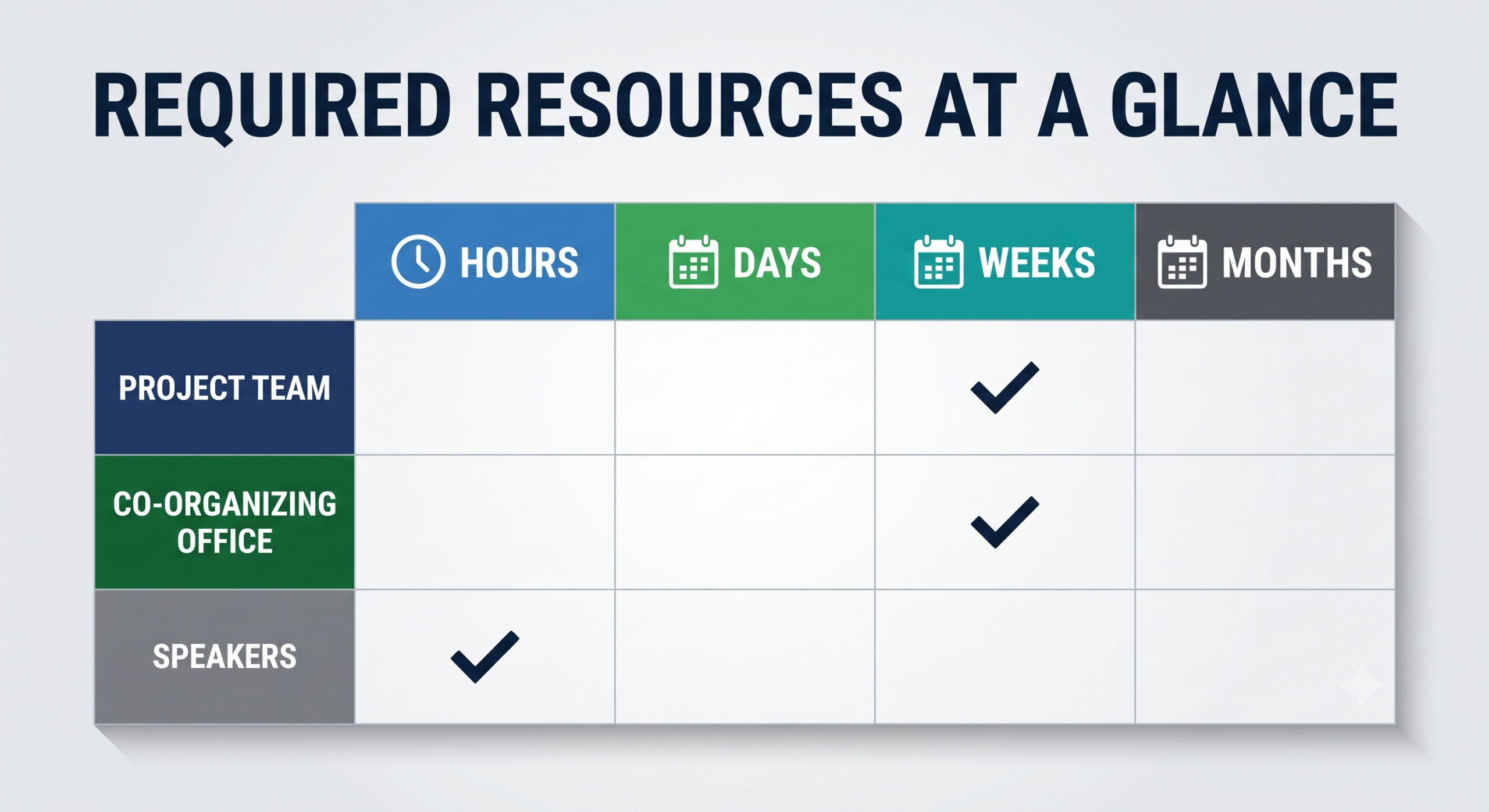
Project team

Coordinates agenda, speakers’ involvement, registration & communication, meeting room and catering services.

Co-organizing office

The office for Promoting Innovation and Knowledge, co-organizing the training, is involved in all preliminary phases, in particular to identify the most suitable topic and related speakers.

Speakers

They meet separately with the organizers to decide on the topic, time and other details relating to the presentations. They prepare the presentation material: slides and links to share with those present.


Required funding for activities

All speakers are affiliated with the university, so no funding is expected for their travel/accomodation.

Light refreshments (e.g., coffee break/snacks) are offered during the networking moment at the end of the training.


Sources and further reading

Ca’ Foscari University event webpage.

Format: Co-Creating Visual Communication as a Strategic Tool for Policy Making

Description

Visual communication plays a critical role in contemporary policy making by enabling the clear, efficient, and inclusive interpretation of complex data and analytical outputs. In public administration, decision-making processes increasingly rely on large volumes of heterogeneous data produced by national ministries, regional authorities, municipalities, research institutions, and private entities. However, these data are often presented in highly technical, textual, or tabular formats that limit their accessibility and practical usability for policymakers, stakeholders, and the general public.

Visual communication bridges this gap by transforming complex datasets and analytical results into intuitive, comprehensible, and actionable visual forms such as dashboards, maps, infographics, and interactive reports. In the context of policy making, visualisation supports both communication to policymakers (evidence provision, scenario comparison, impact assessment) and communication from policymakers (policy explanation, transparency, accountability, and public engagement).

Universities play a key role in this process by contributing methodological expertise in data analysis, cartography, data visualisation, user experience and user design, and cognitive aspects of information perception. Through structured cooperation between public administration and academic experts, visual communication becomes not merely a design add-on, but a strategic instrument supporting informed, transparent, and participatory governance.


Objectives

The main objectives of this format are to:

  • Translate complex policy-relevant data into clear and understandable visual narratives tailored to different target groups (policymakers, experts, citizens).
  • Improve comprehension, interpretation, and responsible use of data produced by public administration, academia, and the private sector.
  • Support evidence-based decision-making by enabling rapid comparison of scenarios, trends, and policy impacts.
  • Increase transparency and trust in public institutions through open, well-explained visual outputs.
  • Promote the reuse and opening of public data by embedding visualisation within open data strategies.
  • Strengthen long-term cooperation between universities and public authorities in the field of applied data communication.

How does the format work?

This format is based on systematic collaboration between data producers, policy users, and academic experts specialising in visual communication. The cooperation typically starts with identifying policy-relevant questions or decision-making needs and continues through the entire data lifecycle—from data preparation to final visual outputs.

A common implementation pathway includes:

  1. Problem definition

    Policymakers, together with domain experts, define key policy questions, target audiences, and decision contexts. Defining the process could start with personal/online meeting between policymakers and researchers, where all tasks are defined. The following processes could be managed through regular hybrid meetings, email reports or through shared documents.

  2. Data preparation and assessment

    Public administration provides relevant datasets, while university experts assess data quality, completeness, and analytical potential.

  3. Visualisation design

    Academic teams propose suitable visualisation methods (e.g. maps, timelines, dashboards, comparative charts) aligned with cognitive principles and user needs.

  4. Iterative development

    Visual outputs are refined through feedback loops involving policymakers and communication specialists.

  5. Publication and dissemination

    Results are published via official websites, open data portals, policy reports, social media, or public presentations.

More advanced implementations may result in comprehensive online data portals that combine interactive visualisations, explanatory texts, downloadable datasets, and methodological documentation. These platforms allow users to explore information at different levels of detail—from high-level summaries to raw data—while remaining compliant with European open data principles and interoperability standards.


Challenges (and ways to address them)

Limited availability of skilled professionals
Solution: Establish long-term partnerships with universities and involve students and researchers through applied courses, internships, or project-based collaboration.

Insufficient data quality or coverage
Solution: Introduce data quality standards and iterative validation processes involving both data producers and analysts.

Inappropriate or misleading visualisation choices
Solution: Apply established visualisation guidelines and ensure expert review by specialists in data perception and cartography.

Financial constraints
Solution: Integrate visual communication activities into existing projects, grants, or strategic development programmes rather than treating them as standalone costs.

Capacity limitations within public administration
Solution: Combine in-house expertise with external academic support and provide targeted training for public-sector staff.

Tasks and resources

Public Administration

  • Define policy questions and communication objectives.
  • Provide access to relevant datasets and contextual knowledge.
  • Ensure alignment with legal, strategic, and institutional frameworks.

Researchers

  • Analyse data and propose appropriate visual communication methods.
  • Design and develop visual outputs and explanatory materials.
  • Provide consultations, training, and methodological guidance.

Knowledge Exchange and Communication Officers

  • Facilitate cooperation between institutions – formal/informal discussion between researchers and chosen officers competent in given subject area – in-person/virtual meeting, round table discussion.
  • Support dissemination, public outreach, and stakeholder engagement.


Required funding for activities

  • No additional funding is required for routine data preparation conducted as part of public administration’s standard agenda.
  • Financial resources may be required for:
    • University staff time dedicated to advanced analysis and visual design.
    • Development of interactive tools or digital platforms.
  • Purely consultative involvement of academic experts typically falls within their standard professional responsibilities and may not require extra funding.


Example

Case: Regional Open Data and Visualisation Portal

A regional open data and visualisation portal was developed following an initiative by a university department specialising in geoinformatics and data visualisation – Department of Geoinformatics at Palacký University Olomouc and the Olomouc region. The project began with an analytical study assessing the current state of data availability and visual communication practices within the region.

University experts prsepared a set of strategic recommendations and proposed a visual framework aligned with international best practices. Following financial support from the regional authority, the portal was implemented as an interactive online platform combining thematic dashboards, maps, explanatory texts, and access to raw datasets.

Throughout the development process, continuous consultation, training sessions, and expert support were provided to regional staff. The resulting portal became one of the first comprehensive open data visualisation platforms in the country and now serves as a reference example for other regions.

Portal is available on https://www.dataok.cz/.


Do you want to know more about the policy engagement toolkit?

Do you want to share your experience in policy engagement? Do you think about contributing to the policy engagement toolkit? Feel free to contact Tome Sandevski via science-policy@pvw.uni-frankfurt.de

How to Recruit Researchers as Participants

Case Study of the Second Impronta Granada meeting and Poniente Workshop

Summary: Key features in a nutshell:

  • Objective: To successfully recruit researchers from the University of Granada (UGR) for collaborative territory-oriented projects with local governments, businesses, and civil society in the Poniente Granadino region.
  • Key Strategies
    • Online preparatory meetings to identify the most pressing regional challenges such as sustainable tourism, heritage preservation, and economic development and map existing research capacity
    • A curated Excel database compiling University of Granada’s researchers, projects and their associated County Council
    • Creation of actor profiles on the Impronta Granada website to improve the visibility of researchers and their alignment with specific County Councils
    • Use of UGR project entries on the website to highlight ongoing research projects, categorized by UGR County Councils and geolocated on an interactive map
    • Micropresentations (short talks) at the Second Impronta Granada Meeting showcasing selected research projects before the main Poniente workshop
  • Outcome: Enhanced researcher engagement; improved transparency of expertise; alignment between academic research and territorial development priorities; better informed, evidence‑based debate during the workshop

Description

Recruiting researchers from Universidad de Granada (UGR) to participate in regional governance and development initiatives is a key strategy to build a bridge between academic knowledge and local policy making.

UGR County Councils refers to the initiative led by the University of Granada (UGR) under the Erasmus+ ENGAGEgreen project, aiming to foster collaboration between academic researchers, local governments, and community stakeholders. This initiative focuses on addressing regional challenges through co-created, research-driven solutions. The Second Impronta Granada Meeting is the third pilot event organised by UGR as part of this project, bringing together researchers, policymakers, and local communities to discuss and develop strategies for sustainable development in rural and urban areas.

In the framework of the Second Impronta Granada Meeting (2 December 2025), through prior online preparatory meetings with UGR County Councils and the subsequent in‑person ‘Poniente Workshop’, researchers were actively integrated into a multi‑stakeholder process.

To operationalise this, an internal Medialab UGR compiled an internal Excel database – listing ongoing research projects, names of researchers, their associated County Council (comarca) and project status— which then served to design and schedule micropresentations of such projects during the in‑person event. The Excel registry was not a static tool but was continuously maintained and updated throughout the process to reflect confirmed participation, thematic relevance, and the evolving alignment between research projects and territorial needs. This mechanism fostered visibility, facilitated researcher‑stakeholder matching, and helped frame the workshop’s agenda around academically grounded proposals. The recruitment process was supported by creating actor profiles and listing UGR projects on the Impronta Granada website, where researchers and their ongoing work were made visible and accessible. These profiles allowed stakeholders from different sectors to identify relevant researchers for collaboration, and also to explore geolocated UGR projects that align with regional development needs.


How does the format work?

The recruitment of UGR researchers for the Poniente Workshop followed a clear and structured process:


1. Identification of needs & existing research

a. During the online preparatory meetings organised by by Medialab UGR within the framework of the Impronta Granada initiative, with various UGR County Councils (including those from Poniente), local actors and UGR researchers discussed regional challenges such as sustainable tourism, heritage preservation, economic revitalisation, demographic decline, migration, rural depopulation, cultural heritage protection, as well as green and digital transition issues, including climate adaptation, sustainable land use and the digitalisation of local services.

b. Concurrently, researchers presented ongoing investigations they were carrying out in the province of Granada, particularly in rural and comarca-based contexts (e.g., archaeology, sociology, environmental studies, heritage, tourism).

c. The outcomes of these meetings were recorded in a structured Excel spreadsheet, including researcher names, project titles, their associated comarca, and project status. This tool enabled mapping research capacity to territorial needs and selecting which researchers could contribute to specific themes.


2. Active recruitment and visibility

a. Based on the Excel registry, Medialab UGR, within the framework of the Impronta Granada initiative, invited selected researchers to produce micropresentations to be delivered during the Second Impronta Granada meeting – before the main Poniente Workshop – giving them a platform to present their work to a broader audience of stakeholders (policymakers, civil society actors, local businesses).

b. Researchers were actively invited to collaborate by presenting their projects on the Impronta Granada website, where their research topics were categorised by UGR County Council and linked to relevant regional development initiatives. The actor profiles feature detailed information about the researchers and the UGR County Councils they belong to, which greatly facilitated the recruitment process.

Actor profiles: Researchers and other actors listed with affiliation, role, and County Council membership. The directory can be filtered by institution (University of Granada), profile (research center), and County Council affiliation on the Impronta Granada website: Impronta Granada Actor Profiles.

UGR project entries: a catalogue of research projects geolocated on a map and categorised by County Council, allowing users to see which investigations are active in which comarcas: UGR Projects in County Councils.


3. Micropresentations as Engagement Trigger

At the Second Impronta Granada meeting (Loja, 2 December 2025) – prior to the thematic Workshop for Poniente – a set of researchers presented short five-minute pitches about their projects. These micropresentations included visual material (maps, images, diagrams, etc.), introducing research outputs to non‑academic stakeholders and grounding workshop debates in empirical evidence. Among them:

  • La voz de las torres – The Voice of the Towers (Ana García)
  • El patrimonio arqueológico en la comarca del Poniente de Granada: desde su investigación hasta su difusión – Archaeological Heritage in the Poniente de Granada Region: From Research to Dissemination (Luca Mattei)
  • Excavación en la Mesa de Fornes – Excavation at Mesa de Fornes (Andrés Androher)
  • El “heheo” en el Poniente Granadino: un estudio sociolingüístico – The “Heheo” in the Poniente Granadino Region: A Sociolinguistic Study (María Cardenete)
  • Estación biológica de campo de la UGR “La Resinera” – UGR Field Biological Station “La Resinera” (Juan M. Pleguezuelos)
  • Volver a los Orígenes siendo Original – Returning to the Origins While Being Original (Eva Moreno Castillo)


4. Integration into the workshop discussion

After the micropresentations, the Poniente mesa de trabajo enabled a dialogue between researchers, policymakers, civil society, and local business representatives, facilitating co‑design of proposals and potential alignment of academic research with territorial plans for the Poniente region.


Challenges

●        Diversity of research profiles. Not all projects listed in the Excel database corresponded to active researchers; some belonged to other participating agents. This occurred because the initial registry was compiled using information gathered from open calls, preparatory meetings, and existing territorial project records, which included contributions from a wide range of actors. A subsequent verification process was therefore required to identify and prioritise research-active profiles.

●        Disparity of research themes vs. local needs. Some research lines (e.g., highly theoretical or disciplinary) did not fit neatly into actionable local policies or heritage/tourism proposals – requiring adaptation or translation into practical proposals.

●        Time & motivation constraints. Research staff face teaching and administrative duties which can limit their availability. In this case, the Excel registry and the online publication of researcher profiles were compiled and made available several weeks in advance of the Second Impronta Granada Meeting, which allowed for initial engagement but proved insufficient to guarantee long-term involvement beyond the event. Sustaining participation therefore requires greater anticipation as well as continued institutional and logistical support.

●        Visibility & communication. While the website and micropresentations improved exposure, ensuring that local government and civil society consistently consulted and used the registry requires ongoing effort and outreach. Promotion of the registry was mainly carried out through direct communication with local councils during preparatory meetings, presentations at the Second Impronta Granada Meeting, and targeted follow-up emails sharing links to the actor profiles and UGR project entries. Even though researchers’ profiles were created and UGR projects were listed on the Impronta Granada website, the visibility of these profiles needed more promotion within local councils and the broader community. Additionally, the active involvement of researchers in local projects requires clear communication and motivation to contribute to territorial development.


Tasks and resources

Scientists

  • Tasks
    • Prepare and deliver micropresentations
    • Provide research data and visual materials relevant to regional issues
    • Engage in follow-up collaborative projects with local actors
  • Required resources

    • Time allocation for research‑to‑action translation
    • Support materials (maps, visuals, data)
    • Ethical and institutional backing from UGR

Knowledge exchange managers and research managers

  • Tasks

    • Maintain and update the Excel registry
    • Manage the “Actor Profiles” and “UGR Project Entries” on the Impronta Granada website.
    • Organize the micropresentation session
    • Facilitate communication between researchers and local stakeholders
  • Required resources

    • Database and website maintenance tools
    • Logistical and technical support for events (venue, audiovisual equipment), follow-up communications

Policymakers

  • Tasks

    • Attend micropresentations and workshops
    • Identify research relevance for local policies and projects
    • Provide feedback and possibly resources to support research-based initiatives
  • Required resources

    • Institutional time allocation
    • Budgeting for pilot initiatives or collaborations
    • Channels for integrating research insights into municipal planning


Examples

1. Actor Profiles:

  • On the Impronta Granada website, the Actor Profiles directory enables filtering by institution, which helps researchers gain visibility and connect with local stakeholders
  • Example: Francisco Antonio Navarro Valverde – a researcher affiliated with UGR, listed under the UGR County Council of Poniente Granadino: Francisco Navarro Profile

2. UGR Projects Listed by County Councils:

  • The UGR Project Entries catalogue, geolocated by County Council, allows users to see where each research initiative is active – building a regional map of academic engagement and potential impact.
  • Example: UGR Archaeology Project.

3. The micropresentation session during the Second Impronta Granada meeting preceded the main Poniente Workshop, ensuring that researchers’ findings informed the debate and project proposals. According to the UGR news report, the event brought together institutional representatives, researchers, social agents, businesses, and citizens to tackle the main regional challenges with a focus on innovation, sustainability, and cultural/ecological wealth.


Sources and further reading


Case study details:

How was the format implemented?

The Poniente Workshop was preceded by two online preparatory meetings where UGR researchers and local stakeholders discussed regional challenges like sustainable tourism, heritage preservation, and economic development. An Excel database was created by Medialab UGR to map research expertise to specific territorial challenges, categorising projects by research topics, researcher affiliation, and the county council. This data laid the foundation for micropresentations at the Second Impronta Granada meeting, where selected researchers presented their work with visual materials to a broad audience, including local governments, businesses, and civil society.

In addition, researchers and projects were showcased on the Impronta Granada website, where actor profiles were created to highlight researchers’ expertise and county council affiliation, while UGR project entries were listed and geolocated, making it easy to connect researchers to local needs.


Available resources (main tasks)

●        Research dissemination. The Impronta Granada website served as a key tool for ensuring that UGR projects were visible and accessible. UGR project entries were created on the website, organised by UGR County Councils, which helped align academic research with local needs. These project entries were geolocated on an interactive map, allowing stakeholders to see exactly where research initiatives were being carried out in the Granada region.

●        Knowledge sharing. Micropresentations allowed researchers to directly engage with stakeholders by presenting their findings in an accessible format. These sessions facilitated cross-sector collaboration, ensuring that researchers were not only sharing knowledge but also learning from local needs and identifying areas of common interest.


What works? What doesn’t? (Lessons learnt)

What works

●        The Excel database was a successful tool in organising and categorising UGR research projects, making it easier to match researchers with local challenges

●        Actor profiles on the Impronta Granada website helped raise the visibility of researchers and foster collaboration between research institutions and local stakeholders

●        Micropresentations were effective in engaging a diverse audience, helping to bridge the gap between academic research and local policymaking by showcasing research projects alongside real-world applications


What doesn’t

●        Sustained engagement from researchers beyond the event remains challenging due to their academic workload and time constraints. Ensuring that these collaborations continue after the initial workshop requires dedicated follow-up activities and institutional support.

●        While the micropresentations facilitated initial engagement, the challenge lies in ensuring the long-term involvement of researchers in the implementation phase of local projects.


How  are the activities evaluated?

●        Feedback surveys were conducted to assess the effectiveness of the micropresentations and the research participation in the Poniente Workshop.

●        Follow-up surveys will be necessary to evaluate the long-term impact of research-driven solutions and the extent to which they have been implemented in local policy and community development.


Do you want to know more about the policy engagement toolkit?

Do you want to share your experience in policy engagement? Do you think about contributing to the policy engagement toolkit? Feel free to contact Tome Sandevski via science-policy@pvw.uni-frankfurt.de

How to Advertise Policy Dialogue Formats

Communication and Dissemination Strategies through Medialab UGR and Impronta Granada

Summary: Key features in a nutshell

  • Integrated communication ecosystem: cross-media approach combining institutional websites, social networks, and local press
  • Branded dissemination materials: merchandising (personalized notebooks, roll-ups, visual identity) for regional events
  • Continuous digital storytelling: regular updates on Medialab UGR and Impronta Granada platforms, including dedicated ENGAGEgreen sections
  • Press and audiovisual coverage: news pieces in IDEAL and Granada Hoy, YouTube webinars, and participation in European conferences
  • Citizen media participation: invitation for UGR County Councils members to record podcasts at Radiolab UGR to showcase territorial initiatives


Description

This contribution explores how the University of Granada (UGR), through Medialab UGR and Impronta Granada, develops and implements innovative dissemination strategies to promote science-policy dialogue formats. Within the Erasmus+ ENGAGEgreen project (WP5 – Dissemination and Civic Engagement), the UGR combines digital communication, traditional media outreach, and participatory storytelling to increase the visibility, credibility, and public engagement of initiatives such as the UGR County Councils and the Impronta Granada Meetings.

These communication actions reinforce UGR’s institutional commitment to open innovation and civic engagement, ensuring that dialogues between academia, policymakers, businesses, and citizens reach a wide audience both regionally and internationally.


How does the format work?

The dissemination strategy functions as a multichannel communication model coordinated by Medialab UGR. It follows a continuous cycle structured around three phases:

  1. Preparation and branding:

    Development of a visual identity and physical materials to accompany each policy dialogue event. For the launch of the UGR County Councils (20 January 2025), UGR produced personalized notebooks containing project information, roll-ups for visibility, and coordinated catering services to enhance participant experience.

  2. Media publication and digital amplification:

  1. Public visibility and international reach:

    UGR promoted ENGAGEgreen across European forums, such as the Arqus Alliance BIP “Making the Planet a Healthier Place” (May 2025), the SAM Conference “Building Bridges: Shaping Europe’s Science-for-Policy Landscape” (Vienna, 26–27 May 2025), and the ENGAGEgreen Brussels event “Unlocking Science-Policy Synergies for Europe’s Green and Digital Future” (June 2025). These participations were accompanied by multilingual press releases and news coverage in Impronta Granada.

  2. Citizen communication and creative media:

    UGR invites members of the UGR County Councils Living Labs to record podcasts at Radiolab UGR, a professional university recording studio. This initiative allows local stakeholders, researchers, and policymakers to share their projects and challenges with a broader audience, turning dissemination into a cocreated narrative that strengthens the “science for people” dimension of ENGAGEgreen.


Challenges

  • Maintaining consistency of branding and visual identity across multiple channels
  • Balancing scientific accuracy with accessible language for non-expert audiences
  • Coordinating timing between local events, press deadlines, and EU-level communication
  • Ensuring sustained engagement after the initial publicity peak
  • Measuring real impact beyond quantitative indicators (likes, reach, and views)


Tasks and resources

Scientists

  • Contribute content explaining research findings and territorial results in accessible language
  • Participate in interviews, webinars, and podcasts to contextualize the project’s impact
  • Review press materials to ensure factual accuracy and scientific credibility
  • Engage in live communication (conferences, Arqus Alliance BIP, SAM Vienna, Brussels event) to reinforce visibility in academic and policy communities

Knowledge exchange managers and research managers

  • Coordinate communication strategy and calendar for all ENGAGEgreen dissemination activities
  • Produce, edit, and publish multimedia content (press releases, video reels, YouTube webinars)
  • Manage relations with local and national printed press media (IDEAL, Granada Hoy)
  • Oversee graphic design, branding, and event logistics (merchandising, signage, photography)
  • Maintain web and social media analytics dashboards to monitor engagement trends

Policymakers

  • Support visibility by participating in interviews and providing statements on collaboration outcomes
  • Share ENGAGEgreen materials across institutional channels (municipalities, local development agencies)
  • Encourage territorial dissemination through newsletters and local events


Examples

  • 20 January 2025 – First Impronta Granada Meeting: Launch event with 143 participants; dissemination through Impronta Granada and Medialab UGR websites, featured in IDEAL and Granada Hoy, plus a full video recording available on YouTube
  • 24 January 2025 – Press releases: Published on both institutional platforms and cross-posted via social media
  • 9 May 2025 – Arqus Alliance Presentation: UGR introduced Living Labs to 25 students and six researchers from three European universities
  • 26–27 May 2025 – SAM Vienna Conference: International visibility through coordinated session on “Universities and Municipalities Coproducing Solutions for Urban Transformation”
  • 12 June 2025 – Brussels Conference: UGR led a session on “Water and Soil: From Research to Public Policies,” positioning ENGAGEgreen within the EU’s science-policy dialogue ecosystem
  • Radiolab UGR: Ongoing invitation for County Council members to produce thematic podcasts showcasing territorial innovation and sustainability actions.


Case studies

A comprehensive publicity strategy combining print, digital, and audiovisual media resulted in broad provincial visibility and EU-level recognition. The integration of Radiolab UGR podcasts extended dissemination into community storytelling, strengthening civic ownership of science-policy dialogue processes.


How is the format implemented?

Dissemination planning begins two weeks before each event and continues for up to three months afterward. The Medialab communication team drafts press releases, coordinates publication schedules, and monitors engagement metrics. Key milestones are synchronized with Impronta Granada’s editorial calendar. Podcasts and YouTube webinars are released as follow-up communication to maintain public awareness and continuity.


Available resources (what are the main tasks)

  • Institutional websites: ugr.es and improntagranada.es
  • Official social media accounts: Instagram, LinkedIn, YouTube
  • Press-release and branding templates
  • Radiolab UGR recording studio and technical support
  • Mailing lists and stakeholder database for targeted outreach

What works? What doesn`t? (Lessons learnt)

  • Works: consistent visual identity; multichannel approach combining academic and public-facing content; early involvement of media in planning; use of audiovisual storytelling (reels, podcasts).
  • Doesn’t: overreliance on one platform; insufficient coordination between event and post-event coverage; underestimation of time for content production.
  • Lessons learnt: establish a publication timeline; integrate social media analytics into evaluation; ensure that every press release includes a direct quote and high-quality image; repurpose materials for European dissemination networks.

How are the activities evaluated?

  • Outputs: Number of press releases (20+), social media posts (>40), and media mentions (2 major newspapers)
  • Outcomes: Increased visibility of UGR’s Science-Policy dialogue formats; higher stakeholder engagement and replication interest in other universities
  • Indicators: Website traffic, post reach, engagement rates, podcast audience statistics, press citations
  • Timing: Continuous monitoring during 2025; reporting integrated into WP5 evaluation


Do you want to know more about the policy engagement toolkit?

Do you want to share your experience in policy engagement? Do you think about contributing to the policy engagement toolkit? Feel free to contact Tome Sandevski via science-policy@pvw.uni-frankfurt.de

Interview with Mike Young

About Mike Young

black and white picture of Mike Young
credits: Mike Young Academy website

I am the founder of Mike Young Academy, a Copenhagen-based agency that offers workshops for researchers and science communication professionals, and social media audits for universities.


I am the former editor of the English-language University Post (2009-2016), a media hub for a community of reporting students and scientists in Copenhagen. Before this I worked for many years as both a journalist and as an experienced lecturer in media studies.

My book Social Media for Research Impact, co-authored with Marcel Bogers, was published by Routledge in January 2026.


Questions

  • During the 2024 Research Communication Week organized by Ca’ Foscari University of Venice, you gave the workshop “Social Media for Researchers,” in which you presented a mindful approach to social media. How does this translate in research communication?

Mindful in this context means the following: researchers should use social media to let social media help their science, that is, disseminate their work, find people to work with, get new ideas, and collaborate with others. But they should not get drawn into the gamification and competition that the social media platforms themselves promote and that academia itself promotes in other contexts. This means not competing for engagement metrics like reach, followers, and attention. Social media should be used for your science, and ultimately for your professional satisfaction, not to brand yourself, or somehow win in a career game. This means using social media to reach, find, think with, and collaborate with singular new people and at your own pace, not trying to reach many people at the same time.

Beyond being mindful, scientists should be aware that there are ethical reasons for acting on social media. These can sometimes conflict with the mindful practices.


  • Can social media amplify the policy impact of science?

Yes. Directly by scientists with specific expertise areas joining and helping to inform conversations about the specific policy-related issues that are related to, and surround, their own specific research area. Indirectly by helping to put their research and expertise into the conversations of key stakeholders like funders and government officials, etc.


  • Can you give us a preview from your and Prof. Marcel Bogers’s upcoming book Social Media for Research Impact?

Social Media for Research Impact reviews the effects of the professional use of social media on science and scholarship, providing practical tips, tools, and guidelines for platforms, practices, and routines on social media for academics. It offers a series of case studies from researchers worldwide and illustrates the diverse and often unexpected ways social media enhances academic work, from building collaborative networks and expanding audience reach to creating real-world impact.


  • Researchers and science communicators are leaving X (Twitter) for other microblogging platforms, what are the best alternatives? How could they curate feed and search and find the right influential members of the science community?

Bluesky looks to be the best alternative microblogging platform at present. Just like on X, you can set up lists of key people. Unlike X, they are, as a default, public, and this takes away part of their usefulness. What is good about Bluesky however, relative to X, is that you can have much more control of your newsfeed. This keeps your focus as a scientist, as you can almost free yourself of political posts, influencers, and marketers.

Starter packs on Bluesky are also an interesting new feature that allows people to share groups of influential sets of scientists and set up communities.


  • Which tips would you give to researchers in need to connect and engage with journalists and policymakers?

In my workshops I have scientists set up specific routines or networking pathways to reach these two groups on LinkedIn and other social media.


Mike Young has been interviewed by Giulia Ballarin (Ca’ Foscari University Venice)

Do you want to know more about the policy engagement toolkit?

Do you want to share your experience in policy engagement? Do you think about contributing to the ENGAGEgreen Policy Engagement toolkit? Feel free to contact Tome Sandevski via science-policy@pvw.uni-frankfurt.de

Science Meets Policy in Brussels: Building a Dialogue on Soil Governance in Europe

Summary: Key features in a nutshell

  • A European-level event co-organised by University of Granada (UGR) and BETA Technological Center (University of Vic) within the Erasmus+ ENGAGEgreen project
  • Included representatives from the Directorate-General for Agriculture and Rural Development (DG AGRI) of the European Commission, the European Environmental Bureau (EEB), the Institute for European Environmental Policy (IEEP), and multiple universities and research institutes
  • Combined a general debate, two roundtables (water & soil), and a poster session
  • Focused on the implementation of the EU Soil Strategy 2030, Horizon Europe’s Soil Mission, and the Soil Monitoring Law
  • Addressed both governance structures and science-policy knowledge transfer mechanisms
  • Identified institutional gaps, emerging tools, and the role of social sciences and citizen engagement
  • Highlighted the importance of inclusive dialogues involving academia, policymakers, and civil society
  • Demonstrated the importance of Living Labs, transdisciplinary research, and participatory governance models


Description

This contribution presents a case study from the ENGAGEgreen Dissemination and Stakeholder Conference held on 12 June 2025 in Brussels. The session titled ‘Water and Soil: From Research to Public Policies for Environmental Protection’, co-organised by the University of Granada (UGR) and the BETA Technological Center of the University of Vic, brought together researchers, policy officers, and civil society actors to explore how science-policy interfaces can support more sustainable environmental governance in Europe. The session focused on two critical elements – water and soil – and addressed how scientific evidence, social sciences, and participatory governance can shape public policies aligned with ecological and social realities.

The roundtable on soil governance addressed a pressing challenge: how to accelerate knowledge transfer and institutional cooperation in the implementation of the EU Soil Strategy and the Soil Monitoring Law.

The session aimed to strengthen science-policy dialogue on soil and water governance on the European level by

  • Creating a structured space for exchange between researchers, policymakers and civil society actors on soil and water governance
  • Exploring how scientific evidence, social sciences, and participatory approaches can better inform EU environmental policies, particularly the EU Soil Strategy, the Soil Monitoring Law and the Horizon Europe Soil Mission
  • Identifying barriers and gaps in current science-policy interfaces related to soil and water governance
  • Highlighting existing tools and mechanisms for knowledge transfer used by the European Commission and EU-funded projects
  • Promoting inclusive and transdisciplinary governance models, including the role of Living Labs and citizen engagement in soil and water policy design


How does the format work?

The session was structured around three parts:

  1. A general discussion, where participants advocated for stronger links between science, policy, and civil society;
  2. A roundtable on water, focusing on ecosystemic governance, participatory models, and European initiatives like Water4All;
  3. A roundtable on soil, centred on Horizon Europe projects, the EU Soil Mission, the Soil Monitoring Law, and knowledge transfer mechanisms used by the European Commission.

Participants addressed

    1. The current challenges in implementing soil-related legislation at EU and national levels;
    2. The need for integrating qualitative data and social dimensions into soil health metrics;
    3. Examples of research-policy collaboration, including Horizon Europe projects, and advisory mechanisms;
    4. Proposals to make soil science more accessible and politically actionable.

Each roundtable featured a mix of researchers and policy officers, allowing a two-way exchange that balanced scientific insight with institutional experience. Moderators facilitated open dialogue and ensured inclusive participation across all sectors. Emphasis was placed on identifying systemic gaps and mapping out opportunities to institutionalise science-policy interfaces around soil.


Challenges

  • Language and framing barriers between scientists and policymakers were repeatedly highlighted
  • Scientists often lack clear entry points or guidance for engaging with EU-level decision making
  • Civil society is still underrepresented in policy dialogues concerning natural resources despite their direct impact
  • The social dimension of soil and water governance is often overlooked in favour of technical or environmental approaches
  • Policy timelines and research cycles are often misaligned, reducing the usability of scientific findings in legislation
  • Lack of dedicated knowledge brokers to mediate between academic expertise and public administration needs


Tasks and resources

Academics & researchers

  • Presented scientific findings and recommendations on pest control, river ecosystem preservation, and participatory governance
  • Shared experiences on barriers to engaging with public administration and the need for social sciences in policy evaluation
  • Proposed formats for co-creating indicators that integrate scientific and local knowledge
  • Highlighted risks of limiting soil governance to narrow metrics

Policy officers (European Commission, DG AGRI)

  • Provided insights into how scientific input is accessed and used at the EU level
  • Explained the internal mechanisms of science-policy collaboration (e.g., expert databases, advisory boards, Living Labs, scientific panels)
  • Emphasised the role of research outputs in influencing legislative proposals
  • Advocate for coordination with CAP advisory services and national implementation bodies

NGOs and think tanks

  • Brought critical perspectives on the need for systemic change and democratisation of soil governance
  • Stressed the urgency of including the civil sector and farmers in the policy design process

Knowledge brokers & coordinators

  • Ensured cross-sectoral communication
  • Acted as facilitators to help researchers better align with institutional needs and timing
  • Gathered and documented insights for policy-oriented dissemination


Examples

  • EU Soil Mission: A Horizon Europe initiative to pilot Living Labs and Lighthouses for soil health across member states
  • Soil Monitoring Law: Legal framework aiming to create EU-wide soil data infrastructures
  • Living Labs for soil: Promoted as multi-stakeholder platforms for applied experimentation and for a governance framework


Sources and further reading


Case studies

Brussels, 12 June 2025 – ENGAGEgreen Dissemination and Stakeholder Conference
Session 3: Water and Soil: From Research to Public Policies for Environmental Protection
 Organisers: University of Granada & BETA Technological Center (University of Vic)


How was the format implemented?

What works? What doesn`t? (Lessons learnt)

What works

  • Co-organising sessions with moderation and academic-institutional balance
  • Including general discussions + topic-specific roundtables strengthens engagement
  • Framing discussions within ongoing EU strategies (e.g. Soil Mission, CAP)
  • Engaging NGOs and academic researchers alongside policymakers

What doesn’t

  • The lack of structured access points for researchers to influence EU policymaking
  • Limited formal structures for civil society or citizen science participation in EU soil governance
  • Technical complexity can lead to disengagement if the language used is not clear


How are the activities evaluated?

  • Feedback was gathered via live interaction and informal networking
  • Indicators: diversity of speakers, institutional interest in follow-up actions, and ongoing connections made during the event. Engagement during the roundtable was high and balanced across institutions
  • Clear expressions of interest for future collaboration
  • Dissemination through press releases and policy briefings (University of Granada and BETA – University of Vic)


Do you want to know more about the policy engagement toolkit?

Do you want to share your experience in policy engagement? Do you think about contributing to the policy engagement toolkit? Feel free to contact Tome Sandevski via science-policy@pvw.uni-frankfurt.de

Evaluating the Impact of Local Science-Policy Dialogue Events

A Methodological Approach from the UGR County Councils Initiative

Summary: Key features in a nutshell

The evaluation instrument was designed with the following objectives:

  • Measure the satisfaction of attendees across the four sectors of the quadruple helix
  • Assess the perceived quality of networking and knowledge exchange
  • Evaluate the understanding and perceived usefulness of the UGR County Councils initiative
  • Capture differences in perception across academic and administrative profiles
  • Identify actionable recommendations for improving inclusivity, policy relevance, and follow-up mechanisms in future living lab–based encounters


Description

The UGR County Councils (Consejos Comarcales UGR) initiative, part of the Erasmus+ ENGAGEgreen project, aims to promote structured science-policy dialogues across the ten counties of the province of Granada. In July 2025, the first territorial encounter brought together researchers, policymakers and civil society representatives in the historical Azucarera of Motril. To assess the impact of this event and strengthen future participatory formats, the University of Granada developed an evaluation survey specifically tailored to the quadruple helix model and the regional context.

This methodological approach was tested during two major events — the First Impronta Granada Meeting and the First Meeting of UGR County Councils — allowing comparison of perceptions and outcomes across different regional settings


How does the format work?

The survey was administered online using Google Forms and disseminated directly after the event. Participants were invited via email and QR codes distributed during the meeting. The form consisted of nine core questions divided into thematic blocks:

  1. Identification block: sector affiliation (Academia, Public Administration, Business, Civil Society)
  2. General satisfaction block: Likert scale (1 to 5) evaluating the overall meeting, networking opportunities, and event logistics. The event logistics was analyzed with four Likert-scale questions on the location, schedule, content, and facilitation
  3. Participatory dynamics block: Items assessed inclusivity, perceived listening, and sense of contribution to the dialogue
  4. Specific feedback blocks tailored to– Academic participants: changes in understanding of policy processes, interest in continued engagement– Public administration participants: prior experience with research, usefulness of data shared, intent to maintain contact.
  5. Open feedback block: Suggestions for future events with optional contact details.


The evaluation process combined quantitative and qualitative approaches, including participant observation and informal feedback during networking sessions, to triangulate survey results and deepen the analysis of engagement dynamics.


Challenges

The questionnaire was developed by the technical coordination team of the Erasmus+ ENGAGEgreen project at the University of Granada. No external resources were required beyond institutional communication channels and Google Workspace tools. Internal collaboration with the data protection office ensured the compliance of the Regulation on the Protection of Personal Data of Individuals.

The main methodological challenge was balancing brevity with analytical depth, as short online forms sometimes limited the detail of qualitative responses.


Tasks and resources

The differentiated blocks for academics and policymakers proved effective in capturing specific expectations and experiences. The use of Likert scales allowed for a quantitative analysis of perceived impact, while the open section provided rich qualitative insights. Most notably:

  • High levels of satisfaction and expressed interest in continued collaboration
  • Strong appreciation for the opportunity to exchange knowledge in a regional context
  • The methodology facilitated the identification of gaps between policy needs and academic communication strategies
  • Tailored insight into institutional and individual motivations
  • Better understanding of perceived usefulness of the event
  • High levels of satisfaction with logistics, participation equity, and perceived listening
  • A growing demand for more frequent formats of pairing and localized science-policy interaction.


Conclusion

Evaluating science-policy engagement formats is essential to ensure their effectiveness and replicability. The UGR evaluation model demonstrates how local events rooted in territorial identity can be assessed through simple but robust methodologies that reflect both institutional goals and participant experiences.


Scientists

  • Designed and validated the mixed-methods evaluation protocol ensuring scientific robustness while maintaining accessibility for non-academic participants
  • Analzsed quantitative data from 43 and 21 respondents across two events, identifying patterns of satisfaction and collaboration intentions
  • Interpreted qualitative feedback to detect emerging themes such as commitment to collaboration, clarity of objectives, and need for stronger political engagement
  • Produced evidence-based recommendations to enhance time allocation, venue accessibility, and follow-up strategies, thus reinforcing the Living Lab methodology’s policy impact
  • Reflected on methodological transferability to other regional science-policy dialogues under ENGAGEgreen

Knowledge exchange managers and research managers

  • Coordinated survey dissemination via digital and in-person channels (QR codes, email lists, feedback sessions)
  • Conducted participant observation during group work to assess cross-sector dynamics and inclusivity.
  • Collected and synthesized informal verbal feedback to complement survey findings
  • Managed anonymization and GDPR compliance with the university’s Data Protection Office
  • Compiled comprehensive reports integrating both quantitative results (e.g., satisfaction 4.53/5; networking 4.36/5) and qualitative insights, providing an internal learning document for ENGAGEgreen WP3

Policymakers

  • Contributed perspectives on institutional needs and constraints through survey responses and interviews
  • Used findings to adjust UGR County Councils’ agendas—prioritizing clearer communication of objectives, longer work sessions, and broader political representation
  • Recognised the value of systematic evaluation as a tool for evidence-based policy improvement and enhanced collaboration with academia
  • Expressed high willingness (avg. 4.50/5) to continue participating in future knowledge-exchange activities


Case studies

How is the format carried out?

Post-event, participants received a digital survey accessible via QR code and email. Data were exported to Excel for quantitative analysis and thematically coded for qualitative insights. Results were discussed internally by UGR’s ENGAGEgreen coordination team to identify lessons and integrate them into the Toolkit.


Available resources (what are the main tasks)

  • Survey templates (Google Forms)
  • Coding framework for qualitative data
  • Feedback report template (summary + recommendations)
  • GDPR consent and anonymisation guidelines


What works? What doesn`t? (Lessons learnt)

  • Works: concise digital tools; mixed quantitative-qualitative design; immediate post-event collection
  • Doesn’t: overly short group sessions; lack of rotation between discussion tables; vague follow-up procedures
  • Lessons learnt: always combine survey data with observation notes; report results back to participants to maintain trust


How are the activities evaluated?

  • Outputs: Completed feedback reports per event; consolidated WP3 evaluation chapter
  • Outcomes: Evidence of increased collaboration intent (4.7/5); improved design of next County Councils
  • Indicators: Satisfaction, networking, clarity, inclusivity
  • Timing: Immediate post-event collection + synthesis within 2 weeks


Do you want to know more about the policy engagement toolkit?

Do you want to share your experience in policy engagement? Do you think about contributing to the policy engagement toolkit? Feel free to contact Tome Sandevski via science-policy@pvw.uni-frankfurt.de

Other