Quadruple Helix Stakeholders Format / Living Labs

Case Study of the Second Impronta Granada Meeting and Poniente Workshop

Description

The Quadruple Helix (QH) model fosters collaboration between four key stakeholders: academia, government, industry, and civil society. The Living Lab methodology allows these groups to cocreate solutions in real-world settings.

UGR County Councils refers to the initiative led by the University of Granada (UGR) under the Erasmus+ ENGAGEgreen project, aiming to foster collaboration between academic researchers, local governments, and community stakeholders. This initiative focuses on addressing regional challenges through cocreated, research-driven solutions. The Second Impronta Granada Meeting is the third pilot event organized by UGR as part of this project, bringing together researchers, policymakers, and local communities to discuss and develop strategies for sustainable development in rural and urban areas

The Poniente Workshop, part of the Second Impronta Granada meeting, serves as a case study of how these two frameworks work together to address regional challenges in the Poniente Granadino region. The event brought together policymakers, academics, local businesses, and citizens working together to identify shared needs, propose solutions, and codesign initiatives for the region’s sustainable development.

In the run-up to the workshop, two online meetings with the UGR County Councils from the Poniente region and other areas were held to identify the key themes that would be presented at the meeting. These discussions helped shape the agenda and guided the workshop’s focus on sustainable development, regional identity, and regional collaboration.


Summary: Key features in a nutshell

  • Stakeholders involved: University of Granada (UGR), local governments (Diputación de Granada, municipalities), local businesses, civil society organizations, and citizens
  • Objective: To identify common challenges and to cocreate actionable solutions for regional problems related to depopulation, local heritage, tourism, and economic development
  • Format: An interactive workshop, with cocreation activities, and panel discussions, building on findings from two preparatory online meetings
  • Outcome: Development of practical initiatives such as intergenerational housing, tourism revitalization, integration of local knowledge, and cultural heritage preservation


How does the format work?

The Poniente Workshop followed the Quadruple Helix (QH) model, with active participation from governmental actors, academia, local businesses, and civil society

  1. Government: Local councils and the Diputación de Granada provided policy frameworks, funding, and regional development goals.
  2. Academia: Experts from the University of Granada (UGR) shared research findings on cultural heritage, socioeconomic development, and sustainable tourism.
  3. Civil Society: Organizations like Tierra de Aguas and local communities represented the needs of the population and their vision for the future of the Poniente region.
  4. Local Businesses: Entrepreneurs discussed how to connect local products and services to sustainable tourism models and the economic revitalization of the area.


Challenges

  • Coordination Complexity: Despite efforts, coordination between stakeholders remains a challenge due to the complexity of local governance structures, funding dynamics, and the differing goals of each actor
  • Sustainability: The main challenge lies in maintaining long-term commitment to initiatives as most projects are funded on a short-term basis and lack a continuous funding strategy
  • Stakeholder Engagement: The need to engage local businesses and the broader community remains difficult, especially in marginalized areas or regions where public participation is low


Tasks and resources

Scientists

  • Tasks
    • Contributing research insights on socioeconomic development, cultural heritage, and sustainable tourism; providing evidence for policymaking
  • Required resources
    • Time for fieldwork and data collection
    • Collaboration with local governments to align research with practical solutions
    • Support for disseminating research findings to local stakeholders

Knowledge exchange managers and research managers

  • Tasks
    • Organizing stakeholder meetings
    • Disseminating research findings
    • Ensuring communication between academia, government, and civil society
  • Required resources
    • Digital platforms (e.g., webinars, forums) to facilitate communication
    • Organizational resources for managing the events and sustaining long-term initiatives

Policymakers

  • Tasks
    • Defining regional policy frameworks
    • Providing financial support for local initiatives
    • Ensuring alignment with local and EU development goals
  • Required resources
    • Policy expertise and administrative capacity for effective project management
    • Financial support and allocation of resources to ongoing initiatives
    • Time to participate in meetings, workshops, and planning sessions


Examples

  1. Living Lab Example:The Poniente Workshop served as a Living Lab where stakeholders codesigned solutions for regional development; projects such as intergenerational housing models and sustainable tourism programs were suggested based on real-world challenges presented during the workshop
  2. Research-based example
  • Research conducted by the University of Granada (UGR) on cultural heritage preservation informed the creation of strategies for preserving the region’s history while simultaneously boosting local economies
  • Academic contributions, such as sociodemographic studies on depopulation, provided the foundation for formulating strategies that directly addressed the region’s challenges.


Sources and further reading

Official coverage of the Second Impronta Granada meeting – University and Territory event: https://improntagranada.es/impronta/ii-impronta-granada-meeting-strengthens-the-university-territory-alliance-in-loja/

Case Study Details

How is the Format Conducted?

  • The Poniente Workshop followed a structured format of an interactive session with micropresentations, group work, and panel discussions; prior to the event, two preparatory online meetings helped define key themes, such as sustainable tourism, youth retention, and economic revitalization, which were then discussed in greater depth during the event

Available Resources (Main Tasks)

  • Coordination between local councils, researchers, and civil society is key to ensuring sustainability and relevance of the projects
  • Research dissemination through the University of Granada (UGR) to share key findings with all stakeholders and design solutions that align with regional needs

What works? What doesn’t? (Lessons learnt)

  • What works: The QH model of collaboration was effective in fostering dialogue and co-creation among diverse stakeholders; bringing together a variety of stakeholders with shared interests can lead to effective co-creation of solutions. The Living Lab approach allows for real-time feedback
  • What doesn’t work: Coordination remains a challenge, and stakeholder engagement continues to be difficult, especially with local businesses and marginalized groups; besides, ensuring sustainability and long-term engagement from stakeholders is challenging, particularly when there are limited resources


How are the activities evaluated?

  • Evaluating the success of the Living Lab requires monitoring stakeholder engagement and the implementation of solutions post-workshop
  • Feedback will be gathered through surveys and follow-up workshops to assess the long-term impact of the initiatives launched


Do you want to know more about the policy engagement toolkit?

Do you want to share your experience in policy engagement? Do you think about contributing to the policy engagement toolkit? Feel free to contact Tome Sandevski via science-policy@uni-frankfurt.de

UGR County Councils: Designing the Roadmap

Description – Key features in a nutshell

The UGR County Councils are regional dialogue spaces that connect university staff, local policymakers, civil society actors, and the private sector across Granada’s regions. They foster collaboration to identify local challenges and co-design solutions. Their aim is to align scientific knowledge with regional development needs. They are organised primarily around in-person meetings, while virtual sessions are also held to follow up on the activities of each UGR County Council. The UGR County Councils are new collaborative spaces designed:

  • To foster direct connections between the University of Granada (UGR) and the different municipalities and regions within the province of Granada
  • To create innovative, sustainable solutions by engaging the university, local governments, businesses, and the public in co-creation processes
  • To generate opportunities and transfer scientific, educational, and innovative knowledge that contribute to the transformation and sustainable development of the regions
  • To lay the foundations for future Living Labs, testing and applying innovations in public policies and local practices


How does the format work?

The methodology behind the UGR County Councils is based on the Living Lab methodology and follows a collaborative model known as the ‘Quadruple Helix’, bringing together four key stakeholders: the university, the public sector (municipalities’ mayors and governments), businesses, and citizens. The UGR County Councils aim to work closely with local communities to identify local needs related to three main thematic areas: the environmental impact of urban agendas, soil and culture. Besides, one of the UGR County Councils’ objectives is to design solutions for local development through regular meetings, workshops, and hackathons which can be implemented through scientific knowledge, technological innovation, and public policies.

After recruiting our main participants (lecturers, researchers, professors, and technicians from the University of Granada) via Google Form, the first informational meeting about the formation of UGR County Councils was held on 18 December 2024, gathering over 45 participants. The formal launch of the UGR County Councils took place and premiered on 20 January, 2025, as part of the Impronta Granada initiative, the strategic alliance between the University of Granada and the Provincial Council of Granada.

This recruitment process was coordinated by Medialab UGR, the Social Innovation Lab of the University of Granada. The first internal call was launched through a Google Form open to the entire university community between June and July 2024. Once this initial group was engaged, we organised the first informational and training session on the Living Lab methodology on 18 December 2024.

After ensuring that the university community was familiar with the initiative, we updated the Google Form to open participation to the other three helices – citizens, policymakers, and the business sector. University members themselves helped share the form with representatives from their own municipalities. Parallel to this, Medialab UGR, with the support of the Provincial Council of Granada, also sent the form to all municipalities in the province of Granada.


Challenges

  • Engagement of local stakeholders. Ensuring active and sustained participation from local businesses, municipalities, and citizens is challenging
  • Coordinating diverse interests. Balancing the interests of different groups (university, public sector, businesses, and citizens) while ensuring the project’s goals are met
  • Implementation of solutions. Ensuring the co-created solutions are practical and implementable within the local context and effectively integrated into local policies


Tasks and resources

Scientists

Over 80 scientists from the University of Granada have joined the UGR County Council initiative. The registered researchers have different backgrounds and are specialised in more than 20 diverse areas of expertise (ranging from psychology and linguistics to parasitology and ecology), which make the knowledge transfer rich and fruitful.

Key tasks

  • Provide scientific expertise and knowledge to help identify local needs and co-create innovative solutions
  • Guide collaborative research projects that address regional challenges, particularly within the framework of the “Living Lab” methodology
  • Actively participate in the evaluation of proposed solutions and innovations based on scientific validity and local applicability
  • Present findings from collaborative efforts at various meetings, workshops, and events, such as the Impronta Granada annual gathering


Knowledge exchange managers and research managers

Key tasks

  • Coordination of knowledge transfer by facilitating the transfer of scientific knowledge to local communities
  • Ensure active participation from all relevant stakeholders, including municipalities, businesses, and citizens and ensure their needs are met with appropriate knowledge inputs
  • Handle logistical arrangements for meetings, workshops, and events, ensuring smooth operations and communication
  • Oversee the implementation of collaborative projects between UGR, businesses, and local governments
  • Promote participation in the councils through communication strategies such as the social media campaigns
  • Collect participant feedback after each session, ensuring that ideas and concerns are communicated effectively to the relevant decision makers


Policymakers

Key tasks

  • Contribute to the identification of local needs, leveraging their expertise to align council projects with existing urban agendas and municipal and regional development plans
  • Help ensure that the innovative solutions developed through the UGR County Councils are integrated into local governance and policymaking processes.
  • Provide institutional support for the projects that emerge from the UGR County Councils
  • Engage with local businesses, citizens, and researchers to promote regional collaborations and policy initiatives based on scientific evidence.


Example

The successful implementation of the Living Lab methodology in the 10 different regions constituting the Granada province, where university researchers and local stakeholders work together to design and implement solutions for their municipalities’ needs.


How has the format been implemented?

  1. Initial informational session. Held on 18 December 2024, organised by Medialab UGR within the framework of the Impronta Granada initiative, with institutional support from the Vice-Rectorate for Social Innovation, Employability and Entrepreneurship. The meeting was moderated by Medialab UGR staff, who were also responsible for designing and managing the agenda, and brought together 46 participants to discuss the structure, objectives, and methodology behind the creation of the UGR County Councils.
  2. Internal structure
    1. Council presidency. Vice-Rectorate for Social Innovation, Employability, and Entrepreneurship.
    2. Council spokesperson. Responsible for leading meetings, ensuring cohesion among stakeholders, and coordinating action implementation. This role could be assumed by a UGR lecturer or staff member.
    3. Dialogue facilitator. When necessary, Medialab UGR experts will facilitate participatory processes, ensuring all actors have a voice and that discussions are productive and balanced.
  3. Ongoing Google Form questionnaire. The initial Google Form used to reach the lecturers, professors, researchers, and technicians from the University of Granada has been extended to the other three stakeholders (municipalities’ governments, private sector and citizenship in the region of Granada) accounting currently for over 120 registered participants.
  4. Emailing list. Creation of an emailing list per UGR County Council so that the different participants can contact each other.
  5. Organisational session. 10 different virtual meetings have been organised so that every UGR County Council participant can meet their counterparts and identify their local needs so as to present them in the formal launch event.
  6. Formal launch. The councils met officially on 20 January 2025 during the Impronta Granada event, where all participants were introduced and roles assigned.
  7. Additional meetings. Subsequent meetings will be held either in-person or online, depending on local needs and priorities.


Available resources (What are the main tasks?)

  1. Coordination: Organising meetings, gathering feedback, and ensuring all stakeholders are informed of developments.
  2. Workshops and Living Labs: Facilitating collaborative problem-solving and ideation sessions.
  3. Community engagement: Ensuring active participation from local residents, businesses, and governmental bodies. Fostering engagement is considered in the following ways:
    1. Participation certificates;
    2. Continuous training through science-policy based workshops;
    3. Best UGR County Council Award to be delivered at the 2026 Impronta Granada event;
    4. Visibility and dissemination through UGR social media.


What works? What doesn`t? (Lessons learnt)

  • What works? Clear communication channels and flexible participation options (online and in-person meetings) have helped engage stakeholders
  • What doesn’t? Overreliance on digital platforms for engagement may exclude some community members, especially in rural areas with limited access to technology.


How do you evaluate the activities?

Evaluation will be conducted through continuous feedback loops, including focus groups after each meeting. Success indicators include:

  • Number of projects initiated
  • Level of satisfaction from participants
  • Number of solutions implemented in local policies
  • Degree of local economic impact


Sources and further reading

Promotion and dissemination of both the informational meeting and the consolidation of the UGR County Councils:


Do you want to know more about the policy engagement toolkit?

Do you want to share your experience in policy engagement? Do you think about contributing to the policy engagement toolkit? Feel free to contact Tome Sandevski via science-policy@uni-frankfurt.de

How to Plan Follow-Up Activities

A Case Study of the Second Impronta Granada Meeting and Entrepreneurship and Employability Workshop

Description

UGR County Councils refers to the initiative led by the University of Granada (UGR) under the Erasmus+ ENGAGEgreen project, which aims to foster collaboration between academic researchers, local governments, and community stakeholders. This initiative focuses on addressing regional challenges through cocreated, research-driven solutions. The Second Impronta Granada Meeting is the third pilot event organized by UGR as part of this project, bringing together researchers, policymakers, and local communities to discuss and develop strategies for sustainable development in rural and urban areas.

Planning effective follow-up activities is essential to ensuring that the momentum generated by participatory events like the Entrepreneurship and Employability Workshop that took place at the Second Impronta Granada Meeting is sustained and transformed into long-term, actionable outcomes. The UGR County Councils initiative, along with the Second Impronta Granada Meeting, demonstrates how follow-up activities can provide continuous engagement between researchers, local governments, and youth participants to address employment and entrepreneurship challenges in rural regions. Follow-up actions help evaluate the success of proposed solutions and allow for adjustments as the community works together to overcome challenges and build sustainable initiatives.


Summary: Key features in a nutshell

  • Objective: To design and implement follow-up activities that maintain engagement with local stakeholders and ensure sustainability in addressing employment and entrepreneurship issues
  • Approach:
    • Post-event surveys to evaluate the effectiveness of proposals
    • Ongoing collaboration between UGR researchers, policymakers, and local businesses
    • Visibility of outcomes through digital platforms like the Impronta Granada website
  • Outcome: Creation of long-term initiatives that reflect collaborative solutions and tackle local development challenges


How does the format work?

  1. Planning post-event engagement: After the  Entrepreneurship and Employability Workshop, the follow-up phase ensures that all stakeholders stay engaged. This can be achieved through feedback loops like surveys and online discussions on platforms such as the Impronta Granada website. Feedback helps refine the solutions discussed during the event and provides participants an opportunity to reflect on the progress made.
  2. Collecting feedback and evaluating impact: Post-event surveys and interviews can be used to measure the effectiveness of the proposed solutions. These tools help identify gaps in implementation and areas that require additional attention. For instance, participants could be asked if the entrepreneurship programs presented in the workshop were accessible and if they helped overcome barriers to starting businesses in rural areas.
  3. Visibility and continuous engagement: Using digital platforms like the Impronta Granada website, researchers and policymakers can continue the dialogue after the event by updating project progress and sharing outcomes. This transparency keeps the community informed and ensures that everyone is working towards common goals.
  4. Sustaining collaboration: Long-term engagement requires regular communication. After the II Encuentro Impronta Granada, stakeholders can continue collaborating through follow-up workshops, networking events, or virtual consultations, where ideas and solutions can be refined using feedback from the initial event.


Challenges

  • Sustaining participation: Keeping stakeholders engaged long-term can be difficult due to time constraints, especially for researchers and policymakers who have other responsibilities
  • Resource availability: Limited funding and resources can make consistent implementation of follow-up activities challenging
  • Managing expectations: Ensuring that stakeholders’ expectations align with what can be realistically achieved in the follow-up phase is crucial to avoiding disillusionment


Tasks and resources

Scientists

  • Tasks
    • Support data collection
    • Participate in follow-up workshops
    • Share updates on research progress
  • Required resources
    • Time for research dissemination and follow-up consultations

Knowledge exchange managers and research managers

  • Tasks
    • Coordinate online feedback.
    • Manage communication platforms
    • Facilitate follow-up events
  • Required resources
    • Digital tools (e.g., websites, survey tools)

Policymakers

  • Tasks
    • Monitor progress.
    • Allocate resources
    • Ensure that research findings are integrated into policy decisions
  • Required resources
    • Financial and administrative support for post-event actions


Examples

  1. Impronta Granada website: The Impronta Granada website allowed continuous engagement after the  Entrepreneurship and Employability Workshop where researchers shared updates, progress reports, and new insights, allowing policymakers and businesses could stay informed and involved.
  2. Follow-up surveys: After the Second Encuentro Impronta Granada, surveys were used to assess the effectiveness of entrepreneurship programs and youth employment initiatives discussed during the event, with feedback used to refine the proposals and ensure that they met local needs.


Sources and further reading


Case study details:

How is the format implemented?

Follow-up activities are initiated post-dialogue events to ensure the connection between researchers and policymakers is maintained. For example, after the Second Impronta Granada Meeting, researchers were invited to submit further proposals for collaboration based on the feedback received from policymakers and stakeholders. This ensured that both parties could review and refine their engagements.

Available resources (main tasks):

  • Collecting feedback from participants to assess the relevance of research presentations
  • Facilitating ongoing dialogue via online platforms like Impronta Granada to track progress
  • Organizing further collaborative meetings based on the discussions at the events


What works? What doesn’t? (Lessons Learnt):

What works:

Using structured online platforms such as Impronta Granada to continue discussions beyond events ensures that the momentum of the workshops and discussions is not lost.

What doesn’t work:

It’s challenging to maintain sustained participation by policymakers after the events due to their varying commitments and workloads.

How are the activities evaluated?

The follow-up activities were evaluated using feedback surveys sent to both researchers and policymakers, to gauge how well the research had impacted local policymaking. Follow-up surveys assessed the continuation of collaboration, the implementation of knowledge, and the development of new projects or initiatives inspired by the initial discussions.


Do you want to know more about the policy engagement toolkit?

Do you want to share your experience in policy engagement? Do you think about contributing to the policy engagement toolkit? Feel free to contact Tome Sandevski via science-policy@pvw.uni-frankfurt.de

How to Organise Dialogue Events in regional Capitals

Case Study of the Second Impronta Granada Meeting and Entrepreneurship and Employability Workshop

Description

Organizing dialogue events in capitals or key urban areas requires a structured approach that balances the needs of local stakeholders with the goals of policymakers. These events provide a platform for researchers, businesses, and policymakers to co-create solutions for pressing territorial challenges, ensuring that the voice of the community is heard and considered. This contribution discusses strategies for organizing dialogue events in urban centers and leveraging them to foster inclusive policymaking in the context of entrepreneurship and youth employment.


Summary: Key Features in a Nutshell:

  • Objective: To create an effective structure for dialogue events that connect local stakeholders with policymakers to co-create sustainable solutions for employment and entrepreneurship.
  • Approach:
    • Clear goals for the event to align academic research with policy priorities.
    • Multi-stakeholder workshops to foster collaborative solutions.
    • Use of interactive tools (e.g., micropresentations, polling, feedback sessions) to ensure active participation.
  • Outcome: A transparent and inclusive process where local challenges are addressed through policy-driven solutions that are informed by academic research and local expertise.


How Does the Format Work?

  1. Setting Clear Objectives: Before the event, it is essential to define the goals and outcomes expected from the dialogue event. For the Entrepreneurship and Employability Workshop, the goal was to address youth unemployment and promote entrepreneurship in the Poniente Granadino region by involving UGR researchers, local businesses, and policymakers.
  2. Interactive Sessions and Workshops: During the event, interactive workshops and micropresentations were organized to encourage real-time feedback. Researchers shared data and insights, while policymakers discussed policy frameworks and how these could be integrated with academic findings to create actionable strategies.
  3. Engagement with Local and National Stakeholders: It is important to include both local actors and national policymakers in the discussion. The Entrepreneurship and Employability Workshop in Granada connected local youth and policymakers with national representatives, ensuring that the solutions developed were relevant and feasible at both levels.
  4. Post-Event Engagement: Ensuring that the event leads to sustained collaboration is key. Follow-up activities, including workshops and feedback surveys, should be planned to ensure that policymakers and researchers continue to collaborate after the event.

Challenges:

  • Managing Expectations: Different stakeholders have different expectations. Policymakers may focus on policy alignment while researchers may prioritize data accuracy. Balancing these priorities requires careful facilitation.
  • Sustaining Momentum: Keeping the engagement high after the initial dialogue event requires consistent follow-up, which may be hindered by time constraints or budget limitations.

Tasks and Resources:

Scientists

  • Tasks:
    • Present research findings relevant to youth employment and entrepreneurship.
    • Provide data-driven solutions for local development challenges.
    • Engage in workshops and policy discussions.
  • Required Resources:
    • Time for research dissemination and participation in events.
    • Communication tools for presenting research data and engaging with stakeholders.

Knowledge exchange managers and research managers

  • Tasks
    • Facilitate interactive workshops and ensure researcher-policymaker interaction.
    • Organize feedback loops and ensure ongoing communication post-event.
  • Required Resources:
    • Digital platforms for research dissemination and ongoing feedback.
    • Logistical support for organizing sessions and ensuring active participation.

Policymakers

  • Tasks:
    • Integrate research findings into local policies and allocate resources to support research-driven initiatives.
    • Ensure long-term collaboration between researchers and local communities.
  • Required Resources:
    • Policy expertise to interpret research data and incorporate it into decision-making.
    • Financial resources for post-event actions and implementation.


Examples

UGR County Councils refers to the initiative led by the University of Granada (UGR) under the ENGAGEgreen project, aiming to foster collaboration between academic researchers, local governments, and community stakeholders. This initiative focuses on addressing territorial challenges through co-created, research-driven solutions. The Second Impronta Granada Meeting is the third pilot event organized by UGR as part of this project, bringing together researchers, policymakers, and local communities to discuss and develop strategies for sustainable development in rural and urban areas.

The Entrepreneurship and Employability Workshop, which took place at the Second Impronta Granada meeting, successfully organized multi-stakeholder dialogues in an urban setting, enabling researchers, policymakers, and youth participants to collaborate in addressing employment and entrepreneurship challenges. The event’s interactive workshops helped align research with local policy, paving the way for further collaboration.

Sources and Further Reading


Case Study Details

How is the Format Conducted

Dialogue events in capitals, such as the Second Impronta Granada Meeting in Loja, combine workshops, networking sessions, and presentations. These events are organized with a mix of in-person and virtual participation to ensure accessibility for a broader audience. The inclusion of policymakers, researchers, and stakeholders from civil society allows for multi-dimensional dialogue on issues such as climate change, urban development, and social innovation.

For this event, an innovative dialogue event was held, where a combination of physical and virtual formats allowed for maximum participation from stakeholders. Researchers from the University of Granada and other partner universities participated by showcasing their work in thematic workshops. The event included a series of discussions, policy briefs, and presentations, as well as the important inclusion of local policymakers through the Impronta Granada platform, which bridges the gap between the academic community and decision-makers.


Available Resources (Main Tasks)

  • Securing venues in capital cities for large-scale meetings.
  • Coordinating with stakeholders from local and regional governments, universities, and research institutes.
  • Using online platforms such as Impronta Granada to promote dialogue and share research outcomes with a wider audience.


What Works? What Doesn’t? (Lessons Learnt)

What works:

The hybrid event format (in-person + online) allowed for wide participation and dynamic interaction. Micropresentations were particularly successful in translating research data into actionable policy recommendations.

What doesn’t work:

Sustaining momentum after the event remains challenging, particularly in ensuring long-term involvement from policymakers who face competing priorities. Additionally, ensuring equal participation across all sectors, especially among local businesses, can be difficult in regions with fewer resources.

How Do You Evaluate the Activities:

To evaluate the effectiveness of the dialogue events, surveys were distributed to all participants to assess their satisfaction with the format, content, and overall engagement. Key indicators such as the number of new collaborations formed, and the implementation of research insights into local policies, were also tracked to assess long-term impact.


Do you want to know more about the policy engagement toolkit?

Do you want to share your experience in policy engagement? Do you think about contributing to the policy engagement toolkit? Feel free to contact Tome Sandevski via science-policy@pvw.uni-frankfurt.de

Pairing Schemes of the Rhine-Main Universities: The Policy Fellowship Programmes

Key features in a nutshell

  • The Policy Fellowship Programmes of the Rhine-Main-Universities Darmstadt, Frankfurt, and Mainz allow policymaking professionals from regional and federal ministries, the European Commission and international organisations, NGOs, as well as journalists to visit the Rhine-Main-Universities to conduct meetings with scientists.
  • The initiatives aim at providing practitioners with scientific expertise on the policy issues they are dealing with while the researchers learn about policy perspectives on their research topics.
  • Record: 210 policymaking professionals have conducted about 2,800 meetings with about 730 scientists since 2016.


How does the format work?

The Rhine-Main Universities – an alliance of  Technical University Darmstadt, Goethe University Frankfurt, and Johannes Gutenberg University Mainz – promote dialogue between scientists from various disciplines and policymakers via face-to-face meetings. The Rhine-Main Universities have established three dialogue programmes: The Mercator Science-Policy Fellowship Programme, the Science Meets Regions Fellowship, and the ENGAGE Policy Fellowship.

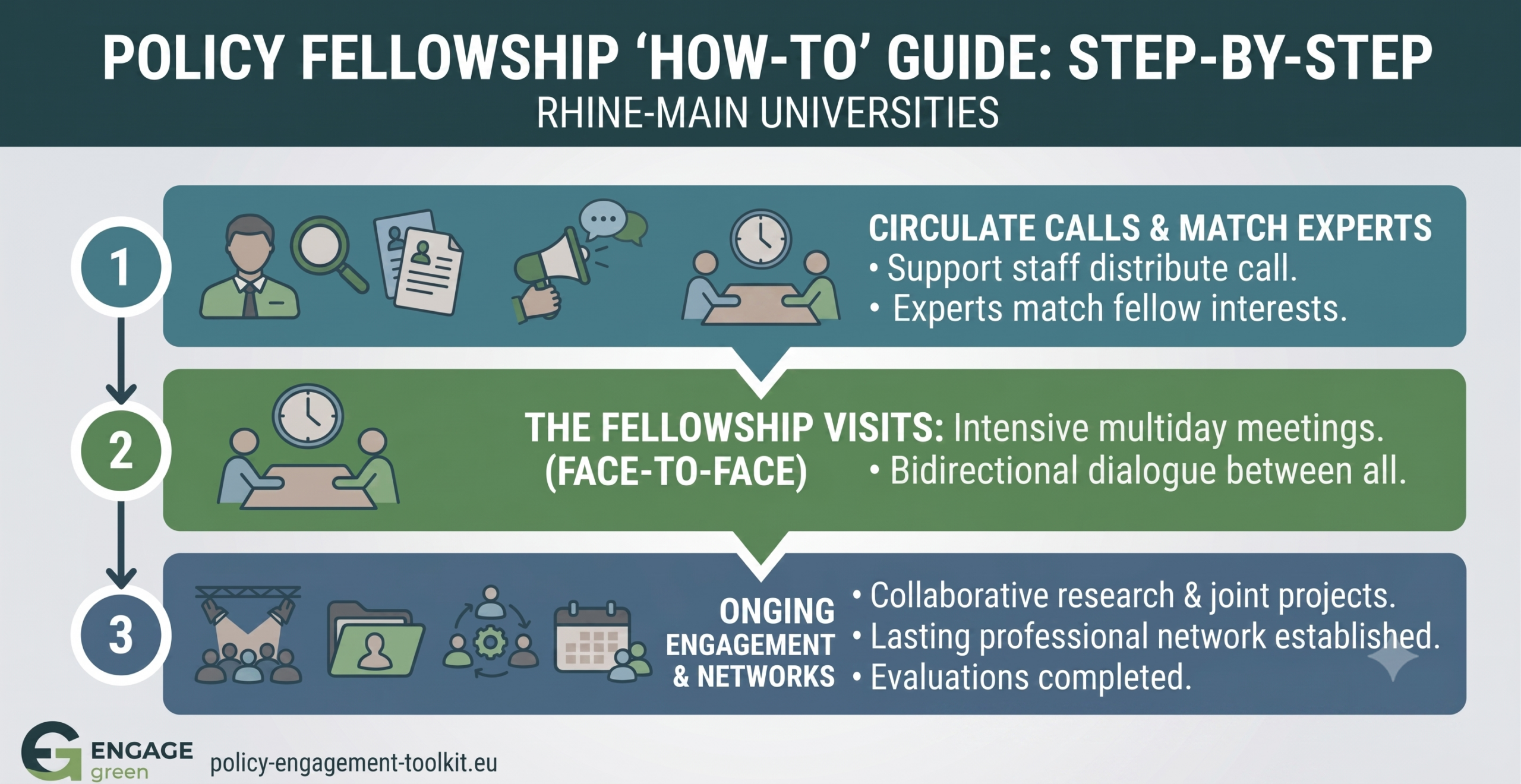
These programmes follow a very similar structure: The Rhine-Main Universities circulate calls for applications to hundreds of policymaking institutions, civil society organisations and media in Germany and abroad.

When applying to our programmes, policymaking professionals must elaborate on their need for academic expertise in motivation letters. Also, they have to provide a list of questions they would like to discuss with our scientists. Once accepted into the programmes, each policymaking professional receives a comprehensive list of researchers with whom they can meet. The policymaking professionals provide feedback on the list. The policy engagement unit at Frankfurt University schedules the meetings between the scientists and the policymaking professionals.

Each fellowship cohort conducts joint visits to the Frankfurt/Rhine-Main area twice during their fellowship, and each policymaker has meetings with approximately eight researchers during each visit. If the policy fellow needs scientific expertise in the future, they will have a network of 16 researchers they have already met and whom they can approach. Likewise, the participating researchers can approach their counterparts in policymaking institutions if they want to disseminate their knowledge. Our evaluations show that the participating policymakers and scientists are very content with the programmes. Both appreciate the office’s time efficiency and organisational support for policy engagement.

These face-to-face meetings have resulted in numerous follow-up activities such as joint events, talks by researchers at the institutions of policy professionals, and joint research projects.

Our fellowship programme brings professionals and scientists together in hundreds of meetings they would otherwise never meet. Our evaluation surveys show that about half of the researchers had no or only occasional contact with policymakers before participating in our programmes. The same observation applies to the participating policymaking professionals.

Thus, our dialogue initiatives prove that there is excellent potential for programmes bringing policymaking professionals and researchers together.


Challenges (and how to address them)

A very practical challenge is scheduling meetings with our scientists, who are often not at the universities daily. Thus, we must start planning the meetings three months in advance.

Another challenge is for the scientists to understand that the policy fellows are diverse. Some policy fellows have extensive knowledge of the topics they would like to discuss; they ask questions, such as “How does the use of smartphones affect the reading skills of children in primary schools?” Others are interested in rather big “big questions” in their policy fields (e.g., “How stable are financial markets?”), while some policy fellows use the time to gain an overview of unfamiliar topics (e.g. “What are algorithms?”).

Likewise, policymakers might talk with scientists who understand policymaking well while others speak to policymakers for the first time. We have prepared FAQ lists for policymakers and scientists and informed policymakers about the programme through bilateral phone calls or Zoom calls and an induction event.


Tasks and resources

Scientists

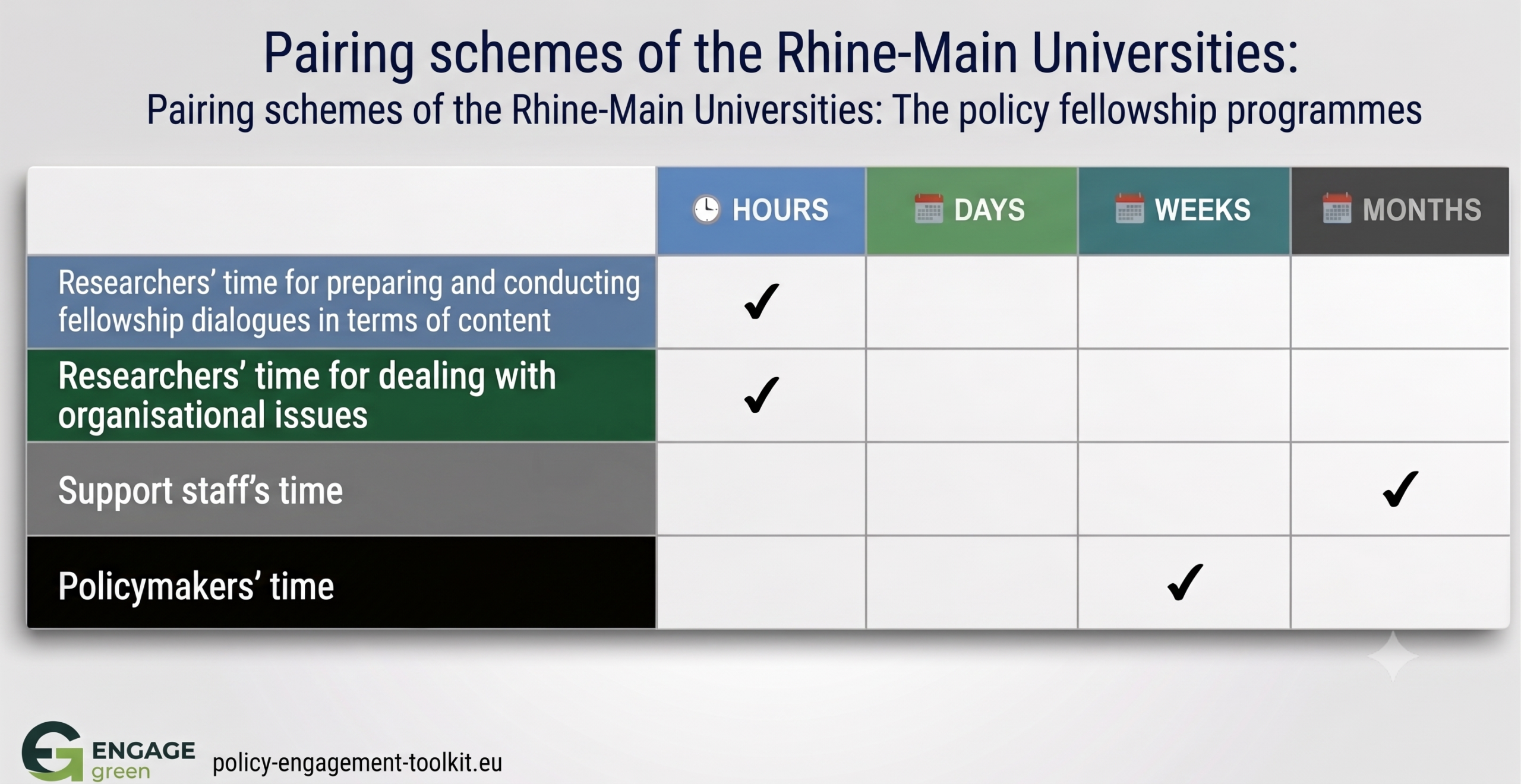
The programmes are very time-efficient for scientists. Since the meetings are informal, they do not have to invest much time in preparing them other than reading the topics of interest of the policy fellows.

Knowledge exchange managers and research managers (Support staff)

The Rhine-Main-Universities created two new positions to coordinate their policy-dialogue projects. Our tasks include managing the application process, identifying possible experts for policymakers, assisting policymakers and scientists with organisational issues, scheduling 350 meetings per year, and other tasks. The programme is very resource intensive regarding support staff because we tailor some 16 meetings to the needs of the policy fellow.

Policymakers

The policymakers must submit an application, which takes them a couple of hours to prepare. We recommend that they spare 30 minutes of preparation time for each of the 16 scheduled meetings with our scientists. They have to conduct the meetings with our scientists. We also ask our policy fellows to participate in preparatory sessions, a feedback call, and two rounds of evaluations.

Required funding

We spend about 80% of our budget on financing two full-time positions. We have a modest budget for joint events, public relations, and travel. Stiftung Mercator provides about 60 per cent of our funds, while the EU and the three Rhine-Main-Universities contribute 20 per cent each.

Our policy fellows must cover the costs of travel to the Frankfurt/Rhine-Main area, accommodation, and dinners. We do not charge the policy fellows; other institutions, like the Centre for Science and Policy at Cambridge University or ETH Zürich, do so for their policy dialogue projects.


Sources and further reading

Tome Sandevski. How the Rine-Main Universities promote knowledge exchange between researchers and policymakers via face-to-face meetings. Knowledge of policy blog. 15 August 2023.  https://knowledge4policy.ec.europa.eu/blog/how-rhine-main-universities-promote-knowledge-exchange-between-researchers-policymakers-face-0_en


Do you want to know more about the policy engagement toolkit?

Do you want to share your experience in policy engagement? Do you think about contributing to the policy engagement toolkit? Feel free to contact Tome Sandevski via science-policy@pvw.uni-frankfurt.de

Bilingual Webinar: “Agri-food Policy: A Comparison between France and Italy”

Key Features in a nutshell

  • Bilingual webinars are the ideal format to virtually put face-to-face scientists and local/regional policymakers and break the language barrier.
  • The remote component and its short duration (1h an half maximum) allow flexibility in terms of time, which meets the needs of the often-busy schedules of policymakers.
  • Online formats such as webinars are more sustainable than in-person transnational meetings in terms of time, costs and inclusivity.
  • The Q&A and comments sections of the platforms allow the interaction with a broader public such as civil society.


How does the format work

Université Lumière Lyon 2 and Ca’ Foscari University of Venice have piloted the bilingual webinar format, within the framework of the Erasmus+ project ENGAGEgreen: Enhancing Institutional Capacities for Policy Engagement for Green and Digital Transitions.

This type of webinar format, with the addition of Remote Simultaneous Interpreting (RSI), allows local and regional policymakers, who might not be familiar or comfortable enough to carry out a discussion in a different language, to actively participate in the webinar.

In their inclusivity, bilingual webinars help foster stronger relationships among host institutions and policymakers, thus broadening the network, and engaging in the discussion also the civil society.


Participants (including organizers and speakers):

10 Researchers

1 Student

9 NGO/Civil society

7 University personnel (Research/Project managers)

4 Other (freelance, company, Coldiretti)


Before the webinar:

In preparation for the webinars, host institutions meet online bilaterally to decide on common topics, possible speakers and the target audience. Subsequently, host institutions and speakers agree on the agenda and time slots dedicated to each speaker, to be included in the online registration form and communication material to be shared on websites and social media.

It is advisable to share with the interpreter the presentations or other support materials.

The videoconference platform chosen for this webinar format is Zoom. It allows RSI, the creation and customization of a registration form and automated reminders to attendees (e.g. 1 week, 1 day and 1 hour before the event), as well as follow-up emails and surveys.

15 minutes prior the start of the webinar the Research manager (or other support staff) initiates a “Zoom practice session” together with speakers, moderator and interpreter. This is to confirm all technical aspects such as audio, selection of language, and sharing of presentations, are ready for a smooth presentation.


During the webinar:

During a 1-hour webinar, a lineup of 3 speakers (ideally 1 moderator, 1 researcher and 1 policymaker from the respective regions/nations) will shortly present their cases and related challenges, to be followed by a round of open discussion, and concluding with taking Q&A from the broader public.

With the support of RSI, which translates the conversation in real time, participants to the webinar are able to follow the discussion without breaks and without the possible misunderstandings of listening/speaking in a language that is not native.

Research managers (or other administrative staff) can support the back-end moderation of the webinar, such as select questions from the participants, and assist the speakers and translators in the event of technical issues.

The structure of the programme is as follows:

15 minutes before the start – practice session with speakers, moderator and interpreter

5 minutes of welcoming & project introduction

15 minutes for the presentation of Speaker 1

15 minutes for the presentation of Speaker 2

5-10 minutes of discussion among speakers

10 minutes for the Q&A

(It is advisable to keep the overall duration of the webinars under 2 hours).


After the webinar:

The webinar is followed by social media posts to communicate the outcomes of the discussion. An automated follow-up email is sent to all participants including a short evaluation questionnaire and the link to the ENGAGEgreen project’s website.

This format of webinars can also be replicated with other project partners or stakeholders or repeated annually as a form of follow-up and to take in the state-of-the-art of the topics discussed.


Challenges (and way to address them)

  • Identification of common topics of interests between the two national institutions. Mitigation measures: monitor common areas of study, investigate with other departments/units of the university about scientists/researchers to involve, contact the already existing network of policymakers.
  • Match schedules of the speakers. Mitigation measures: propose multiple dates and time slots well in advance from the final date of the webinar. Set preliminary and recurrent meetings, to confirm the agenda and keep everyone updated.
  • Possibility of increasing the number of languages and speakers, but this implies a longer duration and higher translation costs. Mitigation measures: investigate the possibility of using AI tools to generate subtitles or interpretation.
  • Production of promotion material in both languages and carry out parallel promotion both on- and offline. Mitigation measures: Create some draft posters/promo material in a common language (e.g. English) and have each partner translate in the respective native language. Moreover, each should disseminate the promo material with the respective networks/dedicated mailing lists.


Tasks and Ressources


Project team

The personnel from the department/unit directly involved in a specific project liaise with other structures of the university/institution to identify the most suitable speakers on the chosen topic, both from academia and among policymakers and other organizations and stakeholders.


Knowledge exchange managers and research managers

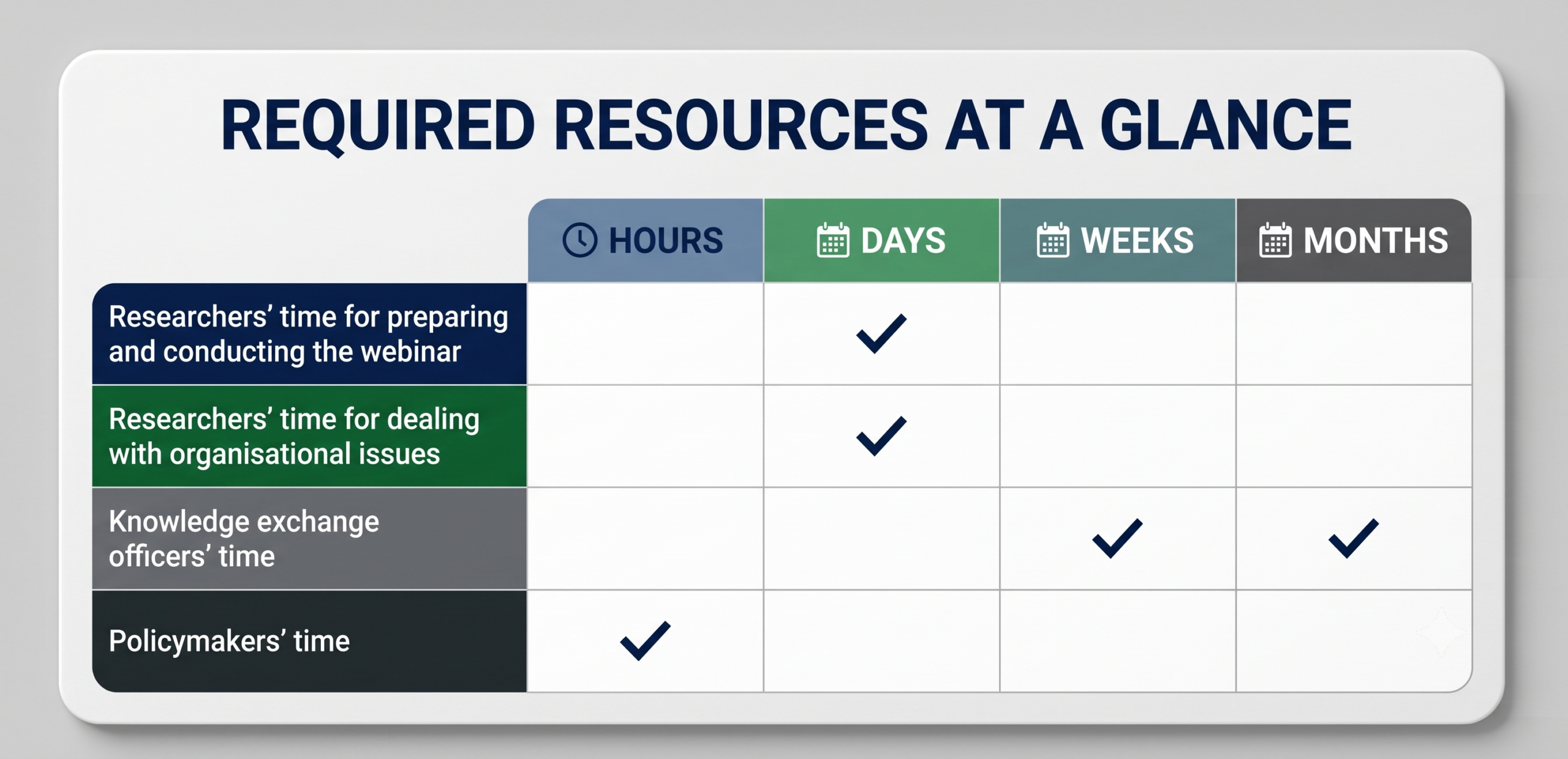
Knowledge exchange managers and research managers play a key role in all phases of the organisation of webinars, from bilateral preliminary meetings to post-webinar debriefing. They can help identify possible topics for the webinars and coordinate the drafting of the programme. Moreover, they can assist in organising the webinar, like identifying the most suitable platform and setup the webinar, contact interpreters, or moderate the session. In addition to that, they can liaise with communication offices to give support in the preparation of press releases and social media posts before or after the webinars.


Speakers: Scientists/Researchers and Stakeholders

Researchers: The researchers need a clear understanding of the context in which they are speaking. Their contribution should balance scientific rigor with relevance for policy development. They should deliver high-value scientific content – not something obvious to the audience – while ensuring it is accessible to non-scientists. They must also adhere to the fast-paced timing typical of online events.

Stakeholder/Organization: It is important to involve individuals who represent a specific sector (for example, an economic sector) and who can effectively engage with researchers. This requires a sufficiently strong knowledge base to understand and meaningfully discuss the scientific issues presented.

Moderator: Given the complexity of connecting research and policy, the moderator’s role is to keep the discussion aligned with the objectives of the webinar. The moderator should be able to guide speakers back to the intended goals if the conversation diverges.


Required funding for activities

If the hosting institution does not have a licensed version of Zoom, which allows the webinar format, upgrade costs may apply.

Given the bilingual nature of this format of webinars, Remote Simultaneous Interpreting costs are required. AI-generated translation has not yet been considered.


Examples

Ca’ Foscari University of Venice website
Université Lumière Lyon 2 website

Engaging with the Policy Alumni Community

Key Features in a Nutshell

The event Engaging Green Policy Decision Making, organized by the project team of ENGAGEgreen of Ca’ Foscari University of Venice, its Alumni Brussels Chapter, and hosted by Ca’ Veneto (seat of the Veneto Region in Brussels), hosted participants from the alumni community living and working in the political capitals of Europe who are likely to be involved in policymaking institutions or other similar entities.

Held concurrently with the ENGAGEgreen Dissemination and Stakeholders Conference, the informal networking event gathered participants from a preexisting pool of contacts (alumni). Already familiar with the university and the region (subnational Italian government authority), they were more likely to attend, providing a natural opportunity for them to reengage with each other and explore the project’s topics.

The program includes a dialogue between a moderator and a researcher involved in the project in which the former leads the discussion with questions on the chosen topic and welcomes questions from the audience.

How does this Format work?

Before the event

Preliminary meetings between the project team and the hosting institution are organized to present the initiative and share the rationale of the event and to confirm the date and time and the possible supporting staff available. Consequently, the organizers arrived at a consensus regarding the conception of an event that would encompass the formality of an academic event while also incorporating the informality of a shared reflective moment. Given the busy schedule during a working day, it was organized outside working hours and at its conclusion a light cocktail was offered by the host institution.

One or more meetings with Alumni representatives are needed to align on topics, speaker(s), and promotion of the event.

Finally, the communication activity: a LinkedIn event post by Ca’ Foscari Alumni Brussels Chapter and promotion by the speakers and organizers.

During the event

All organizers meet in advance to finalize the setting and schedule and to welcome the attendees. Being an informal event, no registrations are required.

After the event

The organizing university sends a message of thanks for the co-hosts, and another for the participants, inviting them to follow the project’s updates on social media, and asking to complete a short questionnaire providing feedback on different aspects of the event.


Challenges (and way to address them)
  • Uncertainty about the number of attendees and spaces required; mitigation measures: set up a registration form with a deadline, so that the number of possible participants can be known at least a day in advance
  • Alumni present in the region; mitigation measures: scout beforehand regarding the presence of an alumni community; if not present, involve alumni from other partner universities present in the region or change the target audience depending on the co-organizers network there


Tasks and Resources

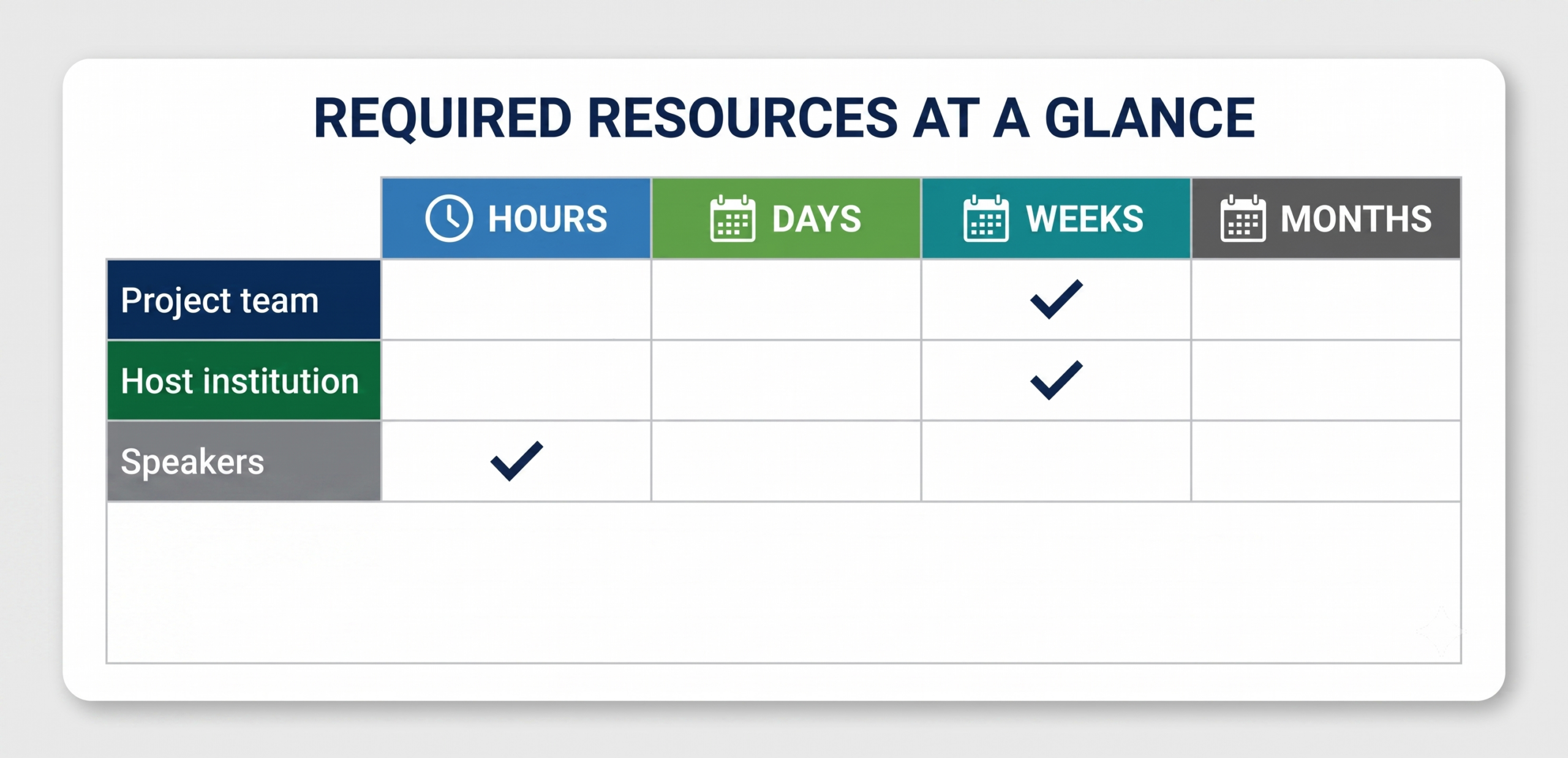
Project team and host institution

The personnel from the university directly involved in the project liaise with the host institution to identify the most suitable speaker or moderator on the chosen topic, both from academia and among policymakers and other stakeholders. They organize regular online meetings to coordinate on registration, support staff, and possible infrastructures/services needed (e.g., screen, microphone, promotional material to be printed).

Speakers

Moderator: Meets online with organizers and the main speaker to confirm the schedule and agree on topics and questions. In this case, the moderator is also part of the alumni community, a vital link to the target audience.

Professor: Meets online with organizers and the main speaker to define the topics, based on their expertise, and the attendees. Decide on the topic and try to identify the main issues that may concern the invited guests.


Do you want to know more about the policy engagement toolkit?

Do you want to share your experience in policy engagement? Do you think about contributing to the policy engagement toolkit? Feel free to contact Tome Sandevski via science-policy@pvw.uni-frankfurt.de

Shadowing Sessions

Definition

A shadowing session is a structured observational activity where a visitor follows a professional in their regular work environment to gain insight into their responsibilities, workflows, tools, and institutional context. The primary objective is mutual learning and knowledge transfer between academia and practice, without the formal constraints of internships or evaluations.


Description

Experiential observation for mutual understanding and content innovation


Objectives

– Foster long-term collaboration between universities and public-sector stakeholders.
– Align university curricula with the actual needs of the public sector.
– Enhance the employability of graduates by providing realistic insights into public administration roles.
– Facilitate mutual knowledge exchange through observation and informal consultation.
– Support public innovation by incorporating up-to-date academic knowledge into policy-making and administrative practices.


How Does the Format Work?

Shadowing sessions are structured visits where academics observe public administration experts—such as data analysts, planners, or specialized officers—in their day-to-day work. The primary purpose is not evaluation, but rather mutual learning. Academics gain firsthand knowledge of professional tasks, tools, workflows, and expectations. This knowledge can then inform curriculum development or shape applied research and project collaboration. The concept of shadowing sessions can also be viewed oppositely, where representatives from public administration visit practice-based academics or researchers in their labs. Although senior policy-makers may not have the capacity to be shadowed due to their schedules, mid-level professionals or practical-oriented officers are ideal participants. These individuals can demonstrate daily tasks such as spatial analysis, permit workflows, data management, or participatory processes. In some cases, group shadowing is used: one public officer performs their tasks while multiple academics observe, followed by a structured discussion.

For academics, shadowing provides:
– Insight into real-life workflows, administrative constraints, and data usage in public institutions
– Access to specialized tools, data systems, or archives that would otherwise remain closed.
– Inspiration for research questions with real-world relevance.

For public-sector experts, shadowing offers:
– A channel to communicate current challenges, outdated processes, or staffing needs.
– Opportunities to influence the competencies of future graduates.
– Feedback on how university teaching and research can support innovation and modernization.


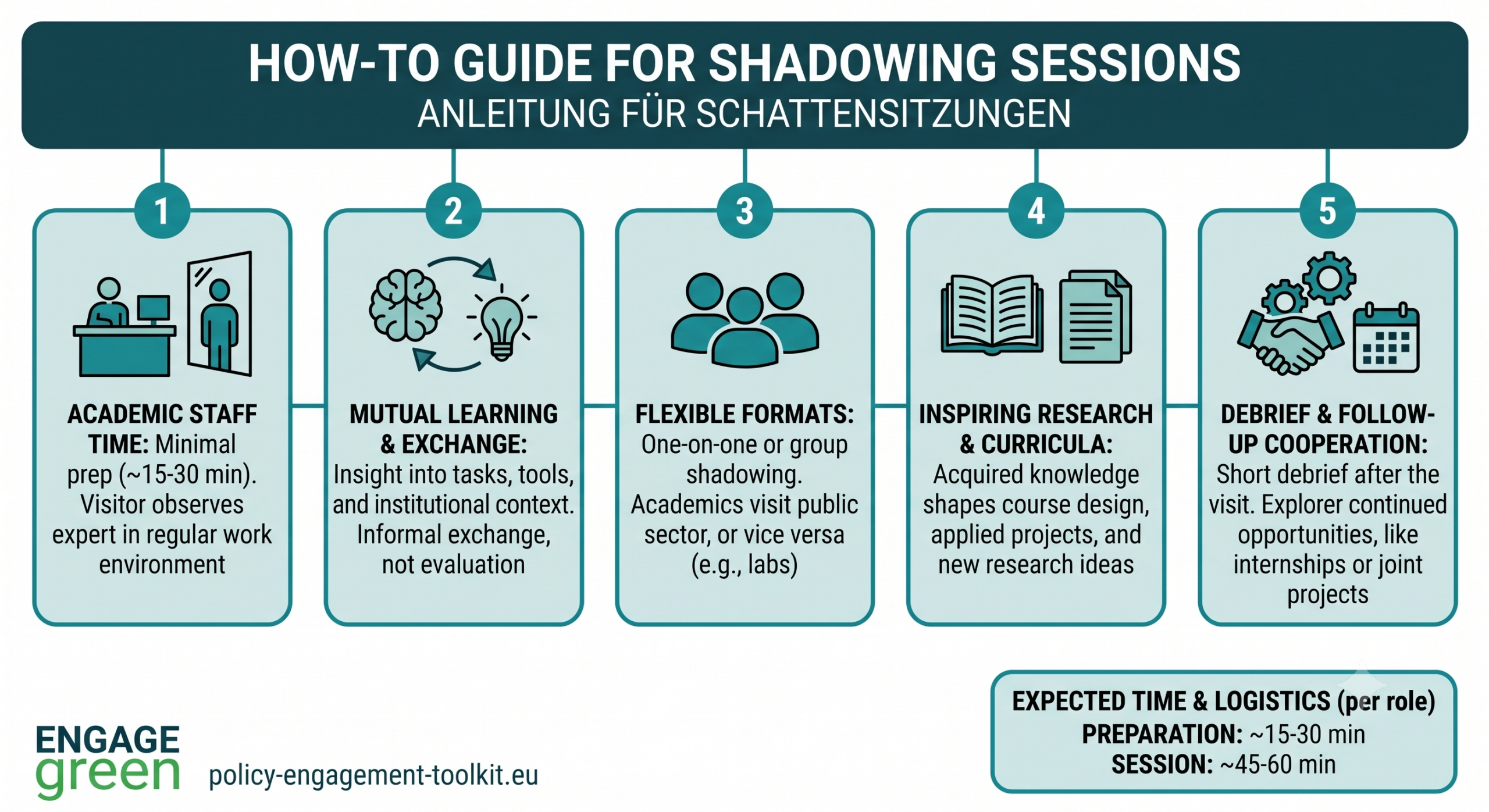
Duration and Logistics

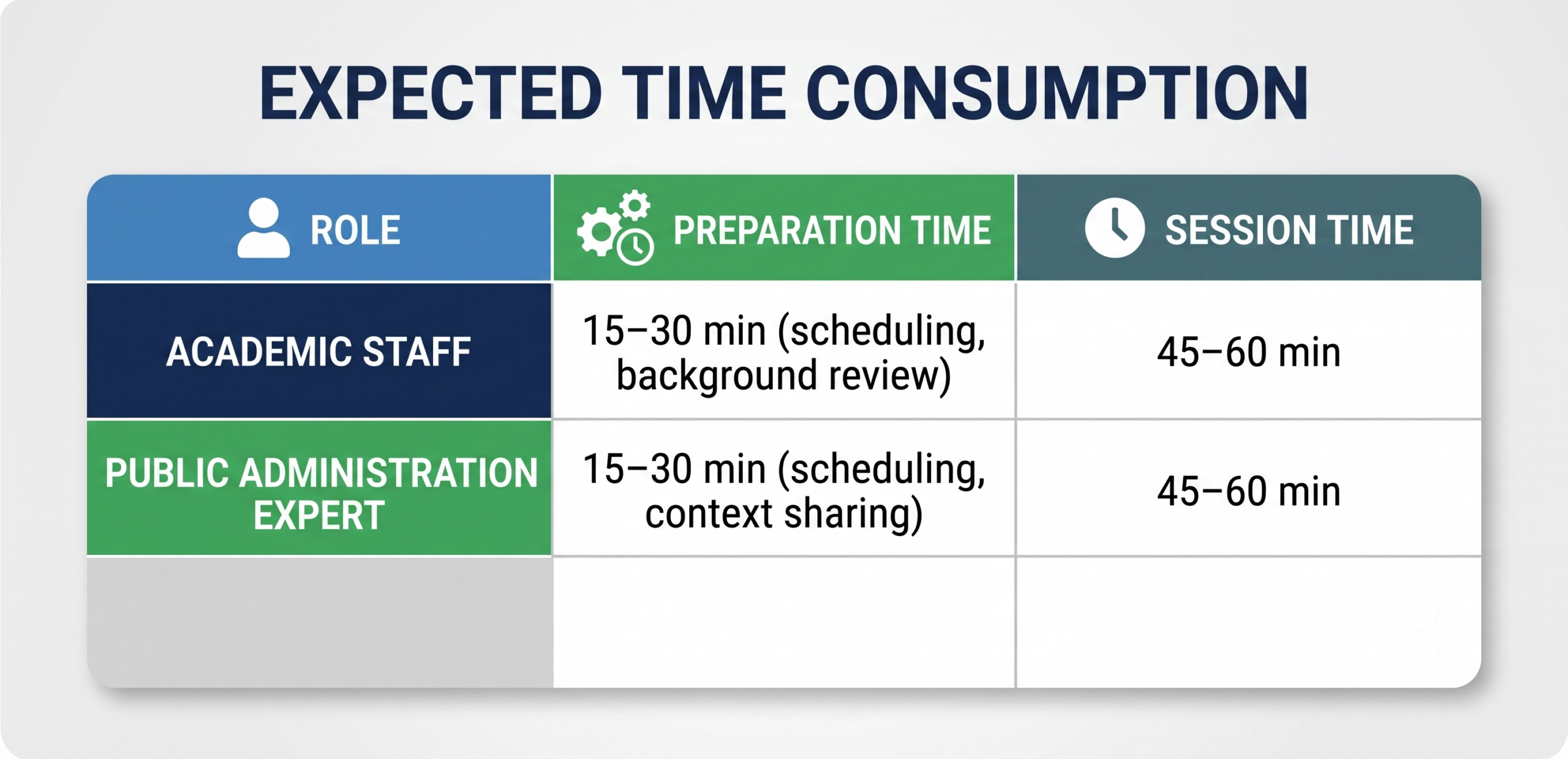
– Typical length: 45–60 minutes
– Format: In-person visit (one-on-one or one-to-many)
– Preparation required: Minimal—informal discussions among experts in similar fields suffice
– Recommended follow-up: Short debrief and opportunities for continued cooperation (e.g., internships, joint projects)


Challenges and Opportunities

While shadowing sessions offer great benefits, they are time-intensive to schedule and organize. Finding mutually convenient times for all participants can be difficult. However, the low-cost and high-impact nature of these interactions makes them worthwhile. Regular shadowing sessions can also serve as a feedback loop—enabling public institutions to revise recruitment criteria and universities to keep curricula aligned with evolving needs.


Benefits for Both Sectors

Academics benefit from:
– A better understanding of how processes are applied in local governance.
– Inspiration for course design, applied student projects, and research ideas.
– Access to real data, software, and institutional know-how.

Public-sector institutions benefit from:
– Influencing academic training to meet real labor market demands.
– Finding new ways to modernize workflows using up-to-date academic methods.
– Building relationships that support recruitment, internships, and project cooperation.

Do you want to know more about the policy engagement toolkit?

Do you want to share your experience in policy engagement? Do you think about contributing to the policy engagement toolkit? Feel free to contact Tome Sandevski via science-policy@pvw.uni-frankfurt.de

A Win-Win Partnership: Collaborative Diploma Theses

Description

This text explores the significance of collaborative efforts between academic institutions and state agencies in the context of diploma theses (bachelor, master, and doctoral) solved by students. By fostering partnerships between students, faculty, and policymakers, we can enhance the relevance and impact of academic research, better inform public policy, and cultivate a new generation of scholars equipped to address real-world challenges.

Such collaborations offer a unique opportunity to bridge the gap between theory and practice, ensuring that academic research is directly relevant to the needs of society. By working together, students, faculty, and policymakers can identify pressing issues, gather the necessary data, and develop evidence-based solutions that can be implemented at the local, regional, or national level.


The key features in a nutshell

Objectives-Academic theses solved in cooperation with the public sector seeks:

  • To bridge the gap between theory and practice: By aligning academic research with the needs of the public sector, we can ensure that research findings are directly applicable to real-world problems.
  • To enhance the quality and relevance of diploma theses: By providing students with access to real-world data, expertise, and mentorship from policymakers, we can help them produce more impactful and relevant research.
  • To foster a culture of collaboration and knowledge exchange: By encouraging partnerships between academia and government, we can create a more interconnected and innovative research ecosystem. This can lead to the long-term and fruitful cooperation, beneficial for all partners.
  • To inform public policy with evidence-based research and analysis: By providing policymakers with access to high-quality research, we can help them make informed decisions that are based on evidence rather than intuition or ideology.


How does the format work?

Diploma theses undertaken within this collaborative framework are jointly supervised by a faculty member and a relevant government official or policymaker. This shared oversight ensures that the research aligns with both academic standards and the practical needs of the public sector. The research topic is collaboratively selected, considering the interests of all parties involved.

For the student, the topic must be clear, attractive, and interesting. For the faculty member, the topic must fall within their expertise and meet academic standards, including a sufficient level of scientific rigor. For the policymaker, the topic must be practical and implementable. A common issue to avoid is mismatched expectations, where the academic supervisor directs the work towards a highly academic direction, while the policymaker’s perspective is often too rigid (adhering strictly to legislation and established practices), thus limiting the space for innovation.

By working closely with policymakers, students gain invaluable insights into the complexities of the policymaking process. They learn how to communicate their research findings effectively to non-academic audiences and understand the challenges and constraints faced by policymakers. This hands-on experience equips students with the skills necessary to become future leaders in both academia and the public sector.

Key phases in addressing the thesis:

  • A precise discussion of the thesis title and content before commencing work.
  • An early in-person meeting of all parties involved to establish personal contact.
  • Presentation of each party’s vision for the thesis content.
  • Acquisition of necessary data and cooperation with public administration in its correct interpretation prior to thesis completion.
  • Regular meetings and updates on the progress of the work.
  • Presentation of the thesis findings to relevant public administration experts (in-depth knowledge of the subject matter often helps students identify inaccurate or incorrect interpretations of the results).
  • Presentation of the final results of the thesis not only to an academic audience but also to a broader group of public administration experts (mayor, councilors, director, representatives, etc.).
  • Submission (presentation) of the thesis to other relevant policymakers.

Benefits for Participants

  • Students:
    • Gain practical experience by working on real-world problems.
    • Develop transferable skills such as critical thinking, problem-solving, and communication.
    • Contribute to meaningful research that can inform public policy.
    • Network with policymakers and other professionals in the field.
    • Enhance their career prospects by demonstrating their ability to apply academic knowledge to real-world challenges.
  • Teachers:
    • Expand their research networks and collaborations.
    • Stay updated on current policy issues and trends.
    • Enhance the relevance of their teaching by incorporating real-world examples and case studies.
    • Contribute to the development of the next generation of policy analysts and researchers.
  • Public Sector (policymakers, officials, agencies):
    • Benefit from fresh perspectives and innovative ideas generated by students and faculty.
    • Gain access to high-quality research that can inform policy decisions.
    • Improve the efficiency and effectiveness of government operations.
    • Strengthen relationships with academic institutions and foster a culture of collaboration.

Collaboration with Policymakers

Policymakers play a crucial role in the collaborative process, providing guidance, feedback, and access to relevant data. They work closely with students and faculty throughout the research process, ensuring that the research is aligned with their needs and priorities.

By collaborating with policymakers, students and faculty can gain a deeper understanding of the policymaking process and the challenges faced by government agencies. This can help them tailor their research to be more relevant and impactful.


Challenges (and ways to address them)

While the benefits of collaboration are numerous, it is essential to acknowledge the challenges that may arise. For students, balancing coursework with research demands, obtaining necessary data, and effectively communicating complex research findings to policymakers can be daunting. However, these challenges can be mitigated through flexible deadlines, streamlined data sharing protocols, and training in policy communication.

Faculty members involved in collaborative projects may face increased workloads due to the additional responsibilities of supervising students and coordinating with policymakers. To address this, institutions can provide faculty with reduced teaching loads and dedicated research support.

For the public sector, participation in collaborative projects can be challenging due to limited resources and bureaucratic hurdles. However, by prioritizing collaboration and allocating dedicated resources, government agencies can reap the benefits of partnerships with academic institutions.

Additionally, topics with strict deadlines imposed by the public administration should be approached with caution. Students may face unforeseen challenges, such as studying abroad, extending their studies, or needing to take a leave of absence. Such circumstances could lead to substantial delays in completing the thesis, potentially resulting in academic penalties for the student and complications for the collaborating institution. Thus, flexibility in timelines is essential when choosing a thesis topic.


Tasks and Resources

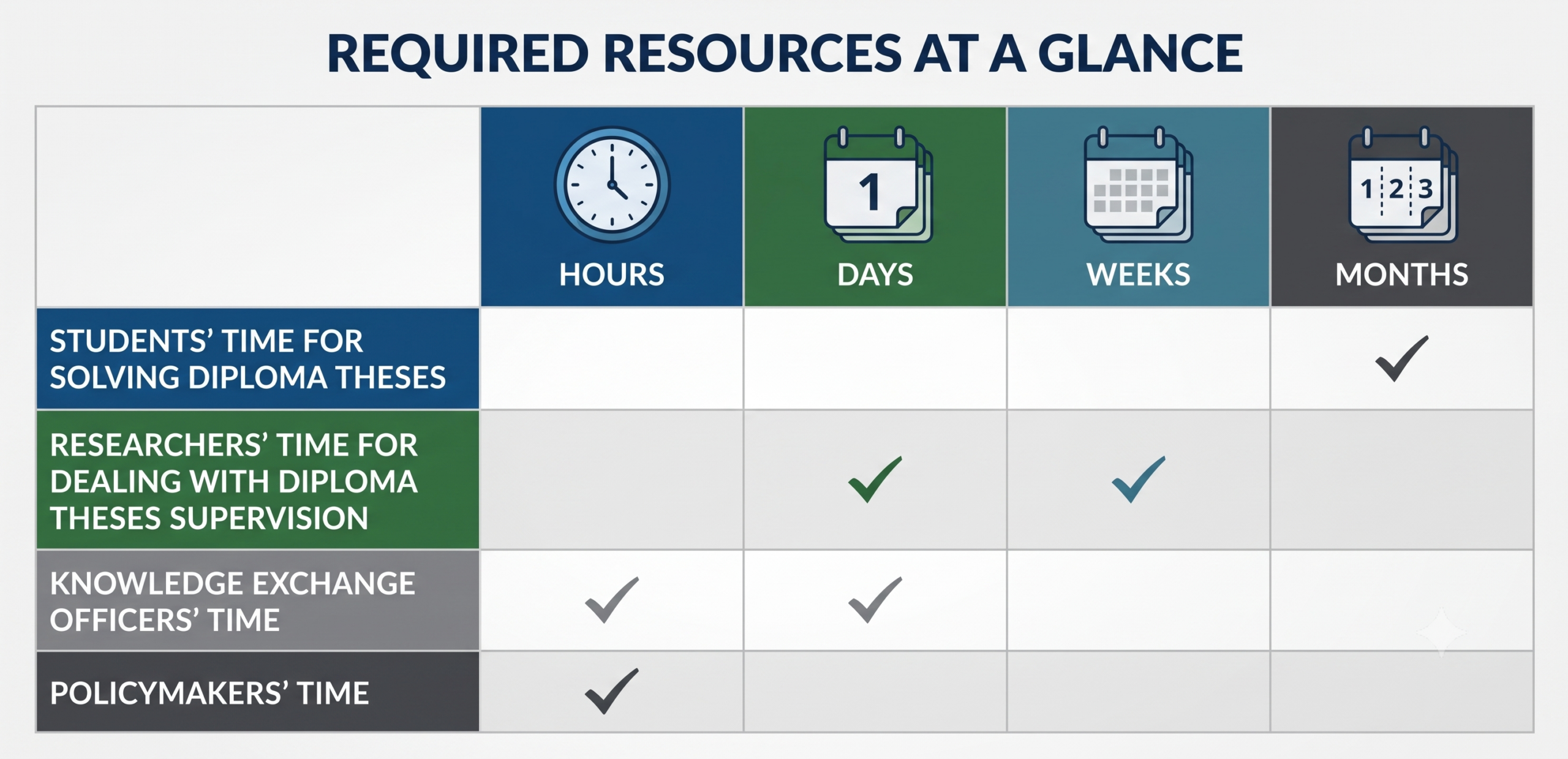
In a typical collaborative project, students are responsible for conducting literature reviews, collecting and analyzing data, writing the text, and presenting their findings to policymakers. Faculty members provide guidance and mentorship, connect students with policymakers, and facilitate knowledge exchange. Policymakers play a crucial role in identifying research priorities, providing data and resources, reviewing research findings, and implementing policy recommendations.

To ensure the success of these collaborations, adequate motivation is essential. All sides (student, faculty member, policymaker) must find acceptable intersection of their requirements, needs and wishes, and must be flexible and able to do some compromises.


Required Funding for Activities

Diploma theses is obligatory part of almost all study programs, so there is no direct need for direct financial resources. Nevertheless, if this option exists it is good to find some supporting resources like student stipends, research assistantships, and administrative support. By investing in collaborative projects, governments can enhance the quality of their decision-making and improve the lives of their citizens.


Example

At the Department of Geoinformatics, Palacky University Olomouc, more than 40 diploma theses have been successfully defended over the past 15 years. These theses were conducted in close cooperation with several state institutions, primarily the Olomouc Region and the Statutory City of Olomouc. The theses covered a wide range of topics focusing on spatial planning, regional planning, transportation, and the environment, with an emphasis on spatial data, spatial analysis, and geovisualization. The results of these theses have been widely utilized by experts from various departments and policymakers at managerial and political levels. Consequently, these findings have directly contributed to more accurate and evidence-based decision-making in public administration.

Many of these diploma theses have also led to the creation of scientific publications, professional articles, and cartographic outputs—both printed and web-based—that are regularly used by municipal staff for spatial and transport planning purposes. In several cases, students complemented their thesis work with professional internships at city or regional offices, gaining hands-on experience in public administration. Specific examples of topics include analyses of transport accessibility to public infrastructure, modern methods for visualizing the spatial plan of Olomouc, and the development of automated tools and ArcGIS extensions for processing large geospatial datasets.


Do you want to know more about the policy engagement toolkit?

Do you want to share your experience in policy engagement? Do you think about contributing to the policy engagement toolkit? Feel free to contact Tome Sandevski via science-policy@pvw.uni-frankfurt.de

Commissioned Research Reports

Key features in a nutshell

  • commissioned or contract research allows policymakers to receive the scientific expertise to assess policy issues
  • commissioned research reports can include evaluations, fact-finding, surveys, feasibility studies, or forecasting exercises; commissioned research reports vary in length and scope


How does the format work?

Commissioned research reports are an established format for policymakers to receive scientific expertise. For example, policymakers can commission research (or contract research) to

  • evaluate a law, funding programme, or other policy initiatives (e.g., questions like “Did the legal regulations reduce carb emissions in transport?” “Why did only a few companies apply for state subsidies to introduce energy-efficient technologies in their production facilities?”)
  • find facts and conduct surveys (e.g., “What are the effects of microplastics on fish populations in rivers?” “How satisfied are citizens with public transport?”)
  • conduct feasibility studies (e.g., “Is it technically possible and economically feasible to change the accounting software in government agencies?” “Which mines can nuclear waste be stored in?”)
  • carry out forecasting exercises (“How many elderly people will be living in care homes in 20 years?” “How will climate change affect food security?”)

Commissioned research projects vary in scope, duration, and budget. They can range from small-scale projects, which an individual scientist can complete in a week, to large-scale projects that require the participation of dozens of scientists over several years. They can also vary with respect to their scientific “publishability”: depending on the academic discipline and type of research, commissioned research reports can be standard scholarly publications scientists write. Or scientists may have to adjust to unfamiliar types of research regarding research questions, structure, and format.

All state bodies and political parties can commission research reports. A common way to do that is to publish a call for tenders, which outlines the aim and budget of the commissioned research. Depending on the type of research, scientists might compete with think tanks, consultancies, NGOs, law firms, and other businesses when submitting a bid proposal.

There are numerous models for agreements between scientists and policymakers. If the following issues for tenders have not been covered by the calls, scientists should address them before applying or signing a contract:

  • Will the commissioned research report be published? If so, will it be published immediately or after a retention period? Can you list the reports on your website?
  • Who owns the research findings and data? Can they be used for other research projects?
  • Who owns the copyright? Do you have permission or the authority to publish the commissioned research reports or sections of the reports in scientific publications?
  • How detailed and strict are the terms of the agreement? Can you alter them during the project? For example, are you allowed to adjust the research question or methodology? Can you add additional questions to a survey?
  • What happens if you cannot make the deadline?
  • Do your clients in the policymaking institution expect you to present interim results/reports, or are they happy to receive the final research report eight months later?
  • Who is going to read the commissioned research report?
  • Do you have to provide policy recommendations?
  • What items does the budget cover? Is there also a budget for travel, workshops, and other events?


Address these questions before starting the research project! Commissioned research is a significant source of income for many scientific institutions. But many scientists refrain from conducting commissioned research if they know that the research report will not count as a scholarly publication. This issue might be resolved if the research is conducted with two research outputs in mind: the commissioned research report and an academic journal (e.g., a peer-reviewed article). Discuss these issues with your client before starting the research project.

Suppose you conduct commissioned research for the first time and are unsure about structure, writing style, layout, and visualisations. If publicly available, check published commissioned research reports. Ask the clients if they can recommend reports regarding structure, writing style, and layout.

Also, keep your audience in mind: Did a unit in a government body commission a research report on a technical issue, which will most likely only be read by a few experts in the respective unit? Or did a committee in parliament commission an extensive study on a contested policy issue, which will be debated in a plenary session and result in media coverage? For example, suppose you are a chemist, and you are going to write a research report for some policy officers with a background in chemistry or a related subject. In that case, you will not have to explain every technical term and invest much time in a non-technical summary. But you should certainly do so if your report will be read by members of parliament or other policymakers who do not have a background in your discipline.

Please remember that commissioned research reports can provide the opportunity to connect with policymakers and is not limited to submitting reports. Even if your clients do not require the submission of interim results/reports, offer personal or virtual meetings to discuss their progress.

Also, if your resources allow, offer to organise a policy workshop or other policy event to discuss the results of the final research report. If your clients agree, think about inviting policymakers from other units or organisations who might be interested in the results. Senior policymakers are more likely to participate in a short event than to read a 200-page report. (CHECK our chapter on policy events.)


Tasks and resources

Scientists

In addition to preparing a funding bid, scientists have to conduct the research and prepare the research report. Depending on the contract, they might also have to prepare interim reports or present their research results at a policymaking institution. Scientists must invest weeks or months in the commissioned research project, which could take time away from their regular work.

Knowledge exchange managers and research managers (Support Stuff)

Support staff can regularly check newsletters, tender portals, and similar websites and inform the scientists at their institutions about relevant tenders.

They can share good examples with scientists and help with the structure or writing style for scientists unfamiliar with contract research.

Policymakers

Policymakers must provide information on the aims, scope, and budget. A list of Frequently Asked Questions and guidelines is very helpful for scientists.


Sources and further reading

European Commission. No date., Funding, Tenders, accessed on 28 August 2024.

Institute for Government. 2024. Using and commissioning research in government, accessed on 23 August 2024.

Hodges, Dan; Rahman, Syahirah Abdul. 2022. Commissioned research, in Tim Vorley et al. (ed.), How to engage policymakers with your research, Edwar Elgar Publishing, pp. 175-183.


Do you want to know more about the policy engagement toolkit?

Do you want to share your experience in policy engagement? Do you think about contributing to the policy engagement toolkit? Feel free to contact Tome Sandevski via science-policy@pvw.uni-frankfurt.de

Other