Pairing Schemes for Groups of Policymakers and Scientists: The example of the SIMIL Programme in Catalonia

Authors:

Ada Domingo Ferrer, Víctor Carbajal Perelló & Enol Nieto Jiménez

Ada Domingo Ferrer holds a Bachelor’s degree in International Relations and Foreign Policy and a Masters in Geopolitics, Territory, and Security. Her main expertise is the analysis of geopolitical factors as a source of conflict in the Middle East and Eastern European regions. At the BETA Technological Centre, she is Governance Senior Technician for Sustainability projects. She is also the project manager of SMART4ENV, an initiative pursuing the excellence for Tübitak Marmara Research Center with respect to R&I capacities and scientific reputation in the field of smart environmental technologies for climate change challenges.


Dr Victor Carbajal Perelló holds a PhD in Applied Sciences, with a specialisation in Environmental Biogeochemistry. He is currently the coordinator of the Governance for Sustainability Unit at BETA Technological Centre. He is mainly involved in initiatives that contribute to increasing BETA TC ‘s impact in the RDI ecosystem, as well as in detecting and implementing new projects together with other stakeholders. In addition, he has participated in different research projects (Spain, Ireland, Portugal, and Ghana) on different topics; water quality, management and conservation of natural resources, governance, agri-food, and bioeconomy.

Enol Nieto Jiménez (enol.nieto@uvic.cat) is a project manager at the Beta Technological Centre of the University of Vic – Central University of Catalonia, where he also works on Governance for Sustainability. He is a jurist and political scientist (Universidad Autónoma of Madrid), an expert in eco-social transition, and holds a MSc in Latin American Studies from the Complutense University of Madrid.


Summary: Key features in a nutshell

  • Pairing schemes offer a valuable platform for policymakers and scientists to collaborate, fostering a deeper understanding of complex issues and driving evidence-based policymaking. This guide provides a step-by-step framework for organising such initiatives, drawing on the experiences of the SIMIL Programme from the BETA Technological Centre (UVIC-UCC).
  • The SIMIL Programme Pairing Scheme is a bridge between policymakers and scientists. It was born from the need to promote bidirectional dialogue within the science-policy interface to address the complexities of contemporary environmental challengesin a thorough way. This initiative aims to foster two-way understanding, empowering municipalities, especially the smallest ones and those in rural areas, with the knowledge and tools relevant to their specific context. Policymakers need technical knowledge to keep abreast of innovative solutions, and scientists need to be fully familiar with local realities. At this vital intersection between science and politics, collaboration is not only beneficial but essential. SIMIL facilitates collaborative development of solutions, overcoming traditional barriers, to pave the way for more informed and therefore more effective policymaking.
  • By fostering collaborative dialogue and knowledge exchange, this programme addresses complex environmental challenges with evidence-based solutions. Through a series of face-to-face sessions and online interactions, policymakers and scientists work together to identify key challenges, explore innovative solutions, and inform policy decisions under a thematic priority common to all participants. This approach leverages the expertise of both sectors to create more effective and sustainable policies that benefit communities and the environment. These sessions are designed to create a dynamic and productive environment where policymakers and scientists can learn from each other, build relationships, and develop innovative solutions to pressing environmental challenges.
  • The term “SIMIL” refers to replicating and comparing two things while highlighting their commonalities. The methodology aims to serve as a model – one that is replicable and adaptable to different contexts and formats of science-policy dialogue that may be created.

How does the format work?
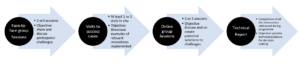
Figure 1: The SIMIL execution process

To initiate these group pairing schemes between scientists and policymakers, various approaches can be adopted (Fig. 1). The main aim is to share the different activities, phases, and methodologies that have been employed, providing a practical guide for research managers interested in implementing similar initiatives.

By documenting and presenting our strategies, this initiative seeks to offer a valuable resource that highlights effective practices and lessons learned. This guidance will support research managers in designing and facilitating their own collaborative efforts, fostering productive exchanges between the academic and political spheres to address complex public challenges.


Before starting the activities …

Prior to the commencement of the sessions, it is essential to conduct extensive outreach for the programme, engaging key stakeholders who can assist in promoting the initiative. Identifying and leveraging these influential actors will help ensure that the programme reaches its intended audience effectively.

A significant number of participants is crucial, given that the length of such programmes often poses challenges for consistent attendance, particularly among those from the political and administrative sectors. By maximising early participation, the programme can better accommodate potential drop-offs over time while maintaining robust engagement throughout its duration.

It is important to present the programme’s content and main focus areas in clear and accessible language to the policymakers, avoiding overly technical or scientific terms. This approach ensures that the objectives and scope are easily understood by all participants, regardless of their background.

Additionally, providing a detailed schedule with reserved dates for the various planned activities is essential. This helps participants organise their availability and fosters a sense of commitment to the programme’s timeline and goals.


Use registration as an opportunity to gather information necessary for the design of the sessions

A useful idea could be to launch a registration form for participants, including a section that provides preliminary information which can inform the initial sessions. By gathering an overview of the challenges faced by participating policymakers, the programme can be more effectively tailored to address these issues while remaining flexible enough to explore additional topics as they emerge.

This approach allows for the design of a programme that is responsive to the participants’ priorities, providing a foundational roadmap for the first activities. Although the challenges identified in this stage will not be definitive, they will serve as a starting point to guide discussions and foster productive engagement from the outset.


There are different formats for conducting the Pairing Schemes for groups of policymakers and scientists.

Face-to-face sessions

In-person activities will serve as the backbone of the programme, fostering personal connections among participants that will strengthen networks between administrations as well as between policymakers and researchers. These interactions are key to building lasting relationships and facilitating ongoing collaboration.

Types of exercises and activities to be carried out in the in-person sessions:

  1. Individual reflection (5 minutes): Participants reflect on their concerns, issues, and key aspects of the policy challenge they want to address and record their thoughts on a blank sheet of paper. They are free to refer to the support document containing information on the specific challenges in case of blockage.
  2. Group discussion (15 minutes): Participants in each group elect a spokesperson to record the collective ideas. They discuss the questions raised and contribute their thoughts to the DIN A-3 sheet (Fig 2).
A positive experience lived in his municipality

The Door-to-Door collection system has increased the percentage of the RS of all fractions.

A concern/need to express

How can I involve or convince part of the population to develop the Door-to-Door system correctly.

A negative experience

There are 2 neighbourhoods of the municipality where the collection through the Door-to-Door system does not work properly due to the inappropriate behaviour of part of the population.

A proposal for improvement or other comments or observations

– Initiative to give away compostable bins and bags from the town hall.

– Establish bonuses/sanctions.


Figure 2: SIMIL real example of group discussion outputs.

  1. Presentation of group findings (5 minutes per group): Each group will present the items proposed and recorded in the worksheets (Fig 3) in a plenary session. Then, the groups of participants will contrast, confront, and complement the ideas raised. During the reading of the recorded items, each group will see its file projected in order to facilitate the understanding of the ideas and so that the participants from other groups who have not dealt with a certain challenge have the possibility to refute, complement, or comment on any aspect of it.


*Note: check that the tempos for each challenge are respected (flexibility according to the interest of the challenge).

  1. Open discussion (30 minutes): Participants from all groups can discuss, challenge, and complement the ideas presented. With this group session, consensual, and significant results will be generated which will be recorded internally to prepare a document of conclusions that will be delivered to the participants (Fig 4).


Online sessions

At the start of each session, it will be helpful to synthesise the results from the diagnosis phase to reconnect ideas and outcomes from previous discussions on the various challenges. This helps ensure that participants are aligned and focused. Based on these challenges, it’s important to establish strategic lines that guide collaboration.

Encouraging dialogue and co-creation enables identification of key technical resources and solutions necessary for addressing the challenges, which in turn informs future decision making. To streamline communication, consider organising participants into virtual rooms while ensuring a balanced representation of stakeholders, such as politicians, technicians, researchers, and experts.

Throughout the session, it’s beneficial for facilitators to actively support the participants, encouraging them to propose concrete solutions and documenting their contributions. Finally, bringing the groups together at the end allows for actions, resources, and other crucial elements that complement the strategic plans to be shared.


On-site visits

Explore case studies showcasing successful examples of the implementation of innovations and solutions proposed by academia to advance the scientific field. Emphasis will be placed on selecting examples that are relatable and applicable to the scale of the participating administrations, ensuring feasibility and fostering enthusiasm for adopting these changes.

These case studies should demonstrate practical and impactful outcomes, highlighting how academic contributions can address real-world challenges effectively. The focus on approachable and scalable models aims to inspire decision makers to view these solutions as tangible pathways for improvement in their own contexts.


Challenges

To thoroughly explore the challenges that public policies face regarding a specific topic, it is crucial to that to all participating public administrations be heard. This process may span one or more sessions, during which various problems – and often potential solutions –will emerge. A key step is to adopt the role of facilitators or mediators, ensuring that political representatives can freely articulate their issues. This will foster connections among political representatives and help researchers gain a deeper understanding of the political realities underpinning these challenges.

During these sessions, collaborative dynamics can enhance engagement and clarity. Tools such as mapping exercises can visually represent the identified challenges, making them easier to analyse. Group dialogue activities, sharing sessions, and collective problem-mapping discussions can further enrich the process. These methods aim to build a shared understanding of the issues while creating a foundation for collaboration between political representatives and academic researchers.

Tasks and resources

The goal is to share academic resources and knowledge in an accessible format tailored for public representatives, enabling them to gain deeper insights into the specific challenges faced by their administrations. Rather than offering predefined solutions to their issues, the aim is to provide tools and frameworks that empower them to address a broad range of problems effectively.

This approach encourages administrations to adapt the shared knowledge to their unique contexts, fostering a sense of ownership and flexibility in problem solving. By bridging the gap between academic expertise and public administration needs, the initiative seeks to equip decision makers with the capacity to devise informed and context-sensitive strategies.

Final report

This 74-page final report is becoming a valuable tool that represents the culmination of the joint process of dialogue and co-creation between representatives of the local administration and scientists during the first edition of the SIMIL Programme. It reflects the identified challenges, proposed innovative solutions, strategic actions, available technical resources, and possible economic considerations. This guide becomes a valuable tool to facilitate decision making and guide future initiatives in the municipal management of organic waste, thus consolidating the successes achieved during this first edition of the SIMIL Programme.


Key Recommendations

In conclusion, we provide a list of key considerations for those planning to implement a programme of this nature. These points serve as essential guidelines to ensure its success and effectiveness:

  • Limit the scope: Focus on a manageable number of topics or challenges to ensure in-depth discussions; In our case, the focus was solely on a general topic, from which more limited categories were subsequently derived
  • Balance expertise: Ensure a diverse mix of policymakers and scientists with complementary skills
  • Utilize technology: Leverage online platforms for virtual meetings and knowledge sharing
  • Promote collaboration: Encourage participants to form lasting relationships beyond the pairing scheme
  • Continuously evaluate: Regularly assess the effectiveness of the programme and make necessary adjustments
  • Define your objectives
    • Clearly outline the goals of your pairing scheme; consider
    • Knowledge exchange: Facilitating the transfer of scientific knowledge to policymakers
    • Problem solving: Addressing specific challenges related to as specific policy areas
    • Policy development: Informing the creation of evidence-based policies
    • Network building: Fostering connections between policymakers and scientists
  • Identify Participants
    • Target policymakers: Municipal, supra-municipal, regional, or even national government authorities
    • Select scientists: Researchers with expertise relevant to your chosen policy areas
    • Consider diversity: Ensure a mix of backgrounds, perspectives, and experiences
    • Develop a roadmap
    • Create a detailed plan outlining the activities, timelines, and deliverables of your pairing scheme. include:
    • Participant recruitment: Processes for attracting and selecting participants
    • Topic selection: Identify key policy areas or challenges to focus on
    • Meeting formats: Determine the structure and frequency of interactions (e.g., workshops, site visits, online discussions)
    • Evaluation: Plan mechanisms to assess the effectiveness of the scheme
  • Design work sessions
    • Facilitate engagement: Employ interactive methods like group discussions, case studies, and roleplaying
    • Provide support materials: Distribute relevant research papers, policy briefs, and other resources
    • Encourage dialogue: Create a safe and inclusive space for open communication and debate
  • Organise site visits
    • Select relevant locations: Visit successful waste management projects, research facilities, or policymaking institutions
    • Facilitate learning: Guide participants through the site, asking questions and encouraging discussion
    • Promote networking: Foster connections among participants during the visit
  • Collect feedback
    • Use surveys or interviews: Gather feedback from participants on the effectiveness of the pairing scheme
    • Analyse results: Identify areas for improvement and adjust future iterations
  • Disseminate outcomes
    • Publish reports: Share findings and recommendations with policymakers, researchers, and the public
    • Organise events: Host workshops or conferences to discuss the results and promote collaboration


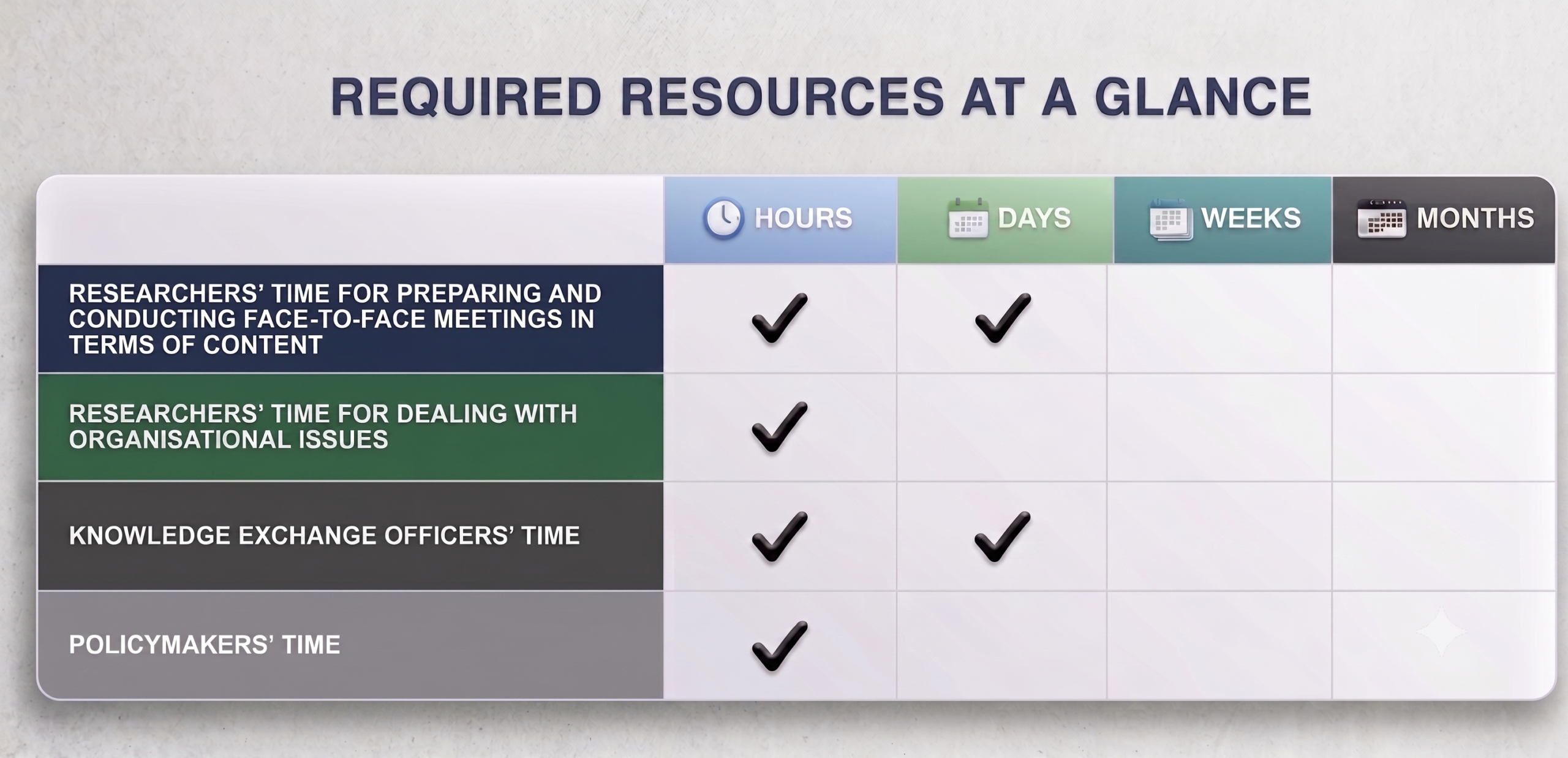
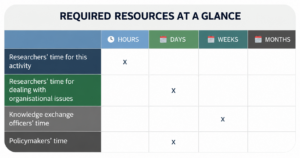
Required resources at a glance
Right Time, Right Format, Right Target Group: Designing Policy Events that Work for Policymakers

Key features in a nutshell

  • There’s no single ‘right’ length or format for a policy event. The right choice depends on your goal, your resources, your target group, and how well policymakers already know you
  • Senior decision makers and junior policy staff behave very differently as event guests; plan accordingly
  • Time of day matters as much as duration: breakfast, lunch, and evening events each come with different trade-offs for policymakers’ schedules
  • Beyond the clock, check the parliamentary calendar too; sitting weeks and recesses can make or break attendance
  • Virtual and in-person formats aren’t just a logistics choice; they change what kind of event actually works

How does the format work?

From informal one-hour meetings in small groups to large, multi-day conferences and policy events can take many shapes and formats. When planning policy events, researchers and research managers often ask fundamental questions:

  • Target audience: Whom should we invite – junior or mid-level policy professionals, or senior decision makers?
  • Duration & balance: How long should an event be? How do we balance the need to convey academic expertise thoroughly with the necessity of allowing time for networking while respecting the tight schedules of policymakers?
  • Format selection: Which event format works best for which target group?
  • Delivery mode: Should we organise virtual, hybrid, or in-person events?

To identify the right event structure, start by answering four guiding questions:

  1. Objectives: What do you want to achieve? (e.g., direct policy change, raising visibility, building trust, expanding networks, mutual learning, gaining research insights, or informing policymakers)?
  2. Resources: What time, budget, and administrative support are available?
  3. Familiarity: Do policymakers already know you, your institution, or your research project?
  4. Format Expertise: Are you familiar with interactive formats (e.g., World Cafés, breakout sessions, panel discussions)? Can you organise them on your own or do you need support (e.g., moderators)?

Who do you invite? Understanding policy target groups

Different groups within policymaking institutions have distinct motivations, knowledge levels, and availability. Effective event design requires tailoring the depth of discussion to the right audience:

  1. Members of Parliament, heads of institutions & senior policymakers

  • Working reality: Extremely packed schedules and high political visibility; they frequently have to leave events immediately after delivering their opening remarks
  • Motivations for attending: Access to high-level evidence, strategic networking, and public/social media visibility (e.g., demonstrating active engagement on a panel with scientists and industry and NGO leaders)
  • Typical roles: Delivering welcome addresses or keynotes, serving as high-profile panellists
  • Level of knowledge & scope: Broad thematic overview; they are the right contacts for discussing fundamental policy questions:
    • How can we accelerate the market adoption of energy-efficient technologies?
    • Should smartphones be banned in primary schools?
    • Should hard drugs be legalised?
  1. Staffers, parliamentary advisers, junior & mid-level policy professionals

  • Working reality: Demanding schedules, but far more likely to attend multi-hour workshops or roundtables than senior politicians
  • Motivations for attending: Gathering solid technical evidence, acquiring background information to brief their superiors, and building subject-matter networks
  • Typical roles: Panellists, presenters, active participants in breakout sessions, World Cafés, or technical workshops
  • Level of knowledge & scope: Specialist or deep technical expertise (civil servants) or strong generalist knowledge (parliamentary staffers); they are the right contacts for discussing technical and regulatory implementation details:
    • Which technical purity standards must existing pipelines meet to transport hydrogen safely?
    • How can water toxicity thresholds be standardised across municipal monitoring systems? 

Delivery ode: Virtual, in-person, or hybrid?

Selecting the right delivery mode directly impacts attendance and engagement depth:

  • Virtual events (45–120 minutes): Ideal for rapid briefings or busy policy professionals spread across different regions; they significantly lower the threshold for attendance and incur no costs for venue rental or catering but only offer limited opportunities for informal networking; virtual events lasting longer than two to three hours should generally be avoided because digital screen fatigue sets in quickly and participant engagement drops sharply
  • In-person events: Essential for building personal trust, exchanging implicit policy knowledge, and long-term networking; but they require higher costs and a greater time commitment from participants
  • Hybrid events: Offer broad reach but require substantial technical support and active moderation to prevent virtual attendees from feeling like passive observers


Matching event duration with objectives

Short events (60–90 Minutes)

  • Focus: Presenting concise new evidence, exchanging initial viewpoints, or pitching key findings
  • Typical formats: Short presentations, roundtables, or panel discussions followed by Q&A
  • Networking: Very limited informal networking during the session itself
  • Active roles: 1–5 active speakers/presenters
  • Catering costs: Minimal (coffee, water, light refreshments)
  • Organisational effort (FTE): Hours to days

Medium-length events (2–5 Hours)

  • Focus: Deepening thematic exchange and fostering connections between researchers and policymakers
  • Typical formats: A sequence of short presentations, thematic roundtables, interactive workshops, or panel discussions
  • Networking: Good opportunities during coffee breaks, joint lunches, or evening receptions, or small-group breakout sessions.
  • Active roles: 4–10 active speakers/presenters.
  • Catering costs: Moderate to high (coffee breaks and light meals, e.g., finger food or buffet lunch).
  • Organisational effort (FTE): Days to weeks

Full-day events (5+ Hours)

  • Focus: Comprehensive thematic exploration and establishing long-term networks
  • Typical formats: Several speeches and presentations, parallel breakout sessions, interactive World Cafés, or panel discussions
  • Networking: Excellent networking during structured breaks, communal meals, and evening receptions
  • Active roles: 10+ active speakers/presenters.
  • Catering costs: High (full catering including morning/afternoon coffee, lunch, and potentially a reception)
  • Organisational effort (FTE): Weeks to months

For what time of day should you organise the event?

  • Timing & duration: Depending on the country, breakfast events typically start between 7:00 and 9:00 and run for 60–90 minutes
  • Format & catering: Attendees enjoy a light breakfast while listening to concise presentations; high-quality moderation and strict timekeeping are essential
  • Pros & Cons:
  • Advantage: Particularly popular with Members of Parliament (MPs) whose core legislative schedule often begins later in the morning; high attendance rates because political emergencies rarely erupt early in the morning; participants start their working day with fresh insights
  • Disadvantage: Limited time for informal networking

Lunch events

  • Timing & duration: Depending on the country, they start between 11:00 and 13:00 and run for 90–120 minutes
  • Format & catering: Combines short inputs with structured discussion over a light lunch or standing buffet
  • Pros & cons:
    • Advantage: Provides a productive break in the workday with sufficient time for Q&A and networking;
    • Disadvantage: Interrupts the daily workflow; unforeseen political priorities or urgent meetings during the morning can lead to last-minute cancellations

Evening events

  • Timing & duration: Depending on the country, they start between 17:30 and 20:00 and run for 2–4 hours
  • Format & catering: Keynotes, presentations or panel discussions followed by an extended networking reception with food and drinks
  • Pros & cons:
    • Advantage: Offers the best atmosphere for building personal trust and long-term relationships
    • Disadvantage: Competing demands that piled up earlier in the day, simple tiredness, or family obligations can all keep policymakers from attending

Tasks and resources

Researchers

  • Clarify what they want to achieve with the event and communicate this early to the organising team
  • Prepare content appropriate to the chosen format, duration, and target group (e.g., a tight elevator-pitch style talk for a breakfast event with senior policymakers vs a fuller technical presentation for a full-day workshop with policy officers)
  • Be available for informal networking during breaks wherever the format allows for it

Research managers and knowledge mobilisers

  • Help match the event’s goal, target audience, and available resources to the right format and duration, using the framework above
  • Handle logistics: venue, catering, invitations, and – especially for short events – a realistic buffer for no-shows or late arrivals
  • Check the parliamentary calendar (sitting weeks, recesses, election periods) before fixing a date

Policymakers

  • Decide whether to attend and in what capacity (e.g., keynote speaker, panellist, or audience member)
  • Where their own schedule doesn’t allow attendance, suggest a staffer or colleague who could attend instead
  • Share relevant current priorities or policy questions in advance so that the event can be tailored to what’s actually useful to them
  • Indicate format preferences when invited – for example, whether a breakfast slot or a longer in-person session fits better into their schedule
  • Flag known scheduling conflicts early (e.g., sitting weeks, election periods, other competing commitments) to help organisers pick a workable date
  • Give brief feedback afterwards on whether the format, length, and timing actually worked well for them

Do you want to know more about the policy engagement toolkit?

Do you want to share your experience in policy engagement? Do you think about contributing to the policy engagement toolkit? Feel free to contact Tome Sandevski via science-policy@pvw.uni-frankfurt.de

Don’t Just Present – Connect! A Researcher’s Guide to Policy Events

Key features in a nutshell

  • Policy events offer three distinct dimensions for scientific impact, moving from formal presentation to individual relationship building:
  1. Formal engagement: Presenting expertise during panel discussions, lectures, presentations, or workshops.
  2. Informal networking: Building direct connections during coffee breaks, lunches, and receptions.
  3. Strategic follow-up: Converting brief encounters into sustained, collaborative policy dialogues post-event.
  • Scientists should not attend policy events just to deliver a speech or participate in a panel discussion; they should attend to have informal conversation and to secure two to three meaningful follow-up meetings.
  • Breaks, lunches, and receptions are as important at the sessions: Organizers of policy events should allow for networking opportunities and informal discussion during breaks.

How does the format work?

To maximize time and impact, researchers must view every policy event through three structural dimensions.

  1. The formal dimension (The platform)

This includes panel discussions, keynote presentations, and interactive workshops. Securing an active role as a speaker or panelist establishes institutional credibility and highlights relevant research. But this is merely the hook—not the intended result.

  1. The informal dimension (The connection)

Coffee breaks, lunch hours, and evening receptions are where real policy alignment happens. Informal settings encourage participants to speak more candidly about constraints, political timelines, and knowledge gaps than a public panel allows. Researchers should avoid the temptation to check emails, isolate themselves within academic circles, or leave early.

  1. The follow-up dimension (The impact)

High-value conversations should conclude with researchers securing permission to reach out again, transforming a brief chat into long-term policy contribution.

Visual blueprint: Why micro-networking beats macro-presentations

Researchers often underestimate verbal exchange compared to publications. At a natural pace, speakers deliver roughly 130–160 words per minute (approx. half a page of text). Consider how two different strategies compare:

Researcher A (The presenter): Delivers a 15-minute presentation plus 5 minutes in Q&A (20 minutes total speaking time = ~10 pages of text transmitted). During breaks, this researcher checks emails, networks only with known academic peers, and leaves early.

Researcher B (The networker): Holds no formal speaking role but actively engages policymakers during breaks and receptions for a combined 50 minutes of conversational speaking time (~25 pages of targeted text transmitted). This researcher secures three explicit agreements for future check-ins. Result: Three scheduled follow-up meetings to pitch evidence directly.


Tasks and resources

Researchers

How can researchers prepare for networking?

Step 1: Analyze & map the room (Pre-event)

  • Researchers should review the program and participant list in advance. They should identify the specific policymakers or other practitioners they would like to connect with
  • If the list is not public, researchers should ask the organizers about the expected audience profile

Step 2: Prepare policy-ready materials

  • Researchers should prepare a 60-second elevator pitch focusing strictly on the policy relevance of their expertise, avoiding pure academic debates or methodology
  • Researchers should bring physical copies of brief texts such as policy briefs, factsheets, or infographics.

Step 3: Execute strategic approach & icebreakers

  • Scientists should approach targets during breaks; they should respect boundaries (skipping those on active phone calls or those writing emails on their laptops) but confidently join standing groups at tables with a polite, “Mind if I join you?”
  • Open-ended icebreakers can include:
  • What session are you most looking forward to?
  • Which session did you find most interesting so far?
  • What did you make of [speaker’s] argument on X?
  • Follow-up questions can include:
  • What kind of scientific evidence would be useful to you?
  • What’s the biggest challenge you face on this topic?

Step 4: Secure the pivot to follow up

  • If the connection is positive, scientists should pivot before the break ends: “I’d love to send a brief update when our next research results are out. May I get your card or scan your LinkedIn QR code?”
  • Sharing a physical policy brief containing clear contact details is an effective way to create an immediate, professional handoff

Step 5: Lock in the meeting (Post-event)

  • Scientists should send a tailored follow-up email within 48–72 hours
  • They should provide links to any data or publications discussed and propose a follow-up meeting over the next weeks


Knowledge exchange officers and research managers

Designing events that maximize science-policy impact requires moving away from overcrowded slide presentations and prioritizing structured interaction. Knowledge exchange officers or research managers who organizeing events should consider the following suggestions:

  • Protect networking buffers: For any event exceeding two hours, organizers should embed coffee breaks of at least 20 to 30 minutes; organizers must never compress breaks when sessions run over time, and they should inform speakers beforehand that time limits will be strictly enforced.
  • Curate high-visibility materials: Organizers should provide large, highly legible name tags; if possible, they can embed QR codes on badges that link directly to professional profiles
  • Moderate dynamic Q&A sessions: Moderators should structure Q&A blocks to draw out room expertise. They should announce clearly at the start: “Questions must be limited to 1–2 minutes to allow room for everyone.” This prevents long statements from the audience and helps scientists identify interesting peers for the next break
  • Knowledge exchange officers and research managers can support scientists by developing clear elevator pitches and designing digestible factsheets
  • Knowledge exchange officers and research managers can actively introduce researchers to participating policymakers on the floor during receptions


Do you want to know more about the policy engagement toolkit?

Do you want to share your experience in policy engagement? Do you think about contributing to the policy engagement toolkit? Feel free to contact Tome Sandevski at science-policy@pvw.uni-frankfurt.de


Resources

Willis, Christina C. (2020), Sustainable Networking for Researchers and Engineers, https://doi.org/10.1117/3.2535500.

Zack, Devora (2019), Networking for People Who Hate Networking: A Field Guide for Introverts, the Overwhelmes, and the Underconnected, Berrett-Koehler Publishers.

Shadowing Sessions

Definition

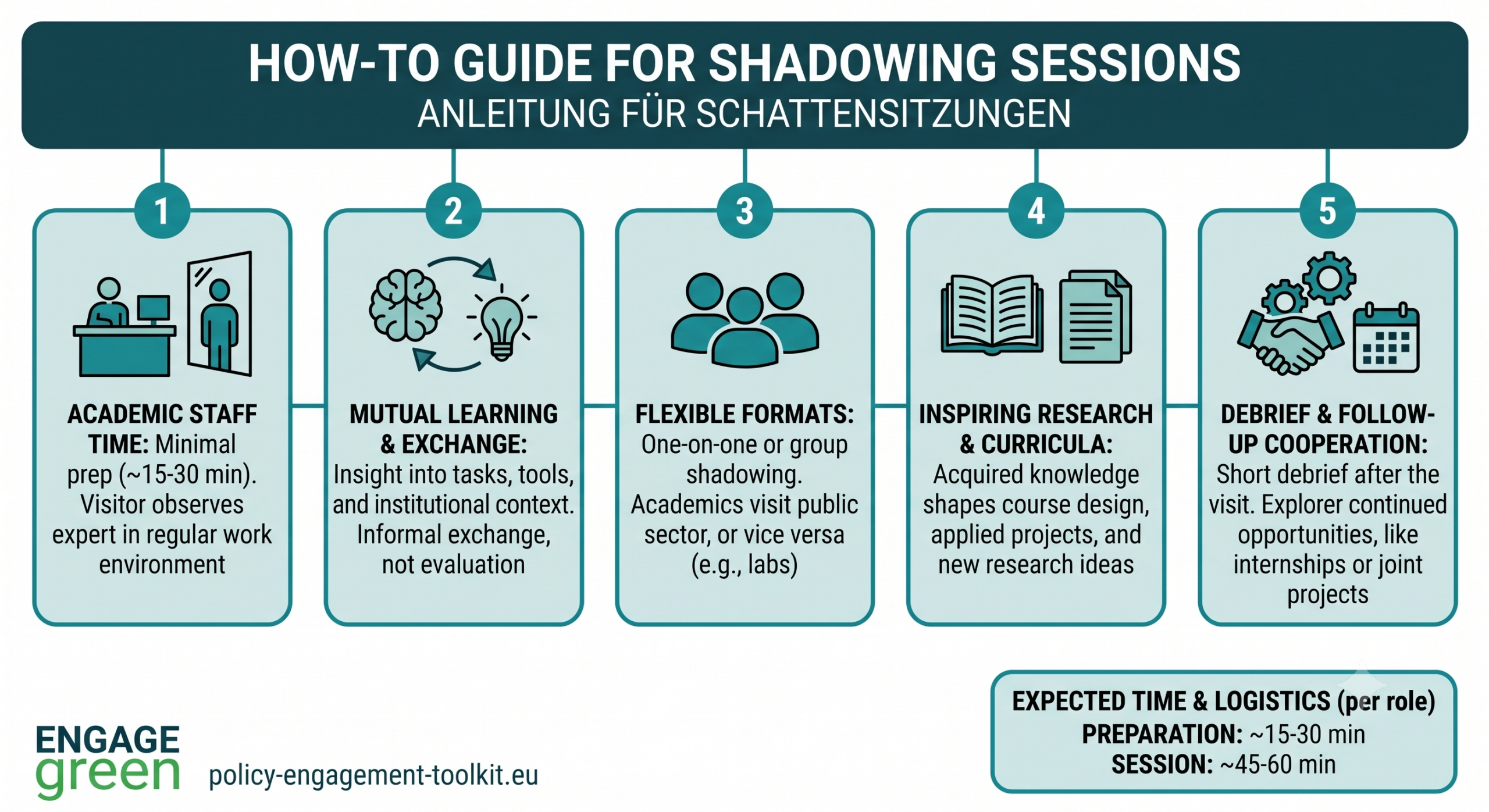
A shadowing session is a structured observational activity where a visitor follows a professional in their regular work environment to gain insight into their responsibilities, workflows, tools, and institutional context. The primary objective is mutual learning and knowledge transfer between academia and practice, without the formal constraints of internships or evaluations.


Description

Experiential observation for mutual understanding and content innovation


Objectives

– Foster long-term collaboration between universities and public-sector stakeholders.
– Align university curricula with the actual needs of the public sector.
– Enhance the employability of graduates by providing realistic insights into public administration roles.
– Facilitate mutual knowledge exchange through observation and informal consultation.
– Support public innovation by incorporating up-to-date academic knowledge into policy-making and administrative practices.


How Does the Format Work?

Shadowing sessions are structured visits where academics observe public administration experts—such as data analysts, planners, or specialized officers—in their day-to-day work. The primary purpose is not evaluation, but rather mutual learning. Academics gain firsthand knowledge of professional tasks, tools, workflows, and expectations. This knowledge can then inform curriculum development or shape applied research and project collaboration. The concept of shadowing sessions can also be viewed oppositely, where representatives from public administration visit practice-based academics or researchers in their labs. Although senior policy-makers may not have the capacity to be shadowed due to their schedules, mid-level professionals or practical-oriented officers are ideal participants. These individuals can demonstrate daily tasks such as spatial analysis, permit workflows, data management, or participatory processes. In some cases, group shadowing is used: one public officer performs their tasks while multiple academics observe, followed by a structured discussion.

For academics, shadowing provides:
– Insight into real-life workflows, administrative constraints, and data usage in public institutions
– Access to specialized tools, data systems, or archives that would otherwise remain closed.
– Inspiration for research questions with real-world relevance.

For public-sector experts, shadowing offers:
– A channel to communicate current challenges, outdated processes, or staffing needs.
– Opportunities to influence the competencies of future graduates.
– Feedback on how university teaching and research can support innovation and modernization.


Duration and Logistics

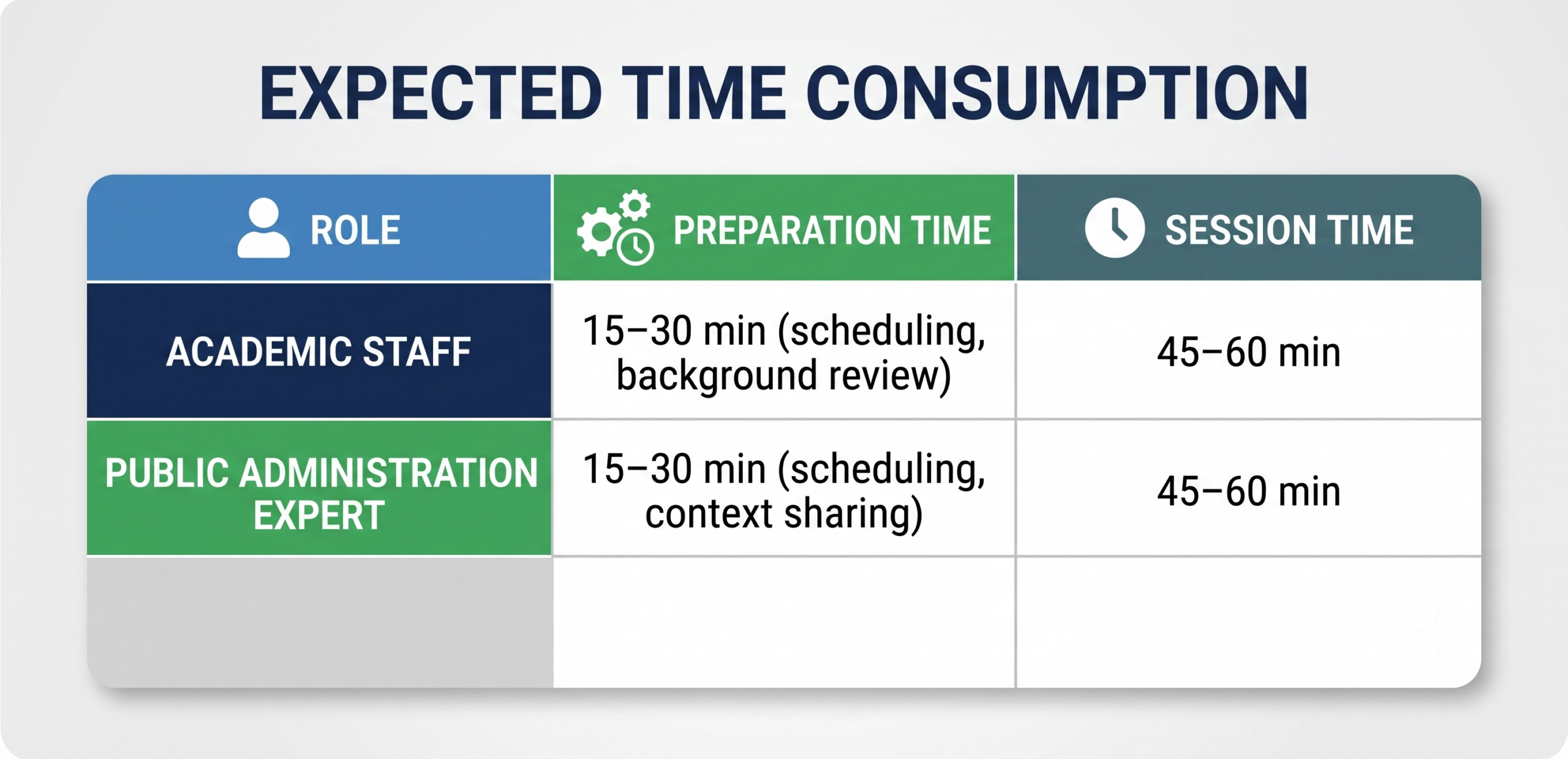
– Typical length: 45–60 minutes
– Format: In-person visit (one-on-one or one-to-many)
– Preparation required: Minimal—informal discussions among experts in similar fields suffice
– Recommended follow-up: Short debrief and opportunities for continued cooperation (e.g., internships, joint projects)


Challenges and Opportunities

While shadowing sessions offer great benefits, they are time-intensive to schedule and organize. Finding mutually convenient times for all participants can be difficult. However, the low-cost and high-impact nature of these interactions makes them worthwhile. Regular shadowing sessions can also serve as a feedback loop—enabling public institutions to revise recruitment criteria and universities to keep curricula aligned with evolving needs.


Benefits for Both Sectors

Academics benefit from:
– A better understanding of how processes are applied in local governance.
– Inspiration for course design, applied student projects, and research ideas.
– Access to real data, software, and institutional know-how.

Public-sector institutions benefit from:
– Influencing academic training to meet real labor market demands.
– Finding new ways to modernize workflows using up-to-date academic methods.
– Building relationships that support recruitment, internships, and project cooperation.

Do you want to know more about the policy engagement toolkit?

Do you want to share your experience in policy engagement? Do you think about contributing to the policy engagement toolkit? Feel free to contact Tome Sandevski via science-policy@pvw.uni-frankfurt.de

The Hackathon: An Intensive Interdisciplinary Seminar

What is a hackathon?

“Hackathon” is a combination of the words “hack” and “marathon.” It is an innovative format in which participants come together to brainstorm ideas and create solutions within a short period of time.

Also referred to as an “innovathon” or “ideathon,” a hackathon brings people together to use collective creativity to imagine and develop new ideas. This collaborative and intense format is designed to inspire innovation and deliver concrete results quickly.


What is our format about?

Hackathons have become increasingly popular over the past five years. They provide students with an opportunity to showcase their skills, explore new ideas, and collaborate with others from different backgrounds.

Hackathons are valuable for institutions because they can help students come up with innovative solutions together to address real challenges. It is also an effective way to strengthen the interaction and connections between universities and practice partners such as policymakers.

In our case, the hackathon format takes place during a week-long seminar dedicated to the topic of public policy design. This seminar option is open to two Master’s students from all disciplines at the university, and we expect 15 to 30 students per session.

Students can develop unique, practical ideas in just a week through intensive teamwork. Hackathons also highlight the value of multidisciplinary collaboration and structure the creative process around specific goals, especially – in our case – where students from all disciplines meet to work in groups of four to five students and combine different approaches to complex questions.


How does the format work?

We organize a five-day hackathon in a non-working week, dedicated to introductory courses (resulting in ECTS credits) where students from all disciplines can explore topics, they have not yet encountered in their studies.  Our format is an in-person event and involves numerous on-site meetings where students can meet with key players in each year’s thematic area of activity.


The key steps

Step 1: Define the challenge

It is important to start by selecting a sponsor and working with them to define the theme or the topic and a related challenge. The challenge should be realistic and achievable within the timeframe. Effective communication is also important to attract motivated participants.

Step 2: Event launch

Kick off the hackathon with an opening session. The teacher explains the schedule and objectives for the week. The sponsor presents the challenge, including constraints and key considerations. Additional contributors, like associations or beneficiaries, may provide input to guide the students.

Step 3: Idea generation

Throughout the week, students take part in seminars and workshops led by instructors and experts. These sessions guide them as they brainstorm and refine their ideas.

Step 4: Prototyping

Once the groups have a clear idea, they move to the prototyping phase. This includes expert-led workshops and autonomous teamwork to create a concrete solution.

Step 5: Presentations and feedback

At the end of the week, the groups present their projects to the sponsor. These presentations may be followed by discussions and/or feedback to further refine the ideas.

Step 6: Post-event follow-up

It is important to stay in touch with both the sponsors and the students/participants after the event. This allows questions to be addressed and adjustments to be made along the practical implementation of the ideas developed. This follow-up stage also helps maintain good relationships with the sponsor and sets the stage for future collaboration.

For universities, grading a hackathon can be challenging. Instead, participation and engagement can be evaluated or feedback collected through a satisfaction survey.


Tasks and resources

A hackathon is a short, collaborative experience designed to inspire innovation and work in the field. Resources need to include an adequate assignment for the format and an external sponsor who is available for a few days.


Examples

https://www.univ-lyon2.fr/sciences-et-societe/les-poles-de-specialites/motif-design-des-politiques-publiques


Sources and further reading

https://www.bibliotheque-initiatives.fonction-publique.gouv.fr/files/2023-11/HACKATHON-LE-GUIDE-PRATIQUE.pdf


Do you want to know more about the policy engagement toolkit?

Do you want to share your experience in policy engagement? Do you think about contributing to the policy engagement toolkit? Feel free to contact Tome Sandevski via science-policy@pvw.uni-frankfurt.de

Format: Capsule

Introduction: What is the format about?

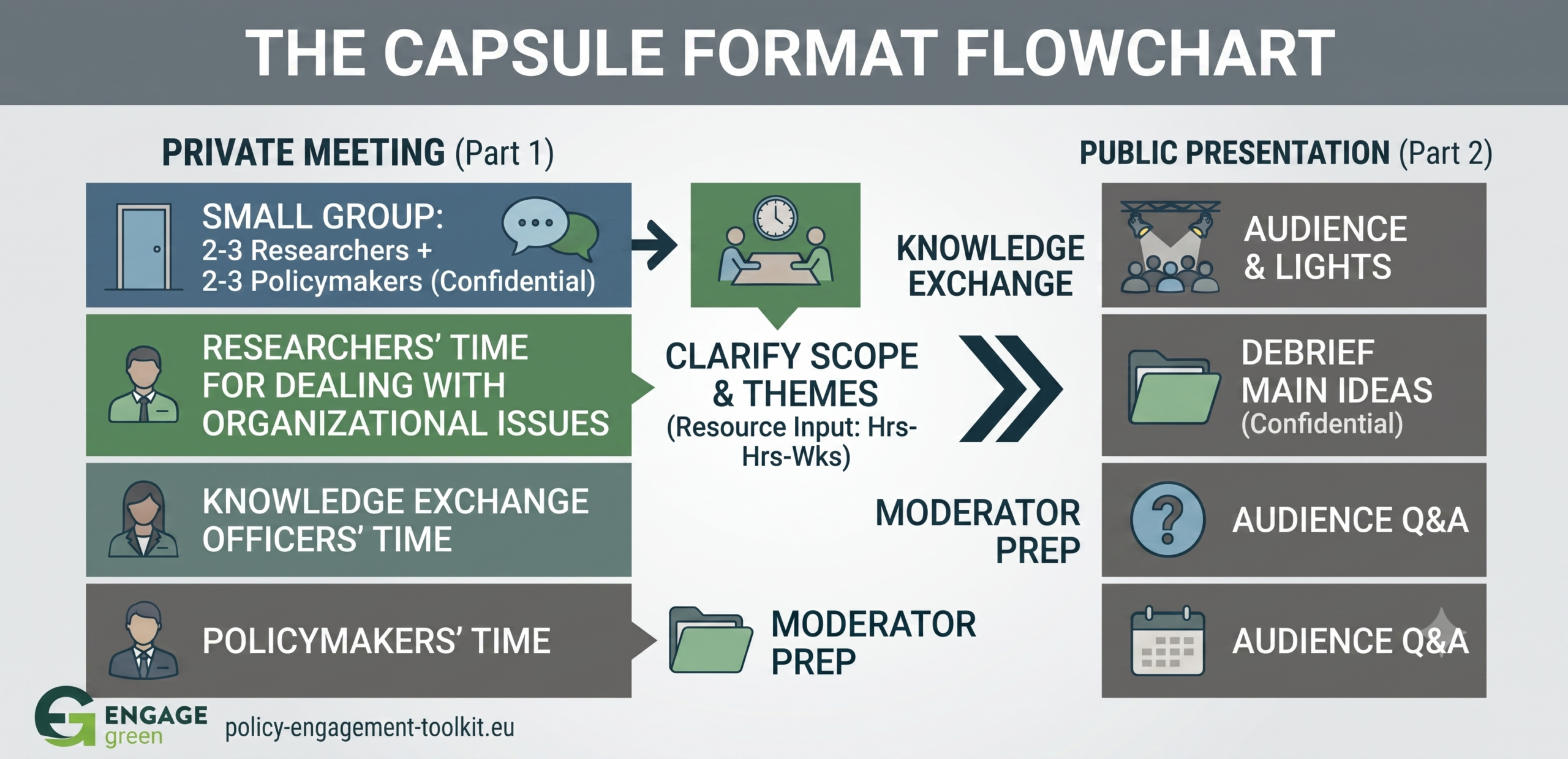
  • A capsule format is a discussion in closed, small group sessions between researchers and policymakers (private). As a rule, these involve two researchers and two policymakers, but there can be less or more if necessary. A small audience may also be present in this discussion.
  • It is a free format that allows participants to engage in free exchange without concern about a large audience listening to, after which the main points that emerged from the discussion are presented to the audience
  • Topics must be open to discussion and the themes defined in advance because there is a public presentation later of the discussion, open to questions from the audience.


How does the format work?

Part 1: The private meeting

The capsule format is based on a confidential and informal setting that is designed to encourage open and constructive discussions.

Generally, two or three policymakers meet with two or three researchers, ideally from different disciplines. The workshop is organized by knowledge exchange officers from the university when, as in our case, we have identified a common theme. The capsule was organized as part of a two-day conference, which gave us the opportunity to bring together researchers and policymakers interested in the topic and provide them with an important opportunity for private discussion on the subject. The meeting is closed to the public and the media. Participants are invited to freely share their knowledge, challenges, and questions without concerns about public communication or political position.

This format aims to create a climate of trust and can lead to mutually beneficial relationships in the future.

Policymakers can ask questions without fear of judgment, and researchers who are not accustomed to speaking in public can present complex or even sensitive findings.

This capsule format also makes it possible to move beyond short-term thinking by opening up new areas for action. These dialogues can be one-off events or part of a cyclical process.

Part 2: The public presentation

At the end of the private session, a public debriefing can be organized to share the main ideas discussed while respecting the confidentiality of individual comments. This time allows for broader reflection and highlights the value of the discussion. In our case, the private session took place when the audience broke up for lunch. When they returned, the public session was included in the conference schedule for the day, which enabled us to have a significant, interested, and dynamic audience.


Challenges and how to address them

The main challenge of this format for support staff (knowledge exchange managers and research managers) is to maintain a common thread throughout the discussion to ensure the coherence and progression of the exchanges. To this end, the choice of moderator is crucial: he or she must have properly prepared the topics in advance, know how to rephrase comments, and make connections between the concerns of the participants, especially during the second phase of the public presentation.


Tasks and resources

Content: The content is very open, but the moderator must have thoroughly prepared the discussion topic and the limits of the researchers’ field of expertise and the limits of the policymakers’ field of activity for the discussion to be productive.

Although the format is fairly open, it requires a certain amount of preparation time for all participants. In fact, a meeting prior to the discussion is very useful for everyone to clarify their area of expertise and also to define the topics and limits of the discussion.


Examples

https://www.univ-lyon2.fr/sciences-et-societe/nos-projets/review-of-the-capsule-meeting-between-policy-makers-and-reseachers-on-the-key-topic-the-management-of-urban-wastelands


Do you want to know more about the policy engagement toolkit?

Do you want to share your experience in policy engagement? Do you think about contributing to the policy engagement toolkit? Feel free to contact Tome Sandevski via science-policy@pvw.uni-frankfurt.de

UGR County Councils: A regional Science-Policy Dialogue Model for Sustainable Development

Summary: Key features in a nutshell

  • Ten regional UGR County Councils, one per county of the Granada province
  • Living Lab and Quadruple Helix approach linking universities, governments, businesses, and citizens
  • Participatory identification of local challenges in water management, soil restoration, sustainable mobility, and cultural heritage
  • Science-policy pairing between researchers and public officials for locally relevant solutions
  • Institutional framework ensuring long-term coordination and knowledge transfer between academia and territorial authorities


Description

The UGR County Councils are a regional model for science-policy dialogue developed by the University of Granada (Spain) within the Erasmus+ ENGAGEgreen project. The initiative is a response to the province’s urgent environmental and social challenges—such as drought, soil degradation, and rural depopulation—by creating ten County Councils, one per county, that connect academia, policymakers, the private sector, and civil society.

Using the Living Lab methodology and the Quadruple Helix model, the Councils foster collaborative experimentation and evidence-based policymaking. They serve as locally rooted platforms for co-creation, capacity building, and participatory governance, advancing sustainable development at the regional level.


How does the format work?

1. Introduction

Granada’s pressing environmental issues revealed a lack of structured mechanisms to integrate scientific evidence into policymaking. To overcome this, the UGR established ten County Councils to institutionalize dialogue between science and policy at the territorial level.

2. Objectives

  • Foster inclusive and structured dialogue between academia, public administration, civil society, and the private sector.
  • Identify and prioritize local challenges through participatory platforms.
  • Pilot a scalable model of science-policy pairing capable of replication in other European regions.
  • Strengthen institutional capacities for knowledge transfer and consolidate the university’s civic engagement mission.

3. Methodology

The Councils employ a Living Lab approach that promotes real-world experimentation and stakeholder cocreation of locally relevant solutions.

They integrate the Quadruple and Quintuple Helix logic, ensuring the participation of:

  • Academic institutions
  • Public administrations
  • Private sector actors
  • Civil-society organizations


Recruitment and participation combined institutional communication (emails, websites) with informal word-of-mouth channels to reach local policymakers and citizens.

Activities used hybrid formats (online and in-person) such as webinars, cocreation workshops, and capacity-building sessions designed to foster dialogue, mutual learning, and joint decision making.

4. Pilot implementation highlights

The UGR County Councils were formally launched in January 2025 during the First Impronta Granada Meeting, which gathered 143 participants for the first province-wide encounter. Since then, the initiative has evolved into a structured network of approximately 230 active participants across ten counties in Granada.

The councils have facilitated science policy dialogue on key environmental issues, including webinars and seminars on soil restoration, drought management, and biotechnological alternatives for pest control, co-organized with local authorities and scientific experts.

Stakeholder engagement reflects the project’s Quadruple Helix foundation, combining public administrations, academic institutions, civil society, and private sector actors.

A total of over 15 multiformat activities have been organized, including:

  • Webinars on soil restoration and drought with regional agencies
  • A seminar on sustainable pest control co-led by UGR biotechnology experts and local mayors
  • Capacity-building workshops and collaborative working sessions, generating more than eight localized action proposals, several of which are being integrated into municipal and regional policy agendas
  • Codesigned, place-based solutions addressing water governance, ecological transition, and rural innovation rooted in territorial realities.
  • Science-policy pairing mechanisms, enabling researchers to act as regional mediators and catalyze evidence-based decision making at the municipal level.

 5. Results and impact

  • National and international visibility through participation in conferences, dissemination via institutional networks, and continuous media outreach
  • Development of a flexible governance model, balancing central coordination with local autonomy and self-organization
  • Institutional recognition and symbolic incentives, such as participation certificates and the forthcoming Best UGR County Council Award, reinforcing long-term stakeholder engagement
  • Hybrid participation formats (online and in-person) expanded accessibility, especially in rural areas, strengthening inclusivity and plural representation

Overall, the UGR County Councils have demonstrated the potential of universities as regional mediators, fostering collaborative solutions that address environmental and social challenges through sustained science-policy dialogue.


Challenges

  • Historically weak links between academia and local governments required trust-building
  • Balancing academic coordination with local autonomy
  • Ensuring equitable representation of all quadruple-helix sectors
  • Managing logistics and accessibility for rural territories
  • Translating dialogue outcomes into concrete, actionable policies
  • Difficulties maintaining consistent participation across all counties


Tasks and resources

Scientists

  • Contribute research insights on sustainability, soil, water, and cultural heritage
  • Act as regional mediators, facilitating evidence-based discussions
  • Support monitoring and evaluation through data analysis and policy translation

Knowledge exchange managers and research managers

  • Coordinate the creation of ten county-based councils and manage logistics
  • Design and facilitate cocreation workshops and training sessions
  • Ensure alignment between local priorities and ENGAGEgreen objectives
  • Compile reports and communication materials for dissemination (websites, media)

Policymakers

  • Participate in workshops and webinars to share challenges and priorities
  • Provide local data, administrative context, and feedback on proposed solutions
  • Integrate cocreated proposals into municipal or county policy agendas


Examples

  • Launch event (January 2025): First Impronta Granada Meeting was attended by 143 participants, marking the establishment of all ten UGR County Councils
  • Ongoing network: Approximately 230 active participants across the province
  • Thematic webinars: On soil restoration, drought management, and biotechnological pest control, co-organized with local authorities and researchers
  • Workshops: Generated over 10 localized action proposals, several now under implementation in municipal policies
  • Hybrid formats: Online and in-person participation strengthened inclusivity and accessibility for rural communities


Do you want to know more about the policy engagement toolkit?

Do you want to share your experience in policy engagement? Do you think about contributing to the policy engagement toolkit? Feel free to contact Tome Sandevski via science-policy@pvw.uni-frankfurt.de

Policy Sessions at Academic Conferences

Description – Key features in a nutshell

  • policy sessions at academic conferences are a great way to gain perspectives on current research issues
  • they are well-suited for connecting policymakers with scientists from various research areas, institutions, and countries
  • the convenors can organise the sessions as roundtables, presentations by scientists and policymakers followed by Q&A, panel discussions, world cafes, fishbowls, and other formats that make dialogue between scientists and policymakers possible
  • The convenors must decide on the goals, content, structure, and target groups when organising policy sessions

How does the format work?

Academic conferences are essential for sharing the latest research results with scientific peers. Such conferences can also offer excellent opportunities to establish dialogue between scientists and policymakers. While the content of pure academic sessions might also be relevant for policymakers, discussions in academic sessions might be difficult for policymakers unfamiliar with scientific debates, methodologies, technical terms, or scholarly jargon. Policy sessions, which can also be called stakeholder outreach sessions, are a great way to open the conference to non-academic audiences. Policy sessions can occur as roundtables, panel discussions, and presentations by scientists and policymakers followed by Q&A, world cafes, fishbowls, or other formats, allowing for dialogue between scientists and policymakers.

The convenors of smaller academic conferences can include policy sessions when planning its conferences. Convenors of large conferences can call for proposals for policy sessions.

Conveners must take the sessions` content, structure, and target groups into consideration. Do they want to cover specific issues requiring technical knowledge or debate “big questions”? The latter is better suited for members of parliament or ministers, while the former for policy professionals in ministries or agencies with specialised knowledge. In any case, they must select timely policy issues relevant to policymakers.

Academic conferences are essential for learning about state-of-the-art academic research. But listening to paper presentations for several hours can be exhausting for scientists, however. Therefore, policy sessions in the afternoon or evening can provide a welcome change to paper presentations.

Also, the most fruitful discussions with policymakers often occur during the coffee break rather than on the podium. Therefore, the convenors should provide a setting that allows for informal conversation. For example, they can opt for buffets and high tables, allowing participants to change tables and talk to different scientists.


Challenges (and ways to address them)

Members of parliament and ministers are notoriously busy and receive dozens of requests regarding event participation every week. Convenors should therefore consider the type of policymakers they want to invite. If they wish the policymakers to participate in panel discussions hundreds will attend, they can focus on ministers or those in similar positions. If they want to invite policymakers to small roundtable discussions, they should consider addressing policy officers at the level of units. Policy session convenors should also consider making the sessions more appealing to policymakers. For example, participating in a panel discussion with scientists and stakeholders from the third sector or the business world appeals to politicians eager to engage in stakeholder dialogue. Convenors of the session should not be offended if policymakers, including ministers or members of parliaments, suggest sending their staff on their behalf unless they have planned to involve very distinguished scientists like Nobel Prize laureates in the policy discussion.

While creating new knowledge is a goal in itself in science, policymakers need to look for the policy relevance of research findings. Discussions on theoretical debates or methodological approaches are vital in academic conferences, which might take more work for policymakers to follow. Therefore, scientists should focus on sharing their relevant knowledge rather than on issues that policymakers don’t understand. Scientists should also inform policymakers that many scientists lack extensive knowledge of policymaking challenges and the functioning of policymaking institutions like parliaments or ministries.


Tasks and resources

Scientists

The scientists convening the session must plan its structure, prepare guiding questions for the moderator and participants, and write a session abstract.

If they need to become more familiar with the policy issues, the scientists who convene the session or play a significant role, such as panellists, should study the issues by consulting official publications like strategy papers, laws or proposed legislation. They should also read the bios or job descriptions of participating policymakers (politicians). For job descriptions, policy officers; organisation charts are beneficial. They should think about the key messages they want to communicate to policymakers.

Support staff (knowledge exchange managers and research managers)

Support staff can help identify possible topics for the policy sessions, suggest including them as part of the academic events, brief the participating scientists on current policy issues. They can also provide assistance regarding the session’s organisation, like booking meeting rooms or hotel rooms. They can also help prepare press releases and social media posts before or after the policy session.

Policymakers

While scientists must present their knowledge in an understandable way to policymakers, policymakers must also show the challenges of policymaking to a lay audience. Elected politicians are used to talking to their constituents and participating in public events. This might be different for policymakers working in ministries or agencies. If policymakers have not had prior contact with scientists, they should prepare key messages that are easy to understand. They should also provide basic knowledge about their institutions’ work and policy challenges.

Academic conferences are a great way to connect with various scientists. Policymakers (or their assistants) should therefore check the list of participants and panels to identify scientists whom they might like to meet.

Finally, support staff can help policymakers register for the conference. The application procedure for large conferences can be very complicated, so support staff should conduct the registration process on behalf of the policymakers.

Required funding for activities

Depending on the location and duration of the conference, expenses can include catering, conference equipment, rent for the conference venue, travel, and accommodation. Travel and other costs can be included in grant applications for conference funding. If conference participants have to pay a conference fee, the convenors should ensure that policymakers are exempt from paying the fees.

Policy sessions at conferences are a resource-friendly format because the scientists will attend the conference anyway.


Examples

Dr Fabienne Pradella on organising policy sessions on the Sustainable Development Goals and healthy nutrition at the annual conventions of the German Society for Epidemiology (DGEpi).


Do you want to know more about the policy engagement toolkit?

Do you want to share your experience in policy engagement? Do you think about contributing to the policy engagement toolkit? Feel free to contact Tome Sandevski via science-policy@pvw.uni-frankfurt.de

Methods: How to Implement Participatory Approaches

Summary: Key features in a nutshell

  • Objective: To implement participatory methods that ensure broad community involvement in the decision-making process regarding local development
  • Approach: Combining online consultations, interactive workshops, and collaborative projects where diverse stakeholders come together to identify challenges and co-design solutions
  • Outcome: A democratic process where solutions reflect the needs and contributions of all stakeholders, creating ownership and ensuring sustainability in the implementation phase


Description

Implementing participatory approaches requires engaging diverse stakeholders – local communities, researchers, policymakers, citizenship, and businesses – to co-create solutions that address regional challenges. Effective participatory methods empower communities to play an active role in shaping local development strategies, ensuring that solutions are not only scientifically informed but also locally relevant and sustainable.

UGR County Councils refers to the initiative led by the University of Granada (UGR) under the Erasmus + ENGAGEgreen project which aims to foster collaboration between academic researchers, local governments, and community stakeholders. This initiative focuses on addressing regional challenges through co-created, research-driven solutions and exemplifies a successful model for participatory governance in the context of territorial development.


How does the format work?

  • Stakeholder Identification. The participatory approach begins with the identification and mapping of relevant stakeholders, a process coordinated by Medialab UGR within the framework of the Impronta initiative. This mapping includes not only governmental actors and researchers but also civil society organisations, local businesses, and community members who hold valuable knowledge about local challenges.
  • Data Collection and Consultation. Online surveys, focus groups, and interactive workshops are used to collect input from these stakeholders. UGR County Councils, for instance, used online preparatory meetings to gather insights from stakeholders, prior to the in-person Second Impronta Granada meeting and its interactive workshops. This method ensures that diverse voices are heard from the outset.
  • Co-Creation and Collaborative Planning. Once needs are identified, co-creation workshops are organised by Medialab UGR within the framework of the Impronta initiative, bringing together researchers, policymakers, civil society, and local businesses to collaboratively develop action plans. These workshops are conducted in real time, allowing for immediate feedback and adaptation. This approach was implemented In the Second Impronta Granada Meeting through the organisation of micropresentations, coordinated by Medialab UGR, where researchers showcased their projects and received direct input from local stakeholders.
  • Public Visibility and Ongoing Engagement. Digital platforms such as the Impronta Granada website help maintain visibility and engagement. Research projects, community initiatives, and stakeholder profiles are made publicly available, allowing all participants to track progress and contribute to the discussion. Actor profiles and UGR project entries are key tools in ensuring continuous participation and keeping the community engaged.


Challenges

  • Coordination and Communication. In complex multi-stakeholder projects, ensuring clear communication between actors can be challenging. The UGR County Councils initiative highlights the need for dedicated facilitation to coordinate between different sectors and ensure that all voices are heard.
  • While initial participation can be strong, maintaining engagement over time is a common challenge. Researchers, policymakers, and community leaders need to be committed to continuous collaboration beyond the initial workshops or meetings.


Tasks and resources

Scientists

  • Tasks
    • Provide research findings that inform the participatory process
    • Facilitate workshops and co-creation activities
  • Required resources
    • Research dissemination tools, such as databases, interactive websites, and community-based data collection tools.

Knowledge exchange managers and research managers

  • Tasks
    • Coordinate stakeholder engagement
    • Manage the organisation of online and in-person consultations
    • Ensure that feedback is effectively incorporated into the development process
  • Required resources
    • Communication tools (e.g., websites, social media platforms); workshop materials (e.g., visual aids, data collection tools).

Policymakers

  • Tasks
    • Create policy frameworks that reflect the inputs from the participatory process
    • Allocate resources for implementation
    • Ensure continuous engagement with community leaders
  • Required resources
    • Policy expertise and financial resources to support the implementation of the co-created solutions.


Examples

ENGAGEgreen Project and UGR County Councils

The Erasmus + ENGAGEgreen project and the UGR County Councils initiative highlight how participatory approaches can effectively connect academic research with local governance. As part of this approach, several preparatory activities were carried out, including the first Impronta Granada Meeting in January 2025, followed by the UGR County Councils meeting in July 2025, and the second Impronta Granada Meeting in December 2025, where researchers, local policymakers, businesses, and civil society actors came together to identify and address regional challenges such as sustainable tourism, heritage preservation, and economic development. These meetings helped align UGR research with the needs of the Poniente Granadino and other regions by actively involving researchers in discussions about local priorities. During these events, UGR researchers presented their ongoing projects, with some projects being mapped through an Excel database that catalogued research topics, researcher affiliations, and their relevant county councils. This process also helped to integrate research findings into the local policy discussions, encouraging collaboration between academia and local actors. Additionally, the Impronta Granada website was crucial in ensuring visibility for these UGR researchers, as it included actor profiles and project listings, categorised by UGR County Councils, which allowed stakeholders to filter and connect with relevant research in their regions. The use of online workshops and micropresentations allowed for continuous engagement and co-creation of solutions, making sure that academic knowledge was aligned with local development goals and integrated into long-term strategies.


Sources and further reading


Do you want to know more about the policy engagement toolkit?

Do you want to share your experience in policy engagement? Do you think about contributing to the policy engagement toolkit? Feel free to contact Tome Sandevski via science-policy@pvw.uni-frankfurt.de

Guided Tours of Research Sites as a Policy Engagement Format

Description – Key features in a nutshell

  • guided tours are a great interactive experience: scientists can present their research and policymakers can ask questions
  • guided tours are an easy to organise format allowing for the involvement of scientists who are usually not in touch with policymakers and vice versa
  • the research sites or labs must allow for a high degree of visualisation of research issues
  • the scientists must communicate clearly and concisely and allow for questions from the policymakers


How does the format work?

Guided tours of research sites provide great opportunities for policymakers to gain better understanding of research activities and their possible applications. Researchers can demonstrate machines or applications and thus not only explain underlying mechanisms but also elaborate on possible applications which are of relevance to policymakers.

A single researcher can guide policymakers through a lab or other research site. Alternatively, the policymakers might move from station to station, which are explained by different researchers at the respective station. Guided tours can create a lasting impact because they activate various senses.

Policymakers listen to the information provided by the scientists while simultaneously seeing, touching, or even smelling objects or applications. Visits allow scientists to present their current research. Since policymakers can ask scientists questions and vice versa, visits of research sites are a great interactive experience for both sides.

Policymakers can visit research sites on an individual basis, in small or larger groups. Groups of policymakers can include participants from a single or various policymaking institutions. The duration of guided tours can vary between an hour or several hours depending on the size of the research site, the number of stations, and the time the scientists want to spend preparing and conducting the guided tours. Guided tours of research sites can be organised as stand-alone events or as parts of conferences, workshops, or other events that allow the participants to interact.

The scientists must communicate clearly and concisely and leave enough time for questions from the policymakers. Early career researchers or senior scientists can conduct guided tours.

The research sites should allow for a high degree of visualisation. For example, while scientists might conduct groundbreaking research on health issues in a lab, showing rows of test tubes and petri dishes might not add value to the transfer of knowledge via formats like Powerpoint presentations or lectures. Guided tours through labs, where policymaker see how robots move or where they can use virtual-reality-headsets, may, however, help them better understand the potentials and challenges of technological innovations.


Tasks and resources

Scientists

Content. Researchers need to prepare brief presentations for the objects and applications they would like to show. If various scientists are involved in the guided tour, coordination will be needed between the researchers. Depending on the structure of the tour, the number of participants, and the background of the participant, the guides may ask the policymakers before the tour regarding the issues they are most interested in and structure the tour accordingly.

Organisational issues. Scientists may also have to rearrange or even clean up the objects they would like to present. The scientists must also assess whether the scientists at the research sites can work as usual or whether their work will be interrupted during the guided tour.

Resources in terms of time. Conducting guided tours should not take more than a couple of hours. If the scientists never prepared presentations on the objects and applications they want to show to the policymakers, preparing the presentations to an outside audience can take several hours and a day or two. But once scientists have prepared the presentations and the course of the tour, replicating the exercise the next time will take less time.

If the researchers opt to evaluate the format, they will have to prepare an evaluation sheet which has to be sent to the policymakers after the tour.

Resources in terms of funding. Possible items include catering, reimbursement of travel costs for policymakers, advertisement of the event, or compensation for participating researchers.

Knowledge exchange managers and research managers

Knowledge exchange managers can provide crucial support to researchers by identifying policymakers and inviting policymakers. Knowledge exchange managers can follow current policy developments to brief scientists about topics of great interest to policymakers.

In addition, knowledge exchange managers can provide support by designing leaflets and sharepics, prepare social media posts and press releases, organise catering (if needed), help the guests from policymaking institutions with directions, and deal with administrative issues like granting access to research sites to guests and following safety protocols.

Knowledge exchange managers should provide a list of the policymakers attending the guided tours to the scientists. They can write follow-up mails to both policymakers and scientists to stay in touch after the guided tours.

Knowledge exchange officers can disseminate evaluation sheets to the policymakers and scientists or conduct feedback-calls with them.


Do you want to know more about the policy engagement toolkit?

Do you want to share your experience in policy engagement? Do you think about contributing to the policy engagement toolkit? Feel free to contact Tome Sandevski via science-policy@pvw.uni-frankfurt.de

Other