Giulia Ballarin (giulia.ballarin@unive.it) is a Project Manager at Ca’ Foscari University of Venice, specializing in the management and reporting of EU-funded research projects within the Department of Economics. She has previous experience in Fundraising, Communication, and Graphic Design. She holds a European Joint Master’s Degree in English and American Studies (M.A.) from Ca’ Foscari University of Venice, and a Postgraduate Diploma in Publishing: Design and Management from the University of Verona.

Elisa Berg (elisa_marie.berg@tu-darmstadt.de) is Managing Director of the Digital Resilience Xchange (DiReX) at the Institute of Political Science, Technical University of Darmstadt. Her research focuses on governance, critical infrastructures, climate and energy policy, and political crisis management. She previously worked as a research associate in the emergenCITY project and the DFG Research Training Group KRITIS, and completed her PhD on political crisis management and energy supply security in Germany during the COVID-19 pandemic and energy crisis.

Mattia Bonfanti (mbonfanti@ieep.eu) is Head of Strategic Partnerships at the Institute for European Environmental Policy (IEEP). With more than a decade of experience in evidence-informed policymaking, he leads IEEP’s strategic partnerships and engagement activities, oversees networks of sustainability-focused organizations and think tanks, and works to strengthen the impact of research on European environmental policy. Prior to joining IEEP, he held positions in EU institutions and public administration, building expertise in stakeholder engagement, governance, and science–policy relations.

Jaroslav Burian (jaroslav.burian@upol.cz) is an Associate Professor and Deputy Head at the Department of Geoinformatics, Faculty of Science, Palacký University Olomouc. His expertise lies in Geographic Information Systems (GIS), spatial analysis, and urban and regional planning. He focuses on applying spatial data, sensor networks, and open data to support evidence-based decision-making in public administration.

Christoph Burchard (sekretariat.burchard@jura.uni-frankfurt.de) holds the Chair of Criminal Law and Criminal Procedure, International and European Criminal Law, Comparative Law, and Legal Theory at Goethe University Frankfurt. He is the founding spokesperson of the Center for Critical Computational Studies (C3S) and a Principal Investigator at the research centre “Normative Orders.” His research focuses on the intersections of criminal law, legal theory, comparative law, and the societal implications of digital technologies.

Stefano Campostrini (stefano.campostrini@unive.it) is a full professor of Social and Health Statistics at Ca‘ Foscari University of Venice, where he is also Director of the Governance & Social Innovation Center. He has always been committed to using statistics to support decision-making processes, particularly in socio-health policies. He has over two hundred publications on topics such as evaluation, information systems, research methodology, surveillance, health promotion, inequalities, migrants, territorial governance, and the relationship between health and the environment.

Marco Corazza (corazza@unive.it) is Associate Professor at Ca’ Foscari University of Venice. His research focuses on quantitative finance, portfolio management, artificial intelligence, machine learning, and decision-support methodologies. He has participated in numerous national and international research projects, authored more than 180 scientific publications, and serves as Editor-in-Chief of Mathematical Methods in Economics and Finance. Alongside his academic work, he is active in consulting on quantitative finance and investment analysis.

Paulina Conrad (conrad@allianz-meeresforschung.de) is Political Communications Officer at the German Marine Research Alliance (DAM). She develops and coordinates science–policy dialogue activities, supports knowledge transfer between marine research and political decision-makers, and organizes formats that strengthen the exchange between science, policy, and society. Her work focuses on making marine research findings accessible and relevant for policy processes and public discourse.

David Corado (davidcorado@go.ugr.es) is a conference interpreter, translator, and predoctoral researcher in the Languages, Texts, and Contexts program at the University of Granada. Trained at institutions such as the Universitat Autònoma de Barcelona and the Universitat Jaume I, he holds an FPU UGR-Santander research contract and is a member of Medialab UGR, where he takes part in projects such as ENGAGEgreen and #YoSigoUGR. He currently combines his teaching and research work with professional conference interpreting, collaborating on a voluntary basis with organizations, associations, and non-profit entities. He has participated in academic projects, conferences, and publications related to interpreting and communicative competences.

Reyn van Ewijk (reyn.vanewijk@uni-mainz.de) is Professor of Statistics and Econometrics at Johannes Gutenberg University Mainz. He has a background in economics, psychology, and epidemiology. In his research, he uses econometric statistical methods, in particular so-called natural experiments, to study human health. He uses large databases such as biobanks and registry data.

Étienne Faugier (etienne.faugier@univ-lyon2.fr) is Associate Professor of Contemporary History in the Department of Tourism at Lumière Lyon 2 University. His doctoral dissertation, defended in 2013, is titled The Economy of Speed: Automobile Culture and Its Implications in the Rhône Department and the Quebec City Region (1919–1961). He is a specialist in transportation, mobility, and tourism, a member of the History Committee of the Ministry of the Environment and Sustainable Development (CHEDD), and President of the Passé-Présent-Mobilité (P2M) association.

Luciana Gualdi (luciana.gualdi@unive.it) is a Research and Innovation Manager at the Knowledge Transfer Office of Ca’ Foscari University of Venice. She focuses on initiatives that enhance knowledge valorization, promoting the exploitation of research and encouraging entrepreneurship within the university. Her goal is to help academics envision the potential impact of their research on society, the local territory, and the economy. She plans and oversees funded European projects, ensuring their strategic alignment and the seamless integration of their outcomes into institutional practices.

Julia Hahn (julia.hahn@kit.edu) is a researcher at the Institute of Technology Assessment and Systems Analysis at the Karlsruhe Institute of Technology. Her research interests include participatory methods and stakeholder engagement regarding technology development as well as approaches to understand the actual effects of these processes. The integrative assessment of potential impacts of technologies and how to provide concrete and relevant policy advice continues to be a focus for her.
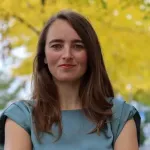
Marie Heidenreich (marie.heidenreich@gfz.de) is Director of the Helmholtz Forum Earth and Environment. In this role, she coordinates and advances interdisciplinary collaboration on key environmental and sustainability challenges, fostering dialogue between science, policy, and society.

Chloe Hill (hill@egu.eu) is the Policy Manager of the European Geosciences Union. In this role, she provides scientists with information and resources that enable them to actively engage in the European policy process. She also facilitates science-policy activities and coordinates Task Forces that provide European policymakers with contextualized, timely and useful scientific evidence.

Rainer Hofmann (rainer.hofmann@tu-darmstadt.de) is a Research Associate at the Institute of Political Science at Technical University of Darmstadt, where he works in the field of Comparative Politics and European Integration. His research focuses on energy policy and regulation, with particular interest in the governance of the energy transition. He holds an M.A. in Governance and Public Policy from TU Darmstadt and received the 2024 Master’s Thesis Award for his research on hydrogen policy in the European Union and the United States. Since 2025, he has also served as Transfer Manager in the Clean Circles project, fostering collaboration between academia, industry, and policymakers.

Sabine Hoffmann (sabine.hoffmann@eawag.ch) is Group Leader of Inter- and Transdisciplinary Research at Eawag, the Swiss Federal Institute of Aquatic Science and Technology, and an Associate of the Transdisciplinarity Lab at ETH Zurich. Her research focuses on knowledge integration and integrative leadership in interdisciplinary and transdisciplinary research, particularly at the interface of science, policy, and practice. She has extensive experience leading large collaborative research programs and advancing approaches to address complex sustainability challenges.

Michèle Knodt (knodt@pg.tu-darmstadt.de) is Professor of Comparative Politics and European Integration at TU Darmstadt. She serves as Director of the Hessian Drone Competence Centre (HDKZ) and the Digital Resilience Xchange (DiReX), and leads the Metal Energy Hub Technology and Transfer Centre. Her research and leadership focus on European governance, digital resilience, energy transition, and the transfer of scientific knowledge into practice.

Jakub Koníček (jakub.konicek@upol.cz) is an Assistant Professor in the Department of Geoinformatics at the Faculty of Science, Palacký University Olomouc. His expertise includes Geographic Information Systems (GIS), digital cartography, and visual communication. He specializes in geovisualization, data visualization, infographics, and visual storytelling across various interdisciplinary fields.

Linda Lammensalo (linda.lammensalo@acadsci.fi) is a knowledge broker dedicated to strengthening the translation of scientific knowledge into policy and fostering effective science–policy collaboration. With a background in sustainability, she develops and implements innovative approaches to facilitate dialogue between researchers and policymakers, with a particular focus on addressing complex environmental challenges through evidence-informed decision-making.

Luisa Last (llast@ethz.ch) is PhD Program Coordinator at the Zurich-Basel Plant Science Center, ETH Zurich. With a background in environmental and agricultural sciences, she coordinates interdisciplinary training programs at the science–policy interface and develops capacity-building activities for researchers. Her work focuses on science–policy dialogue, stakeholder engagement, and supporting early-career researchers in translating scientific knowledge into societal and policy impact.

Virginia Martínez Tudela (vtudela@go.ugr.es) is a digital project manager specialising in strategic partnerships, intercultural communication and the coordination of multidisciplinary initiatives and international teams. She holds a BA in Translation and Interpreting from the University of Granada and an MA in International Relations from the University of Nebrija, complemented by specialised training in Digital Marketing and Community Management. Her strong interest in international cooperation and multilateral institutions has led her to engage with the United Nations and the International Labour Organization. At the University of Granada, she collaborates with Medialab UGR in European initiatives such as ENGAGEgreen.

Michele Marzulli (michele.marzulli@unive.it) is Associate Professor of Sociology at the Department of Economics, Ca’ Foscari University of Venice. With extensive teaching experience in sociology of health and public policy analysis, he is currently the University’s delegate for social inclusion and social justice in the National Academic Network on Sustainability (RUS); and the Department of Economics‘ delegate for accessibility, disability, inclusion and gender equality. He currently serves also as the Scientific Director of the Social Innovation Unit at the Yunus Social Business Centre and member of the Research Institute for Social Innovation – Public governance, welfare and social innovation.

Martina Miechová (martina.miechova@upol.cz) is a research project manager and communications manager at Palacký University Olomouc and Masaryk University. She specializes in the development and implementation of European research projects, strategic science communication, and the dissemination of research results. Her work focuses on strengthening the societal impact of research and fostering effective engagement between academia and society.

Giulio Minto (giulio.minto@unive.it) is a project manager, facilitator, and researcher Governance & Social Innovation Centre and the Yunus Social Business Centre at Ca’ Foscari University of Venice. His work focuses on social innovation, project management, training, and stakeholder engagement, combining academic research with practical implementation. He also serves as Subject Matter Expert in General Sociology at Ca’ Foscari University of Venice.

Enol Nieto Jiménez (enol.nieto@uvic.cat) is a project manager at the Beta Technological Center of the University of Vic-Central University of Catalonia, where he also works on Governance for Sustainability. He is a jurist and political scientist (Universidad Autónoma of Madrid), an expert in eco-social transition, and holds an M. Sc. in Latin American Studies from the Complutense University of Madrid.

Marie Préau (marie.preau@univ-lyon2.fr) is Professor of Social Psychology and Director of the Reshape Laboratory. Since September 2022, she has also served as Project Manager for Scientific Strategy in the field of health, contributing her expertise to the development of interdisciplinary health research and innovation.

Fabienne Pradella (fabienne.pradella@uni-bremen.de) is a researcher at the University of Bremen. She was a postdoctoral researcher at Johannes Gutenberg University Mainz and the Heidelberg Institute for Global Health. Her research lies at the intersection of epidemiology and economics and focuses on the prerequisites for a healthy life for all from pregnancy to old age. Her current projects focus on the effects of environmental influences during pregnancy on offspring health and on the prevention of neurodegenerative diseases in later life.

Esteban Romero-Frías (erf@ugr.es) currently works as Vice-Rector for Social Innovation, Employability and Entrepreneurship at the University of Granada and Full Professor in the Department of Accountancy and Finance. His academic and research work focuses on public and social innovation, digital learning, and digital humanities. Through UGR MediaLab, which he has directed since its foundation, he has led various collaborative projects such as Impronta Granada and UnInPública, aimed at building bridges between universities, public institutions, and society to tackle regional challenges.

Tome Sandevski (tome.sandevski@uni-frankfurt.de) is Programme Manager for Science-Policy Dialogue at Goethe University Frankfurt and coordinates joint policy engagement activities of the Rhine-Main Universities (Frankfurt, TU Darmstadt and Johannes Gutenberg-University Mainz). He designs and delivers training on policy engagement for researchers and research managers.

Vincent Schmid-Loertzer (vincent.schmid-loertzer@w-i-d.de) is scientific officer at Wissenschaft im Dialog in the project Impact Unit. This unit is committed to strengthening impact orientation and meaningful evaluation in German science communication. To this end, it offers tools, analyses, workshops, individual advice, and networking. Vincent regularly facilitates workshops on the topics of evaluation, impact and quality, and organises the exchange and further training of various stakeholders.

Finn-Lauritz Schmidt (fi.schmidt@jur.uni-frankfurt.de) is a research assistant for the Chair of Criminal Law and Criminal Procedure, International and European Criminal Law, Comparative Law and Legal Theory at Goethe University Frankfurt. He is an early-career researcher at the research centre ‘Normative Orders’ as well as an affiliated researcher at the DIRPOLIS Institute at the Sant’Anna School of Advanced Studies.

Marius Schmidt (schmidt@rsm.tu-darmstadt.de) is Managing Director of the Clean Circles initiative and Technology Manager of the Metal Energy Hub at Technical University of Darmstadt (TU Darmstadt). With a background in mechanical engineering and reactive flow research, his work focuses on sustainable energy conversion, energy storage technologies, and the transfer of scientific innovations into practical applications. He plays a key role in fostering collaboration between academia, industry, and policymakers to advance carbon-neutral energy systems and circular energy solutions.

Joachim Schulze (schulze@stadt.tu-darmstadt.de) is Head of Real-World Laboratories and Deputy Managing Director of the Digital Resilience Xchange (DiReX) at Technische Universität Darmstadt. With a background in engineering, urban development, and interdisciplinary resilience research, he leads the development and implementation of real-world laboratories that translate research on digital resilience into practical solutions for critical infrastructures, public administration, and society.
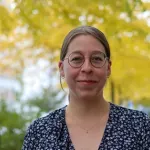
Katharina Sielemann (katharina.sielemann@ufz.de) is Senior Advisor for Synthesis and Communication at the Helmholtz Forum Earth and Environment. She works at the interface of science, policy, and society, supporting the synthesis and communication of interdisciplinary environmental research and fostering dialogue on sustainability challenges.

Laura Väliniemi (laura.valiniemi@acadsci.fi) holds a Master of Social Sciences degree and joined the Finnish Academy of Science and Letters in September 2026 as a Specialist in Science–Policy Interaction. Prior to this role, she worked at the regional development consultancy MDI, focusing on social sustainability. She has extensive experience in facilitating stakeholder dialogues and supporting public sector development. Laura studied sociology at Tampere University and brings a strong social science perspective to fostering collaboration between research and decision-making.

Jialin Zhang (jialin.zhang@eawag.ch) is a scientist at Eawag, the Swiss Federal Institute of Aquatic Science and Technology. Her work focuses on sustainable development, biodiversity conservation, and strengthening collaboration between science, policy, and society. With international experience in interdisciplinary research and stakeholder engagement, she develops and supports initiatives that translate scientific knowledge into practical solutions for environmental and societal challenges.