From Cartoons to Conversation: Using Visual Stories to Teach Science–Policy Competencies
Key features in a nutshell
- Cartoons turn abstract science–policy competencies and soft skills into recognisable situations from science–policy practice.
- They make visible and discussable not only challenges, but also the different realities, underlying assumptions and dynamics that shape how people perceive and respond to them.
- Cartoons can be used in many ways: to introduce a topic, prompt reflection, start a group discussion, connect experiences to competencies, or inspire participants to create their own visual stories.
- No artistic experience is needed. The aim is not to interpret a cartoon “correctly”, but to use it as a starting point for reflection and exchange.
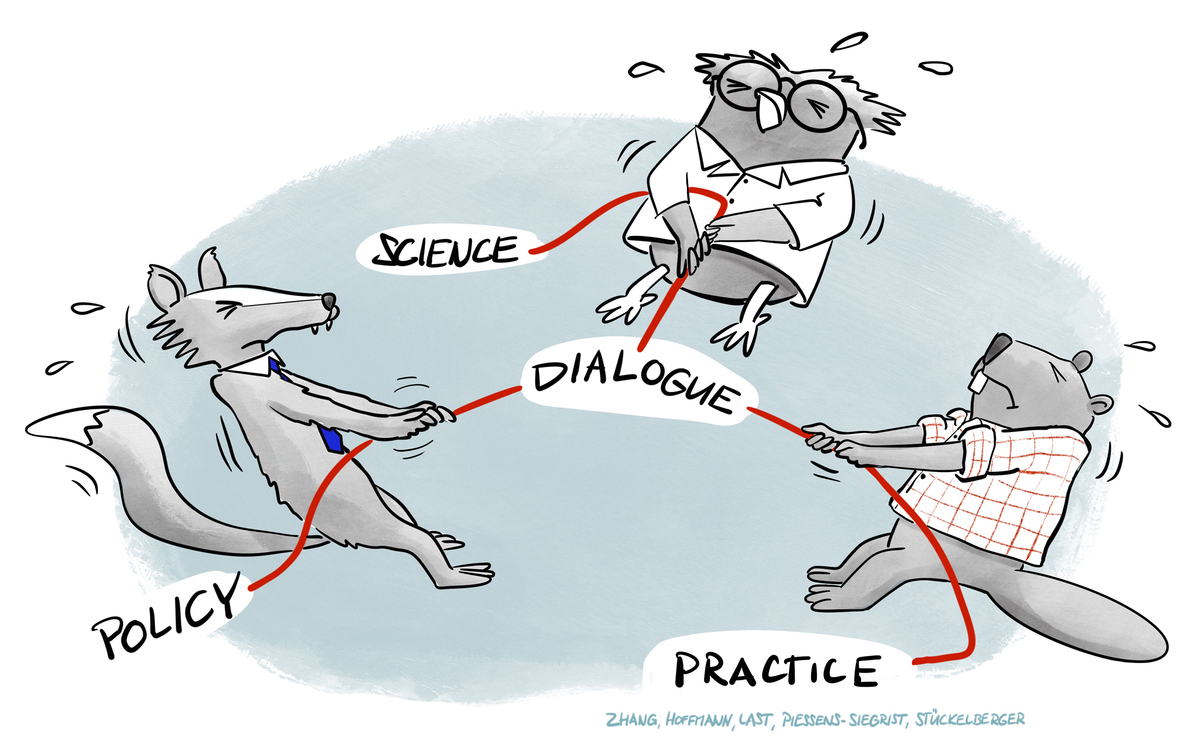
How does the format work?
Dialogues at the science–policy interface can go off the rails for reasons that are easy to overlook: trust was never built, evidence arrived at the wrong moment, people were talking past each other, power dynamics remained unnamed, or researchers had not reflected on the role they were playing.
Competency frameworks can help us describe what is needed in these situations. But descriptions such as relational competency, reflexivity or navigating complexity remain fairly abstract until we can connect them to situations people recognise from their own work.
How do we iden
tify these situations and find out that might share the same experience to exchange about? Our answer is visual storytelling.
Together with cartoonist Christof Stückelberger, we translated science–policy competencies and soft skills into a series of cartoons. Each cartoon brings an aspect of science–policy engagement to life through a recognisable scene. Some are about complexity and uncertainty. Others deal with finding the right moment for engagement, tailoring communication to different audiences, building trust, recognising power asymmetries or reflecting on one’s own role.
The humour matters, but the cartoons are more than illustrations or entertaining additions to a presentation. They give people something concrete to look at, react to and talk about.
Instead of beginning with a definition such as “What does reflexive competency mean?”, a facilitator can simply show a cartoon and ask:
What is happening here? Or can you relate to this?
That small shift makes a difference. Participants can first talk about the characters rather than themselves. They can disagree about what they see, notice different details and compare interpretations. Recognition often follows: “I have been in this situation.” From there, the conversation can move naturally towards their own experiences.
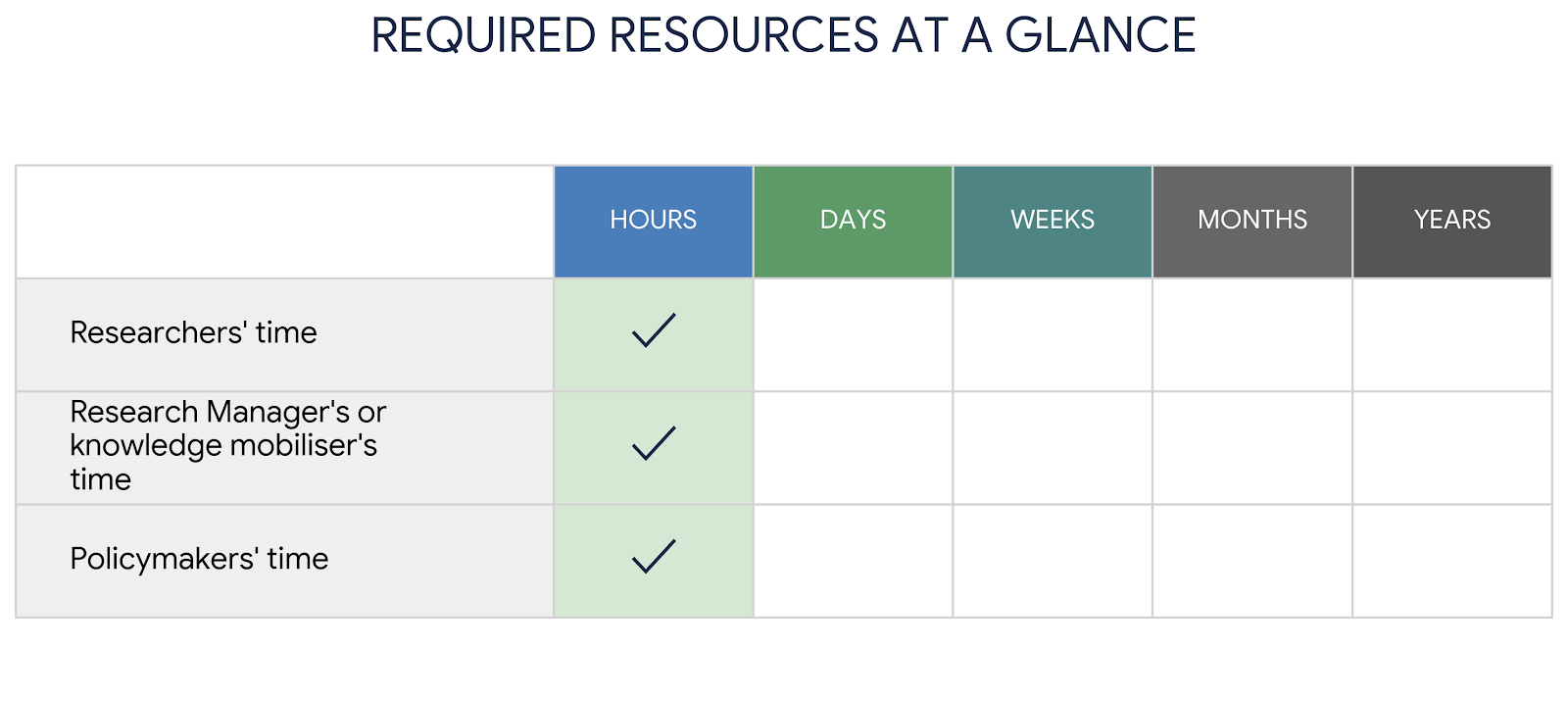
The cartoons can therefore be used at different stages of teaching and learning. The cartoons can be used with a single image in a ten-minute discussion or ice-breaker, or as part of a longer course or workshop.
Explore and recognise
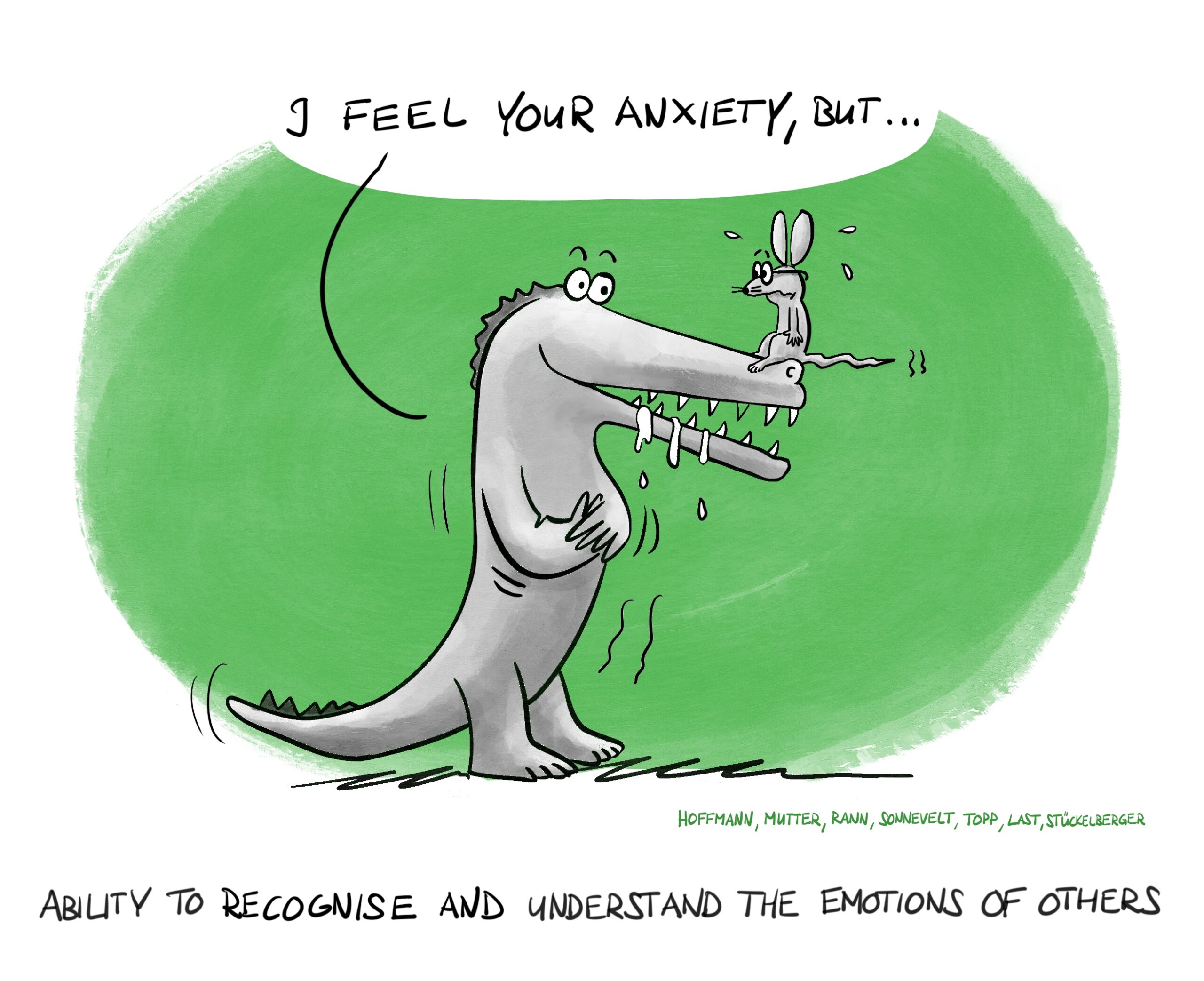
Show one cartoon or display several around the room. Ask participants which scene feels familiar, surprising or relevant to their work.
Simple questions are often enough:
- What do you see?
- What seems to be happening?
- What is the difficult part of this situation?
- Have you experienced something similar?
At this stage, there is no need to explain the competency behind the cartoon. Let people interpret it first.
Discuss and connect
Once participants have explored the situation, the discussion can move towards the competencies or soft skills involved.
Questions might include:
- Which science–policy challenge does this cartoon surface?
- Which competencies (in your own words or based on a competencies framework) matter here?
- Why might the different actors see the situation differently?
- What could have been done differently?
- What would make this situation easier to navigate?
A simple structure such as: Challenge → Competency → Possible strategy, can help participants move from recognising a problem to thinking about what might help.
The important point is not to match each cartoon with one “correct” competency or soft skill. Science–policy situations are usually messier than that. A communication problem may also involve trust. A question of timing may also reflect institutional incentives. An apparent disagreement over evidence may
hide different values, roles or understandings of the problem.
Reflect on experience
Cartoons can also provide a low-threshold way to open conversations about experiences that participants might otherwise hesitate to discuss.
A cartoon about power, for example, allows a group to talk about the power relationship shown in the picture before asking whether similar situations occur in their own projects or organisations. A cartoon about failed communication can prompt people to explore why apparently clear messages are understood differently by scientists, policymakers and practitioners.
Humour can lower defences; recognition does the rest.
Reimagine the situation
Participants can go one step further and ask what is missing from the cartoon collection.
What science–policy challenge have they experienced that is not yet represented?
They can sketch their own scene using stick figures, speech bubbles or simple symbols. No artistic skill is required. The useful part is the conversation involved in deciding what to draw:
What exactly is the challenge? Whose perspective should be shown? What is difficult to make visible? What competency or soft skill might help?
Creating a new cartoon can therefore turn participants from viewers into interpreters and creators of their own science–policy experiences.
Possible challenges and how to address them
One temptation is to explain
a cartoon immediately. This can quickly turn the exercise into a test: “Which competency does this cartoon represent?”
Try the opposite. Let participants look, interpret and discuss before providing the background. Different readings are not a problem; they are part of the exercise.
It is also useful to avoid reducing every challenge to an individual skill deficit. Science–policy engagement takes place within institutions and political contexts. A researcher may understand perfectly well how to communicate with policymakers but still face a closed policy window, organisational incentives that discourage engagement, or unequal power relations.
Tasks and resources
- For scientists: Look for connections between the cartoons and situations from your own work. Be prepared to compare your interpretation with those of people working in other roles.
- For knowledge exchange officers / research managers: Select cartoons that fit your audience and learning goals. Use them as conversation starters rather than illustrations that need to be explained. Printed cartoons, sticky notes and a few guiding questions are usually enough.
- For policymakers: Bring the policy perspective into the discussion. The same situation may look very different depending on institutional responsibilities, timing, political feasibility and evidence needs.
References
Last, L., Piessens-Siegrist, M., Zhang, J., Stückelberger, C., & Hoffmann, S. (in press). Cosmovisions in dialogue: Visualizing competencies at the science–policy interface. In E. E. Tibet, S. Keller, C. Mutiyamana, & E. Cledat (Eds.), Cosmovisions Arts.
Dettwiler, D., Salomon, H., Piessens-Siegrist, M. et al. (2025), Building capacity at the science–policy interface: a competencies framework. Humanities and Social Sciences Communications. https://doi.org/10.1057/s41599-025-06403-5
Cartoon credit- Competencies at the Science–Policy Interface:
© Eawag, WFSC & PSC. Jialin Zhang, Sabine Hoffmann, Luisa Last & Monika Piessens-Siegrist; cartoons by Christof Stückelberger. CC BY-NC-ND 4.0.https://www.eawag.ch/de/abteilung/ess/publikationen/cartoons-kompetenzen-an-der-schnittstelle-zwischen-wissenschaft-und-politik/
Cartoon credit- Soft Skills at the Science–Policy Interface:
Soft skills at the Science–Policy Interface (2026), Sabine Hoffmann, Janik Mutter, Mialy Rann, Martijn Sonnevelt, Lene Topp, Luisa Last & Christof Stückelberger; Illustration: Christof Stückelberger; Eawag; CC BY-NC 4.0.